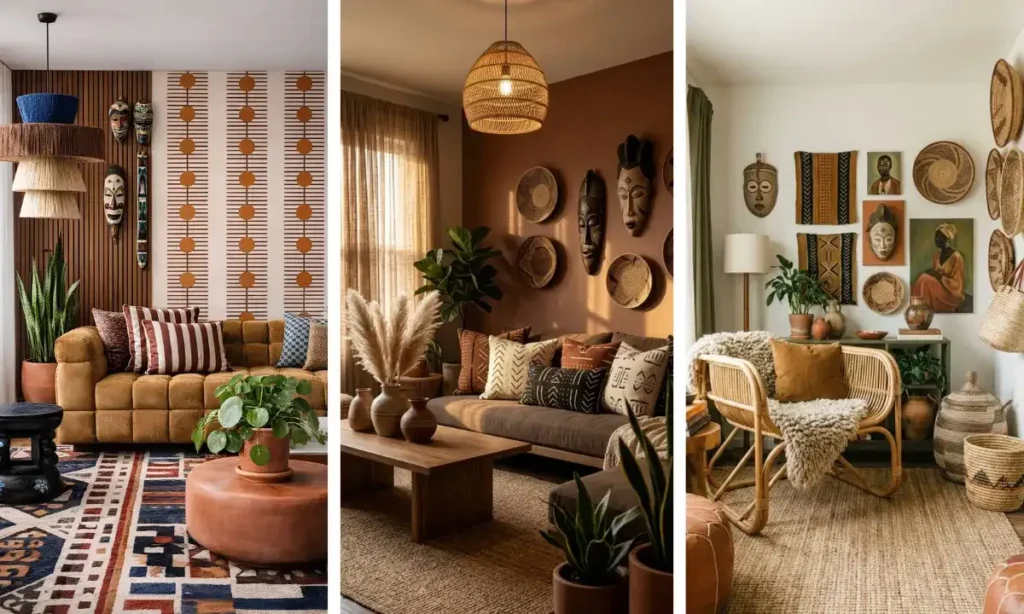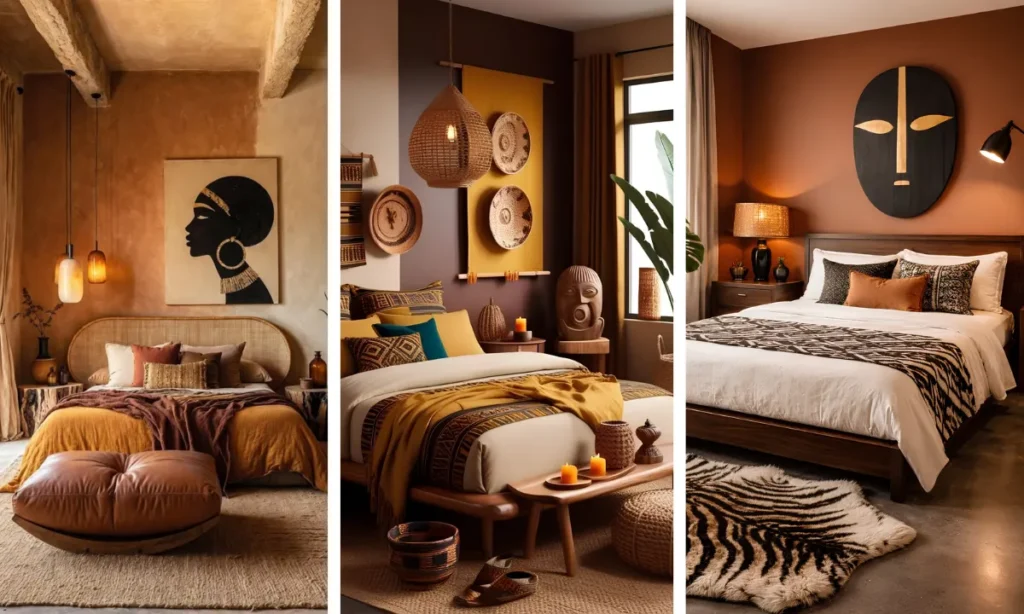
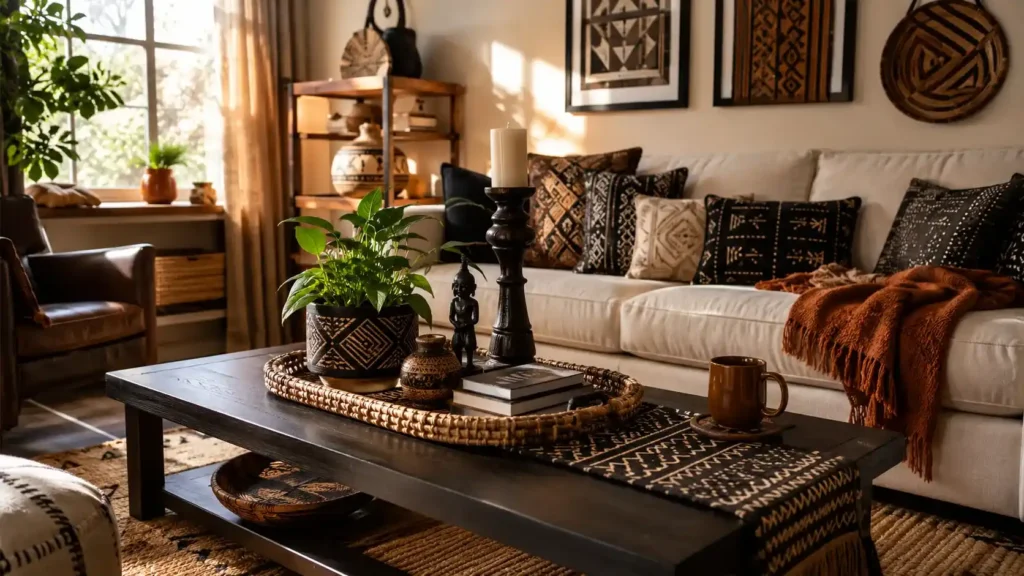
Most people start styling a coffee table by grabbing every pretty object they own and setting it all down at once. A candle here, a vase there, a stack of magazines wherever there’s room.
The result almost always looks cluttered instead of curated. Nothing feels intentional because nothing was placed with a plan.
Learning how to style a coffee table with Afrocentric decor is really about building layers in the right order. Tray first, then height, then texture, then the small details that make it personal.
Once you see the layering logic, you will never randomly place objects on a table again. Every future coffee table takes minutes, not an afternoon of second-guessing.
This project takes under 30 minutes once your pieces are gathered. If you are still collecting those pieces, these budget-friendly Afrocentric decor ideas show how to find carved wooden bowls, woven trays, and textile runners that look styled without spending much.
The hardest part is resisting the urge to add just one more thing.
What You Need
- ▸Wooden or woven tray
- ▸2 to 3 hardcover books
- ▸African print or mudcloth fabric scrap
- ▸Small woven basket or carved bowl
- ▸One tall candlestick or vase
- ▸One small sculptural object (mask, figurine, carving)
- ▸Small potted plant or faux greenery
- ▸Soft cloth for dusting the surface
At a Glance
- Clear the table down to bare wood first
- Choose a tray as your foundation layer
- Anchor the tray with a stack of books
- Add a textured African-print element
- Bring in a natural material accent
- Place your tallest decor piece off center
- Layer in a small sculptural or symbolic object
- Add greenery for a living touch
- Step back and edit what you have added
Clear the table down to bare wood first
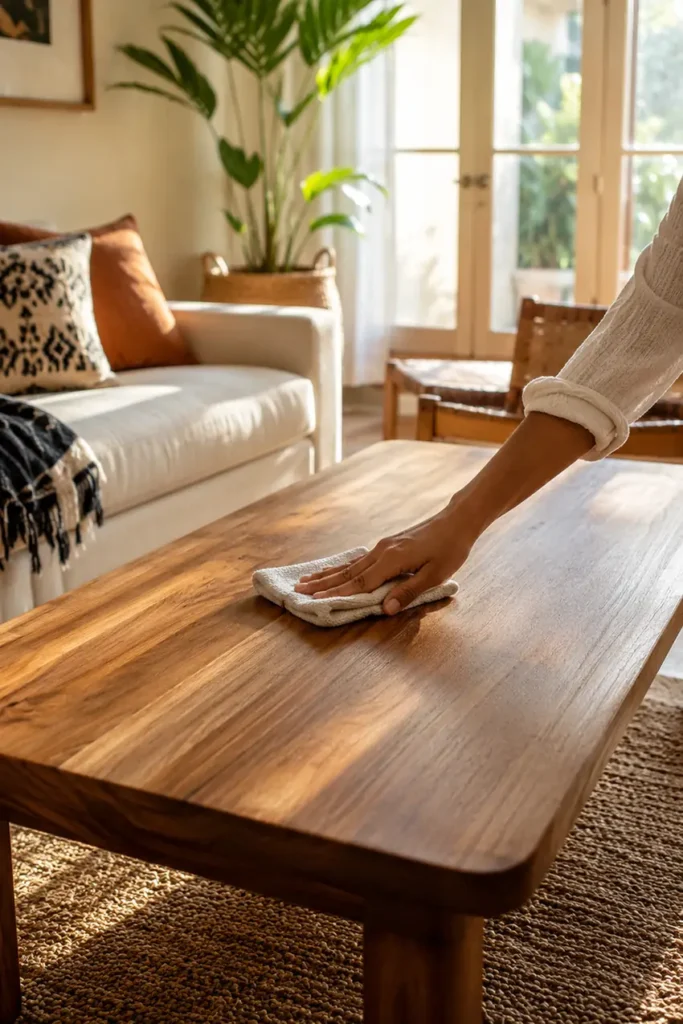
Every object currently on your coffee table needs to come off, even the ones you plan to put right back.
Starting from zero forces you to be intentional about what earns its spot. It also lets you actually see the wood grain or surface material you are working with.
Wipe the surface clean with a dry or slightly damp cloth. A dusty table undercuts even the best styling.
Choose a tray as your foundation layer
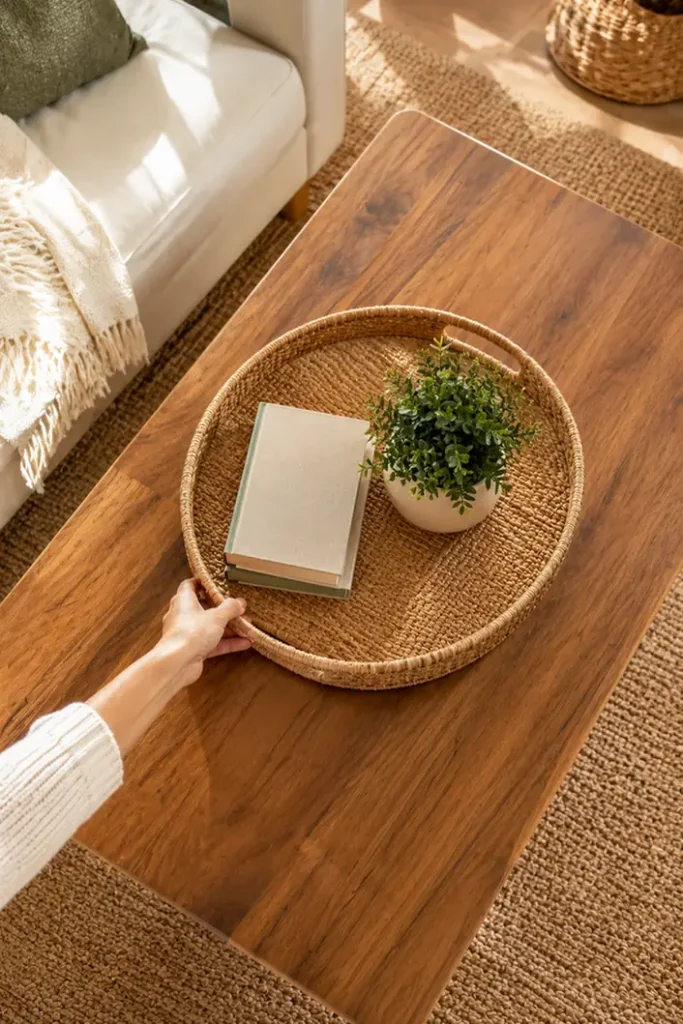
A tray does more work than people expect. It creates a defined zone on the table instead of letting objects float randomly across the whole surface.
Wood, rattan, or woven trays all read as Afrocentric-friendly because they lean into natural, earthy materials rather than glossy or metallic finishes.
Place the tray slightly off-center, not dead in the middle. Centered feels stiff. Off-center feels lived-in and styled by a person, not a showroom.
If your coffee table is narrow, a 12 by 16 inch tray is usually the largest size that still leaves breathing room.
Anchor the tray with a stack of books
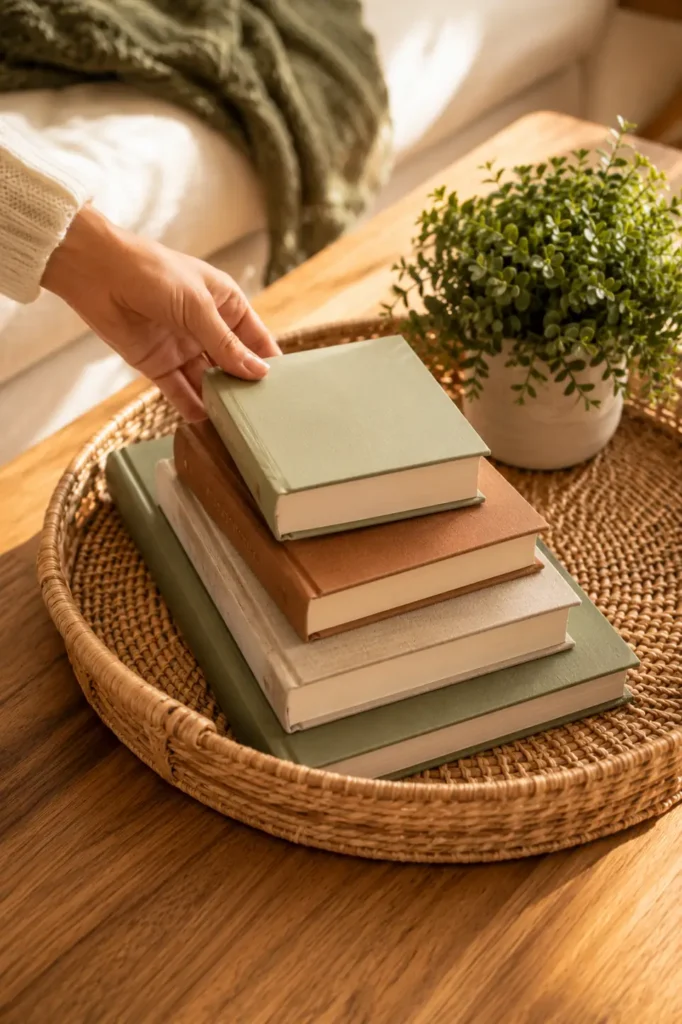
Two or three hardcover books stacked on the tray give you your first layer of height. Height is what keeps a flat table from looking one-dimensional in photos.
Stack them largest at the bottom, smallest on top. It is a small detail, but a wobbly-looking stack undercuts the calm, grounded feel you are going for.
Aim for a book stack roughly 4 to 6 inches tall. Any shorter and it disappears next to your tray. Any taller and it competes with the object you place on top of it.
Add a textured African-print element
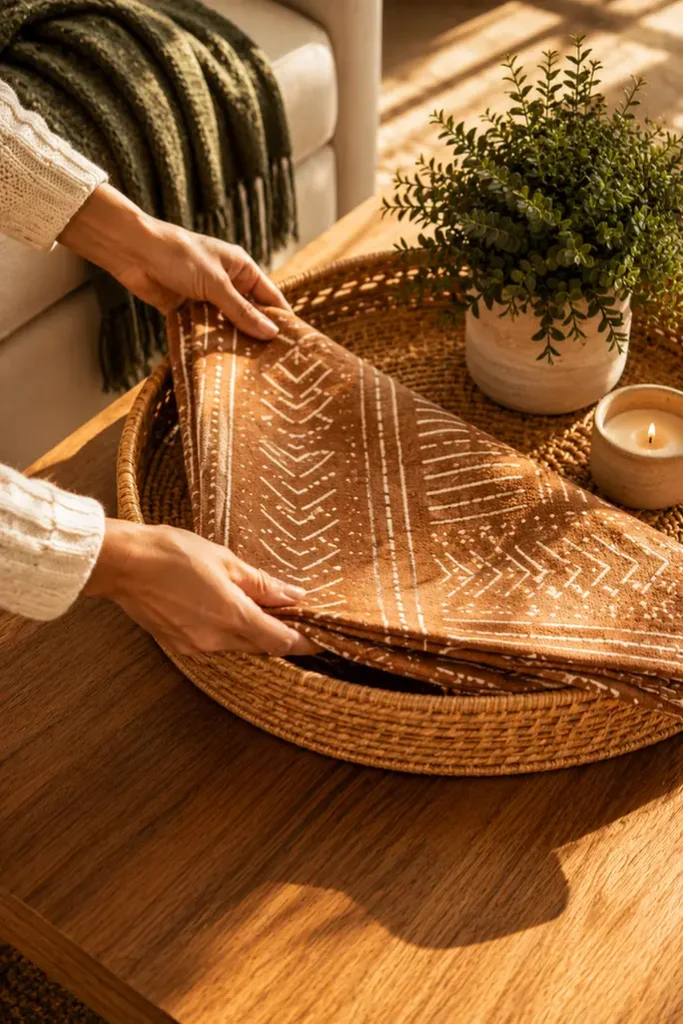
Texture is where a coffee table starts to feel Afrocentric instead of just neutral and beige. This is the step most beginners skip because they are not sure how to use fabric without it looking messy.
A folded runner of mudcloth, kente, or ankara fabric works well. If you are unsure how to choose between these prints or how to fold them cleanly, our guide on layering African textiles in your living room walks through exactly how to handle mudcloth, kente, and ankara so they look intentional instead of messy.
Fold it into a long strip, roughly 4 to 6 inches wide, and lay it diagonally across one corner of the tray.
Do not drape it over the edge of the table itself. Keeping the fabric contained to the tray keeps the whole vignette feeling planned rather than accidental.
Bring in a natural material accent
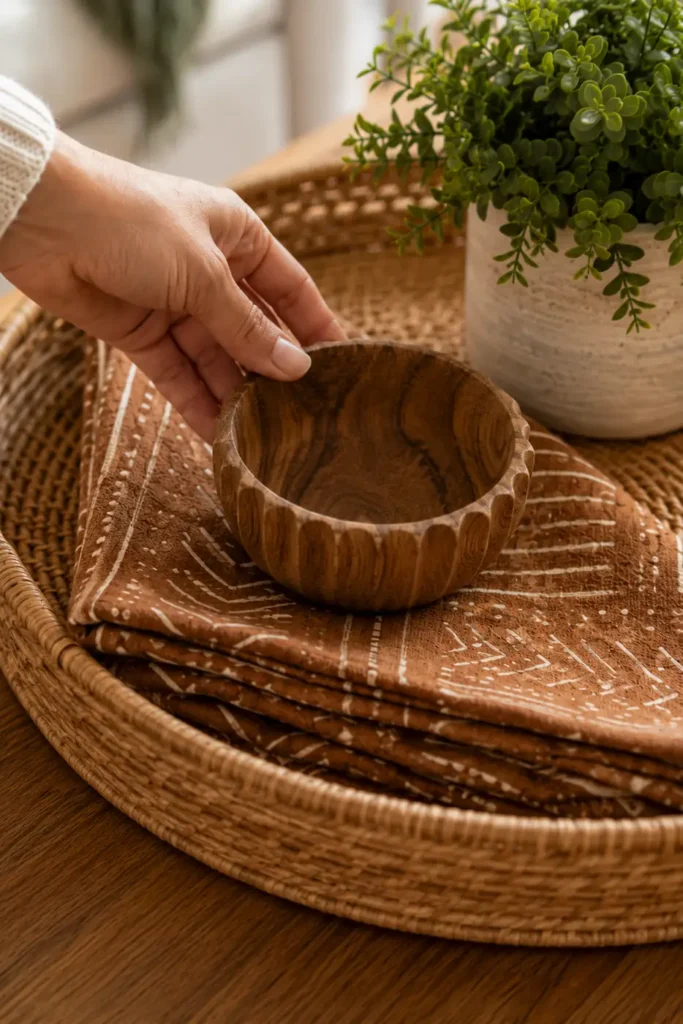
Wood, rattan, clay, and stone all pair naturally with African print textiles because they share the same earthy, handmade quality. A small carved wooden bowl or a woven basket both work here.
Set it directly on the fabric runner, not beside it. Layering objects on top of each other, rather than lining them up in a row, is what creates depth instead of a flat display.
Empty is fine for now. This piece can hold something later, like small stones or dried botanicals, but it does not need filling yet.
Place your tallest decor piece off center
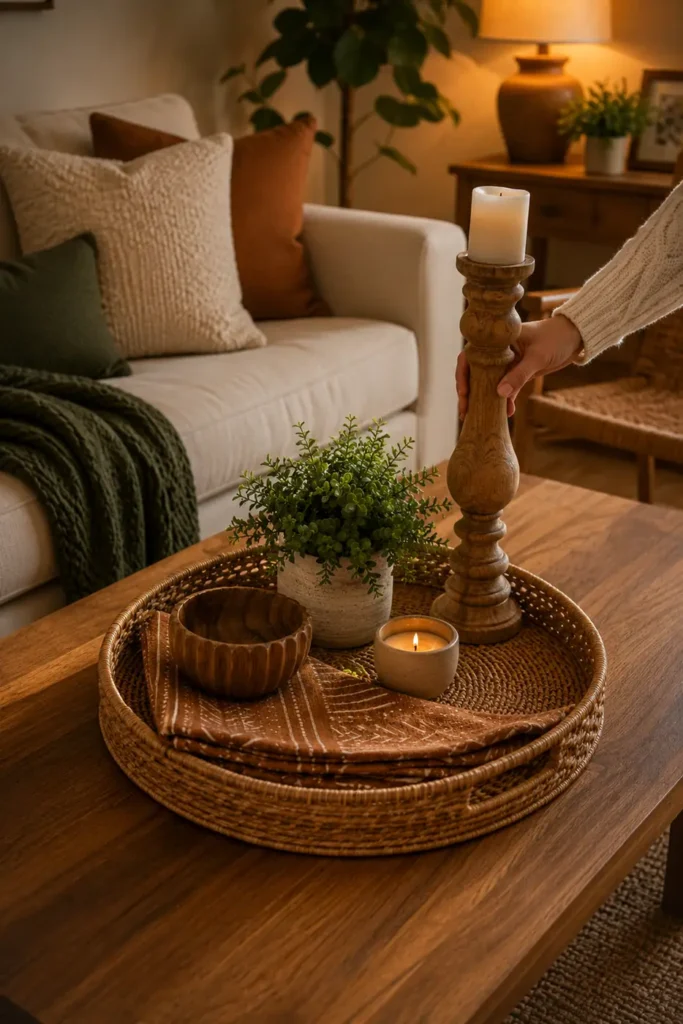
Now is when your display gets its vertical anchor. A tall candlestick, a slim vase, or a carved wooden figure works here, ideally standing 10 to 14 inches tall.
Position it toward the back corner of the tray, never dead center. A centered tall object splits your vignette in half and makes everything on either side feel like an afterthought.
Height at the back, lower items toward the front, is the same rule photographers use to keep a scene readable at a glance.
- Avoid two tall objects of similar height. They visually cancel each other out instead of creating a focal point.
- Skip anything taller than 14 inches on a standard-height coffee table. It starts to block sightlines across the room.
- Don’t center the tall piece “to be safe.” It reads as staged, not styled.
Layer in a small sculptural or symbolic object
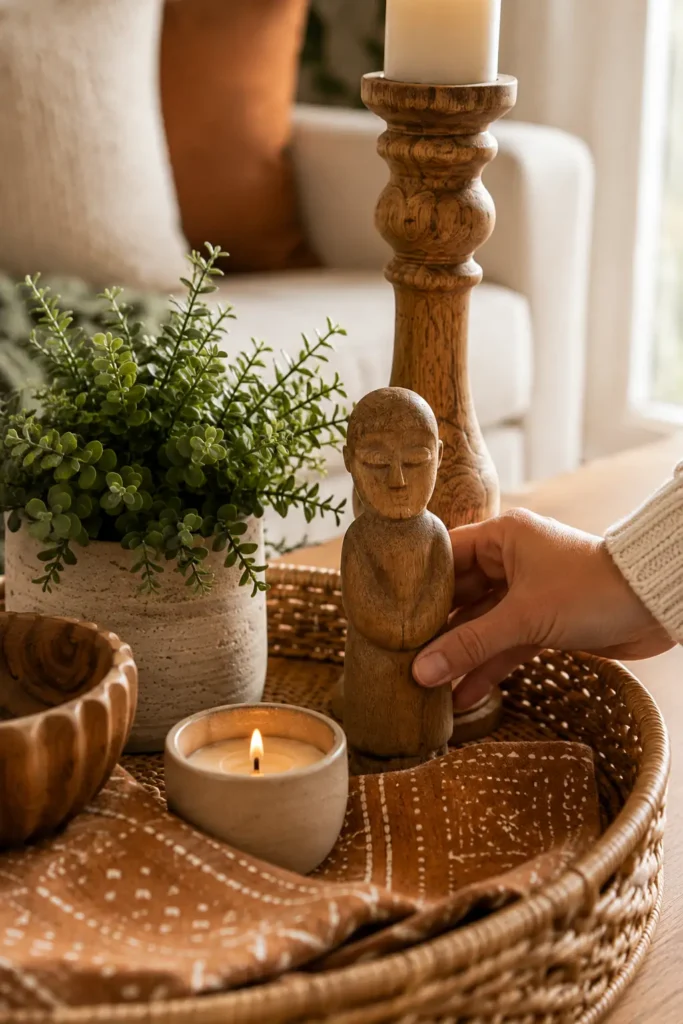
This is the piece that gives your table a story. A small carved mask, an Adinkra symbol coaster, or a figurine all work well here.
Choose something that means something to you personally, not just something that looks African. A table styled with pieces you actually connect to always reads more genuine than one filled with generic decor.
Place it near the base of the tall piece, slightly in front. This keeps the eye moving naturally from tall to short instead of jumping around the tray.
Two symbolic pieces are usually the limit. A third starts to feel like a museum shelf instead of a coffee table.
Add greenery for a living touch
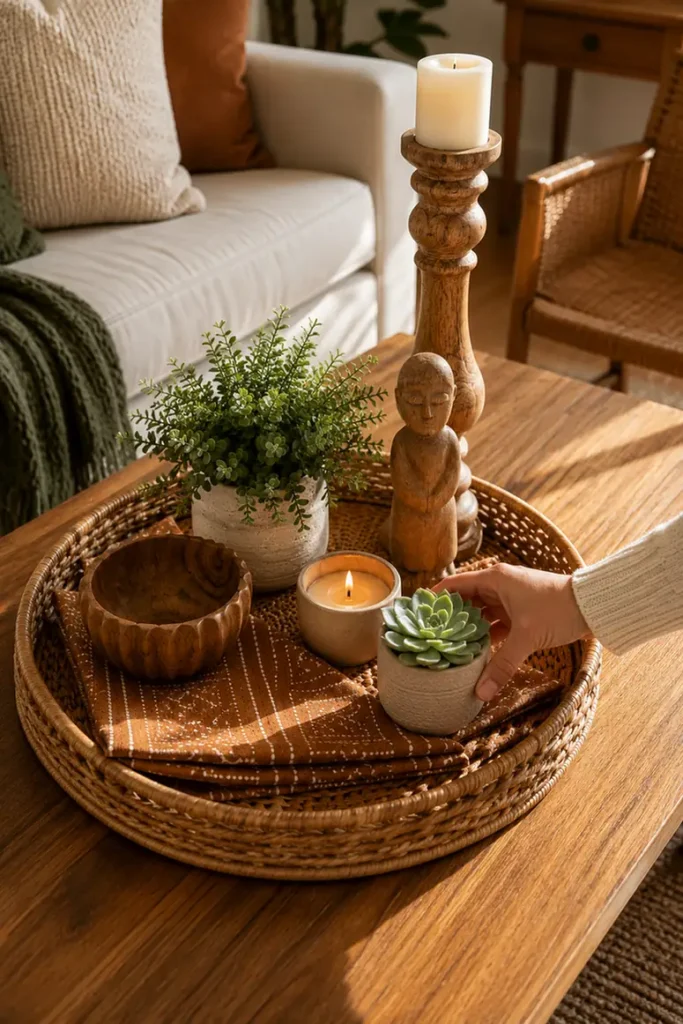
A plant is what keeps a styled table from feeling like a still life. Even a small one softens all the hard edges of books, wood, and carved objects.
A single stem in a bud vase works if you want something minimal. A small potted succulent works if you want more visual weight.
Set it at the front edge of the tray, opposite the tall piece. This balances the height you built earlier without competing with it. Faux greenery is completely fine if you do not want to keep a real plant alive on a table you rarely remember to water.
Step back and edit what you have added
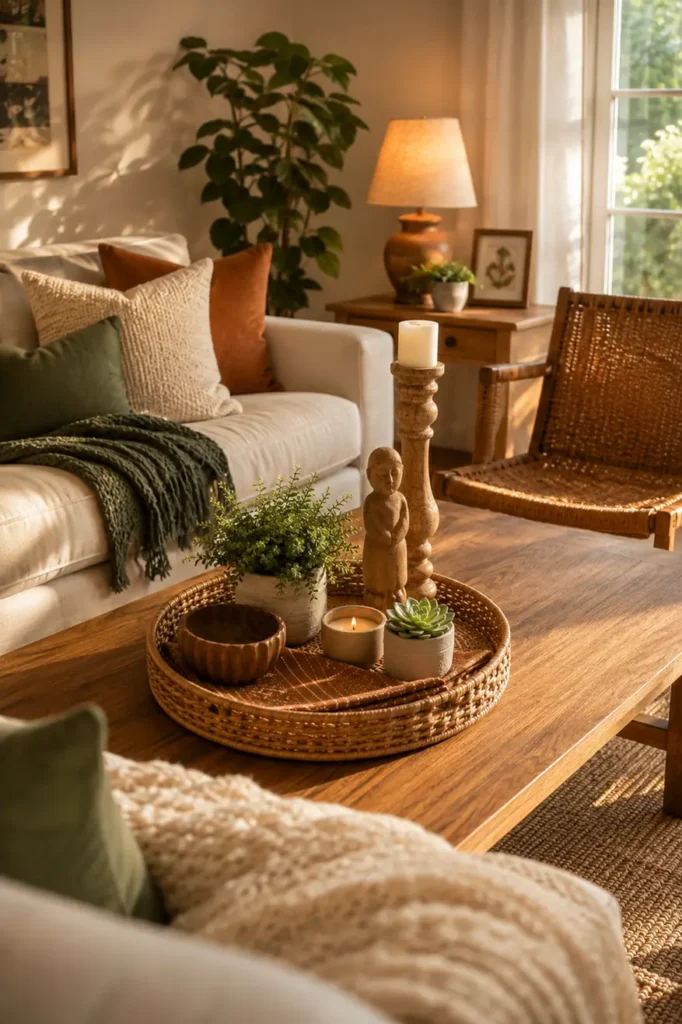
Walk to the other side of the room and actually look at the table from a distance. Styling always looks different up close than it does from the couch, where you will actually be seeing it.
Ask yourself if everything on the tray earns its spot. If one piece feels like it is only there because you happened to own it, it probably needs to come off.
Most people remove one item at this stage, not add one. That is normal, and it is usually the step that makes the whole table finally click.
That same editing instinct is what keeps an entire living room from feeling cluttered. These common Afrocentric living room mistakes that kill the vibe show exactly what to watch for when you scale this same approach up to the whole room.
Frequently Asked Questions
Do I need real African decor pieces, or can I use anything with a similar pattern?
Authentic pieces from African makers add real meaning, but a mudcloth-print throw or a carved bowl from any home store still works visually if that is what is available to you.
What if my coffee table is round instead of rectangular?
Use a round or organically shaped tray instead of a rectangular one, and keep your tall piece toward one edge rather than the true center of the circle.
How often should I restyle the table?
Every few months is plenty, or whenever the current setup starts to feel stale. Swapping the fabric runner or the greenery alone can refresh the whole look without starting over.
Can I still use a coffee table book that has nothing to do with African decor?
Yes. The book stack is doing a structural job, building height, so its subject matters far less than its size and how it looks stacked.
Quick Reference Card
Afrocentric Coffee Table Styling
Tray, 2 to 3 books, print fabric, natural material bowl or basket, tall vase or candlestick, sculptural object, greenery.
- Clear the table completely
- Set the tray off-center
- Stack books for height
- Layer in a fabric runner
- Add a natural material bowl
- Place tall piece toward the back
- Add one sculptural object
- Add greenery at the front
- Step back and remove one item
Conclusion
Your coffee table now has what most tables are missing: a plan. Tray, height, texture, and one meaningful piece, all working together instead of competing.
This same layering method works on a side table, a console, or even a nightstand the next time you want a space to feel finished instead of empty.
Once you have the coffee table handled, the next logical step is pulling the whole living room together. This step-by-step guide to decorating an Afrocentric living room shows exactly how to coordinate color, furniture, and texture before you add the finishing layers.
Save this now so you have the layering order handy the next time you rearrange your living room.