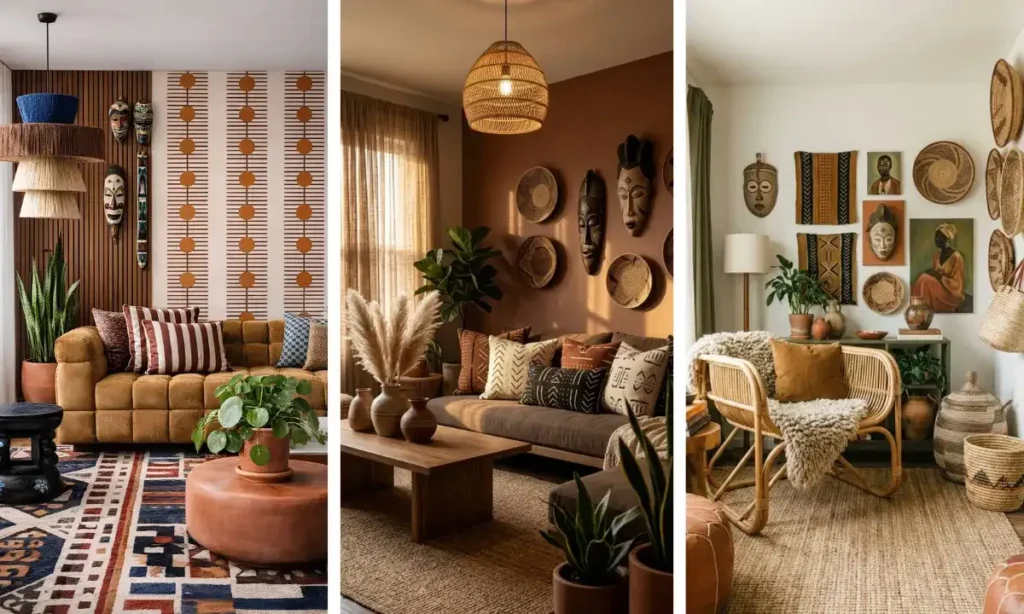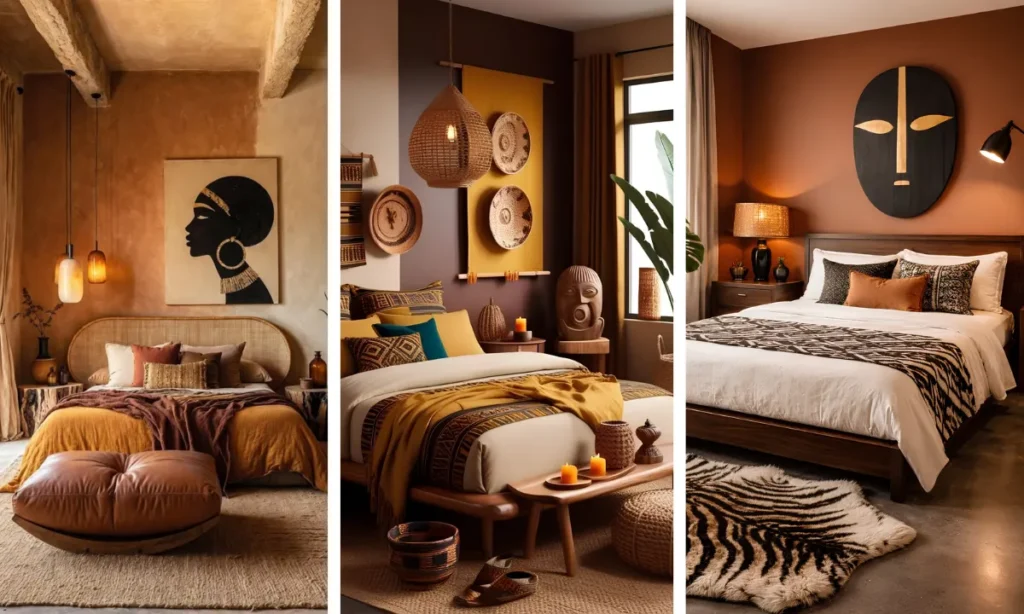
Your living room has the right pieces. The rug is bold, the art is warm, the colors feel right on paper.
But something still feels off, and you can’t quite name it.
That gap almost always comes down to a handful of small choices, not one big design failure. This guide walks through the most common Afrocentric living room mistakes to avoid, the exact fix for each one, and why each fix actually works.
None of these fixes require new furniture. Most take 15 to 30 minutes and use things you already own. A few need a small purchase, like a warmer light bulb or one extra throw pillow, but nothing drastic.
By the end, your room will feel intentional instead of assembled. Grab a notepad, walk through your space as you read, and fix each mistake as you spot it.
🧰 What You’ll Use to Fix These
Tap each box as you gather it. Most rooms already have 5 of these 8.
👀 At a Glance: 7 Mistakes to Fix
- Stop pushing every piece against the wall
- Avoid mixing more than three bold patterns at once
- Fix lighting that is too cool or too harsh
- Stop scattering art without a focal wall
- Balance wood tones instead of clashing them
- Avoid skipping texture in favor of only color
- Stop treating textiles as an afterthought
Stop Pushing Every Piece Against the Wall
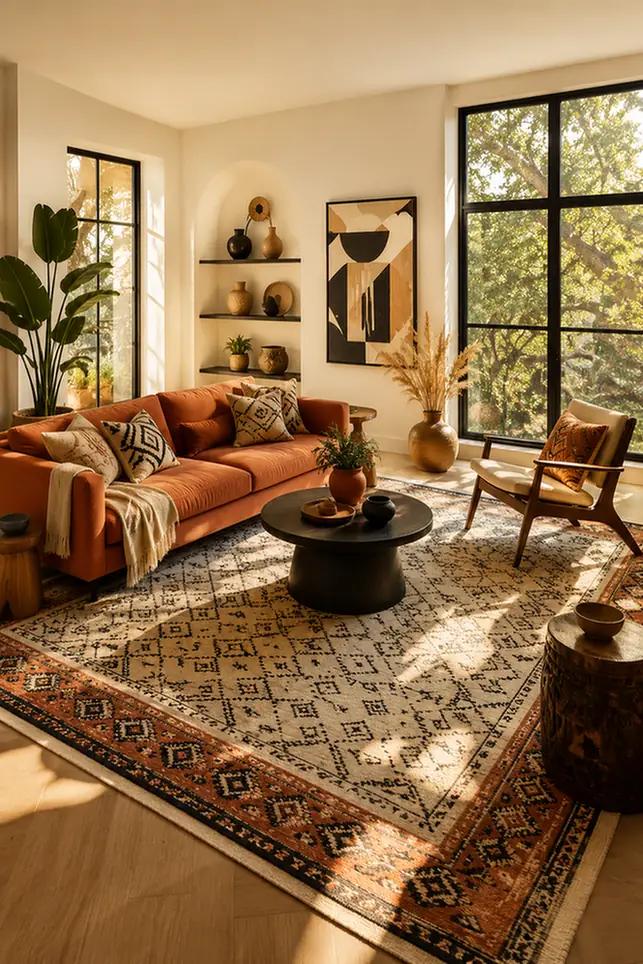
It feels safe to line every sofa and chair against the walls. It also flattens the room and kills any sense of gathering.
Pull your sofa 3 to 4 inches off the wall. Angle one chair slightly toward the center instead of facing it dead straight ahead.
Leave a walking path of at least 30 inches between furniture pieces. This one shift makes patterned rugs and layered textiles read as a designed space instead of a showroom floor.
⚠️ Heads Up
If your room is small, don’t pull furniture out just to match a photo. Anything under 120 square feet should stay close to the walls, just angled instead of flat.
Avoid Mixing More Than Three Bold Patterns at Once
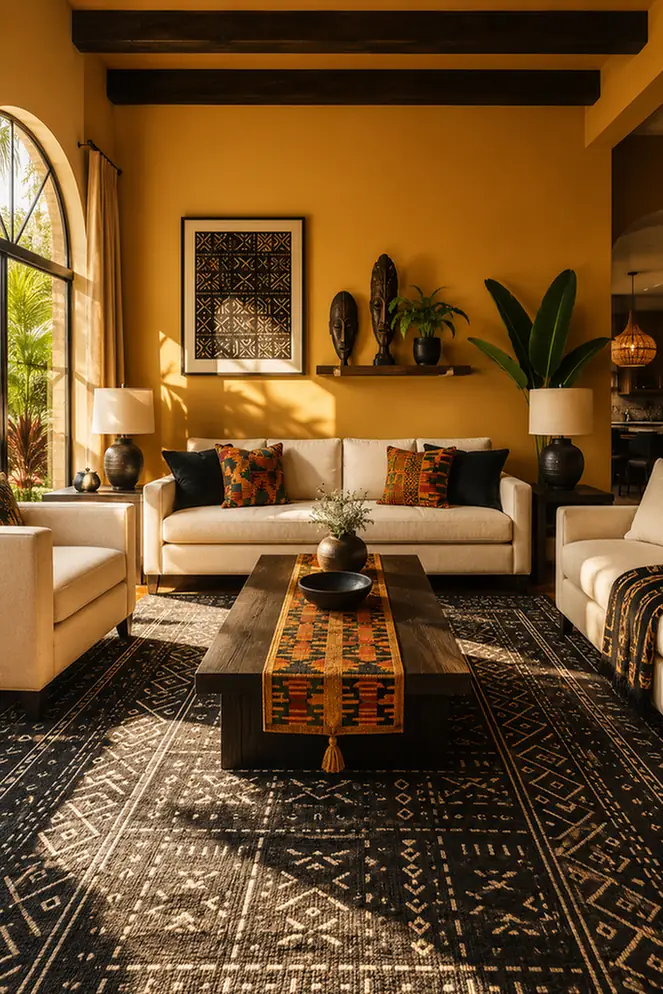
Bold pattern is the heart of Afrocentric styling. Too much of it at once turns a room busy instead of rich.
Pick one large-scale pattern, like a mudcloth rug. Add one medium pattern, like kente-print pillows.
Then choose one small pattern, like a printed table runner or basket weave. Anything beyond those three should be a solid color or a plain texture.
💡 Pro Tip: Tap for the quick pattern-scale test
Stand at the doorway and squint at the room. If your eye can’t find a clear resting spot within **2 seconds**, you have one pattern too many. Swap the smallest one for a solid.
Fix Lighting That Is Too Cool or Too Harsh
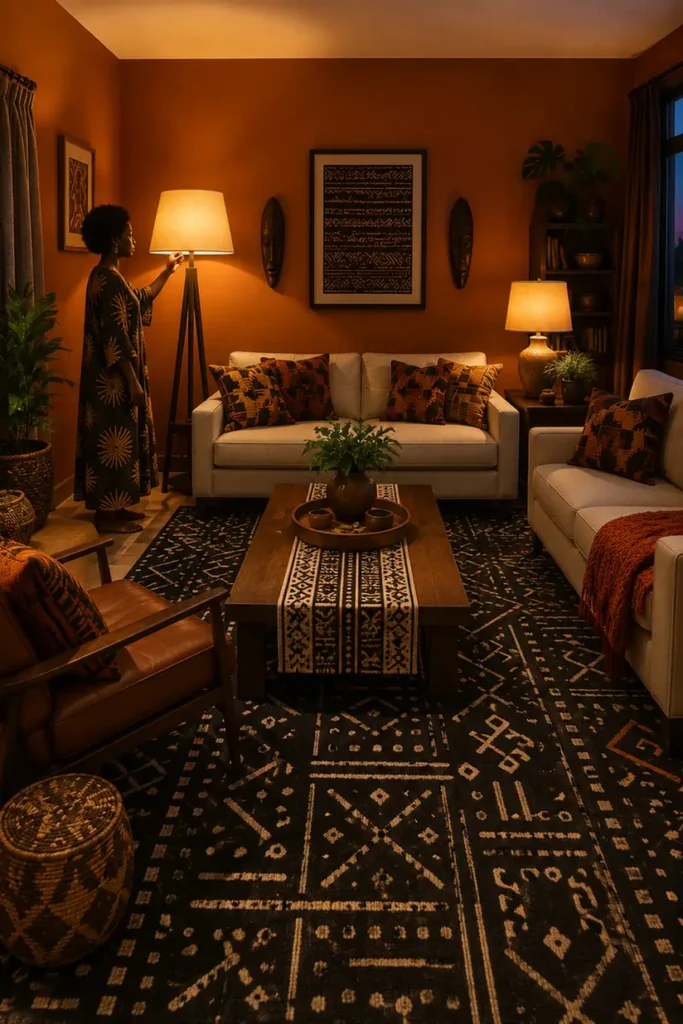
A single overhead bulb at 5000K washes out warm terracotta and rust tones fast. This is the single most underrated fix on this list.
Swap your main bulbs for 2700K to 3000K warm white. Add a floor lamp in one corner and a table lamp near the seating area.
Three separate light sources at different heights do more for warmth than any new decor piece. Turn off the overhead entirely some evenings and rely only on the lamps.
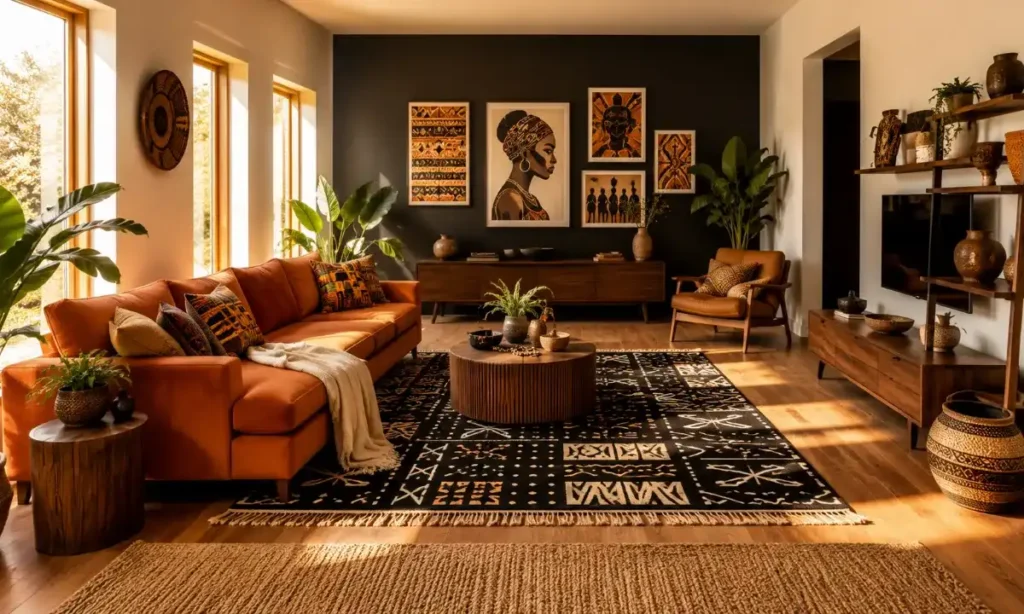
Stop Scattering Art Without a Focal Wall
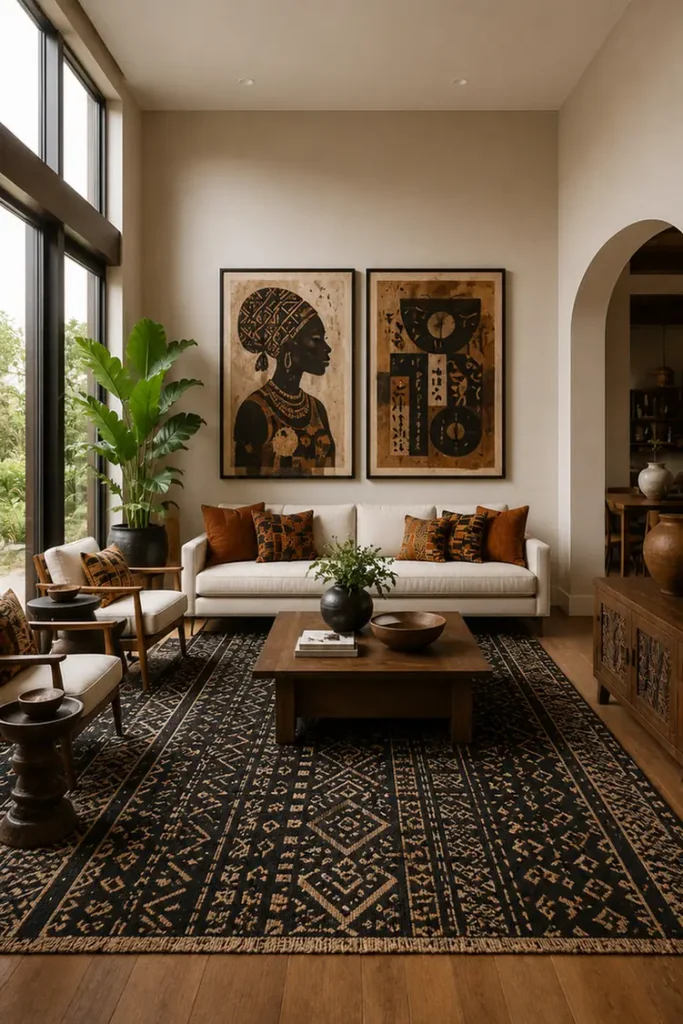
Three small frames on one wall, one canvas on another, a mask by the window. Nothing wrong with any single piece, but together they compete instead of cooperate.
Pick one wall behind the sofa or facing the entry. Group your strongest 2 to 3 pieces there, leaving the other walls mostly bare or holding just one small item.
A room with one clear focal wall photographs better and feels calmer to sit in, even with the exact same art you already own.
💡 Pro Tip
Hang your largest piece at 57 inches to its center, the standard eye-level height used in galleries. Everything else clusters around it.
Balance Wood Tones Instead of Clashing Them
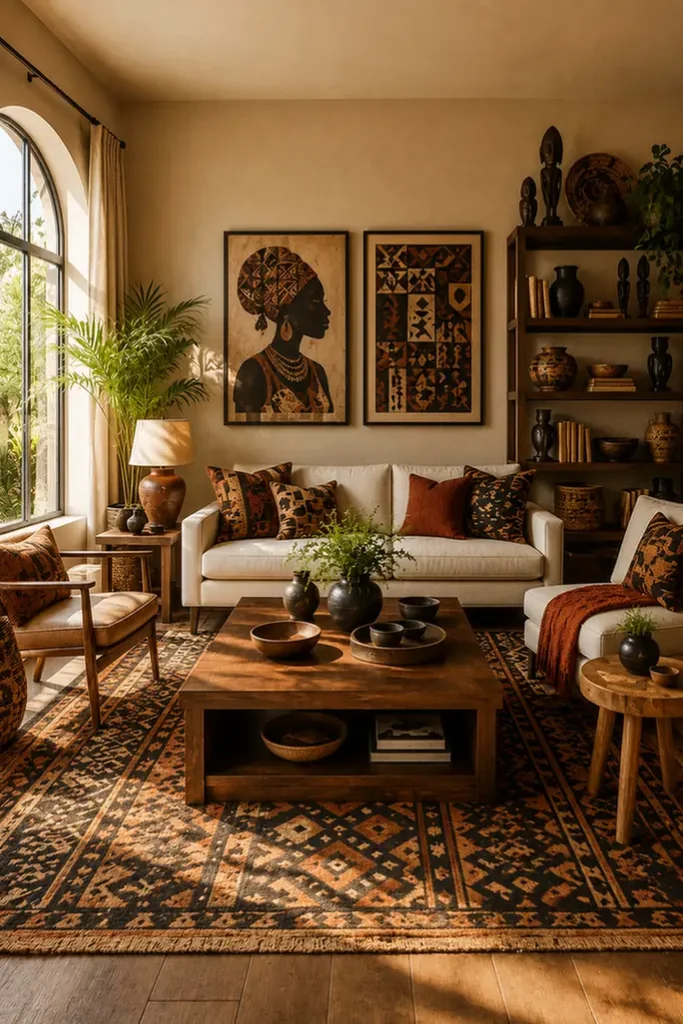
Four different wood tones in one room read as accidental, not layered. A dark walnut coffee table next to honey oak shelves next to a black-stained media console fights itself.
Pick one dominant wood tone to anchor the room, usually your largest piece like a coffee table or shelving unit. Let one secondary tone appear in smaller pieces, like a side table or picture frames.
Keep any third wood tone to something small, like a tray or a stool. If you already own clashing pieces, a wood stain pen can bridge two tones in under 10 minutes per spot.
Avoid Skipping Texture in Favor of Only Color
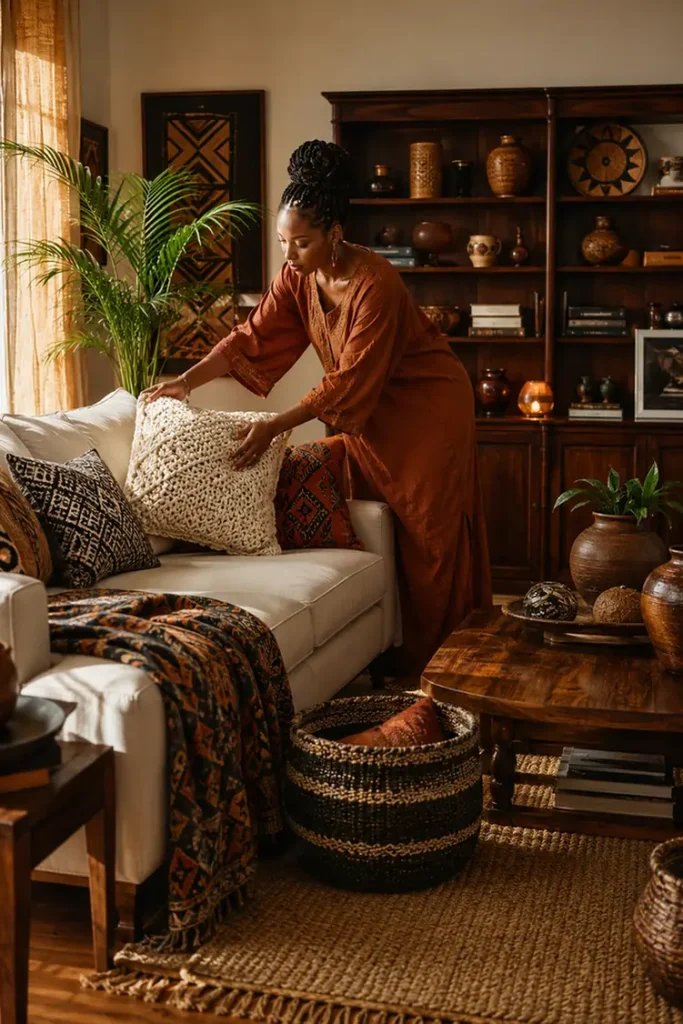
Color carries a lot of the Afrocentric look, so it’s tempting to stop there. A room with only flat color, even the right color, still feels a little unfinished.
Layer in texture the room is currently missing:
- A woven basket in a corner
- A jute or sisal rug underneath a patterned one
- A raw wood stool or bench
- A knit or bouclé throw pillow
Texture is what makes a photo of a room feel touchable instead of printed. Aim for at least three different textures visible from the main seating spot.
Stop Treating Textiles as an Afterthought
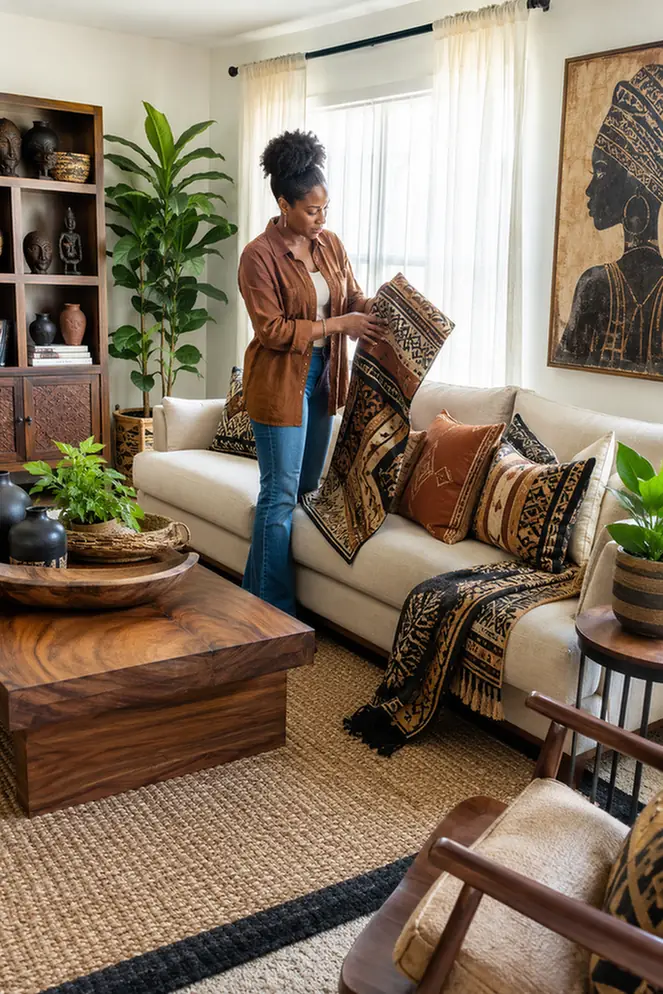
Textiles get added last, almost always as an afterthought once the “real” furniture is in place. That order shows.
Textiles carry pattern, color, and warmth all at once, so they deserve to be planned early, not grabbed last-minute from whatever throw was on sale.
Choose your rug first, before anything else in the room. Let your pillow and throw colors pull directly from it, rather than picking pieces that only sort of match. Wash and steam any secondhand textiles before styling them; stiff or musty fabric never drapes right, no matter how good the pattern is.
⚠️ Heads Up
Don’t wait until the room is “finished” to add textiles. Rooms styled textiles-last usually end up needing a full pillow and throw swap within a few months.
❓ Common Questions
Do I need to buy new furniture to fix these mistakes?
No. Every fix here uses furniture and decor you likely already own, just rearranged, restyled, or relit.
What if my room is too small to pull furniture off the wall?
Angle the pieces instead of pulling them out. Even a slight angle breaks the stiff, lined-up look in small spaces.
How many patterns is actually too many?
More than three distinct pattern scales in one sightline usually reads as cluttered. Stick to large, medium, and small.
What’s the fastest fix on this whole list?
Swapping to warm bulbs. It takes under 10 minutes and changes how every other color in the room reads.
Can I fix all seven mistakes in one weekend?
Yes. Most of these fixes take **15 to 30 minutes** each, so a full pass fits easily into one afternoon.
📌 Quick Reference Card
What You Need
Tape measure · Warm bulbs (2700K-3000K) · Fabric swatches · Floor lamp · Statement art · Wood sample chips · 2 textured pillows · Basket or plant
The 7 Fixes
- Pull furniture off walls, angle one chair
- Limit to 3 pattern scales max
- Swap to 2700K-3000K bulbs, add lamps
- Group art on one focal wall
- Pick one dominant wood tone
- Layer in 3+ textures
- Choose textiles first, match everything to them
Conclusion
Your living room now has a plan, not just pieces. Seven small shifts, and the whole room reads as intentional instead of assembled.
None of this required buying a single new piece of furniture. A few bulbs, a little rearranging, and choosing what to see first when you walk in.
Pick one fix and start today. The lighting swap alone will change how every other color in the room feels tonight.
Save this guide to your afrocentric living room mistakes to avoid board so you can walk through each fix room by room this weekend.