Small living rooms ask a lot of you.
They have to seat guests, hide the clutter, catch the daylight, and still feel like home.
That’s a big job for a few hundred square feet.
The good news: farmhouse style suits tight rooms. It leans on honest materials, soft light, and pieces that earn their place.
If you’re hunting for farmhouse living room ideas for small spaces, you’ve probably hit one of these walls:
- The room feels crowded the minute the sofa arrives
- Everything you own has nowhere to go
- Adding character makes it look smaller, not bigger
This list is for exactly that.
Every idea was chosen for a tight footprint, from quick swaps you can finish in an afternoon to bigger moves worth saving for.
Take what fits your room. Skip what doesn’t.
1. Quiet Color, Loud Texture
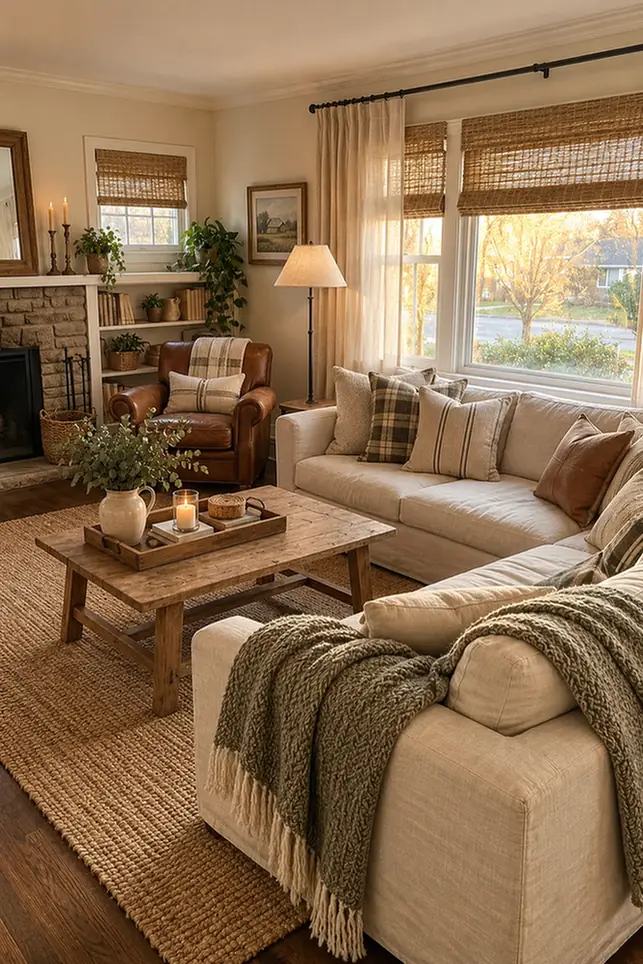
A small room can only hold so many opinions.
Give it one pale color family and let the materials do the talking. The eye stops sorting, and the room reads wider than it is.
Variety comes from the touch of things:
- Rough beside smooth
- Chunky beside fine
- Matte beside a little shine
Swap the soft pieces each season. The big ones stay put.
pale and quiet
earthy support
one dark anchor
2. Go Up, Not Out
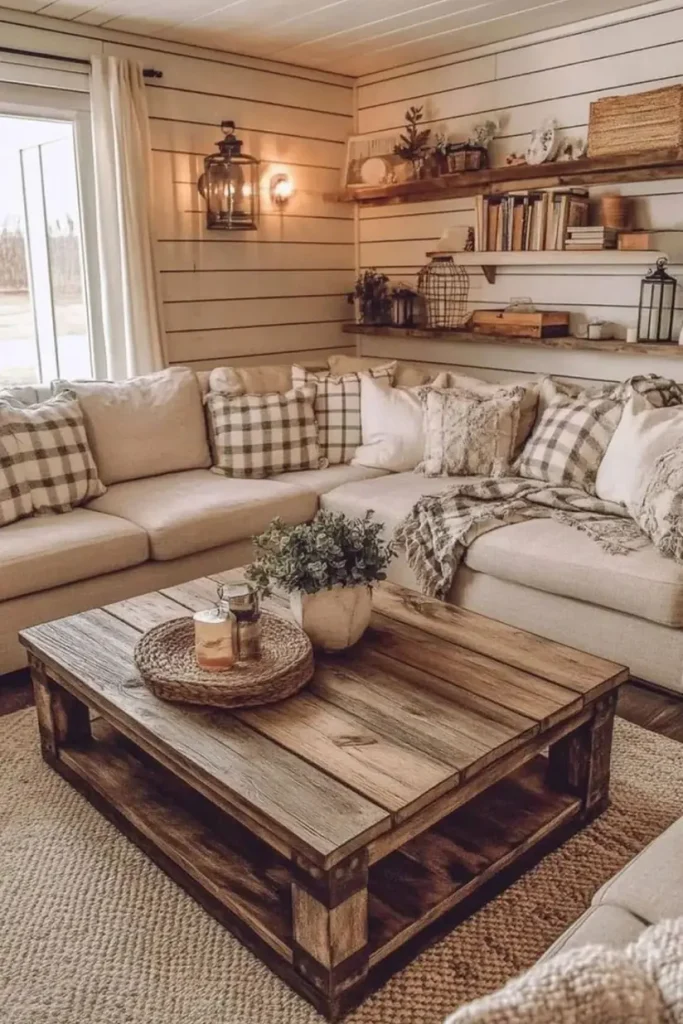
Small rooms rarely need less stuff.
They need it off the floor.
Here the corner does the heavy lifting. Storage and display climb the walls in staggered tiers, so the seating keeps every inch it has.
Open tiers also force you to edit, which a small room quietly needs.
One caution: anything mounted high needs a proper wall anchor, so check before you hang.
3. Pieces That Pull Double Duty
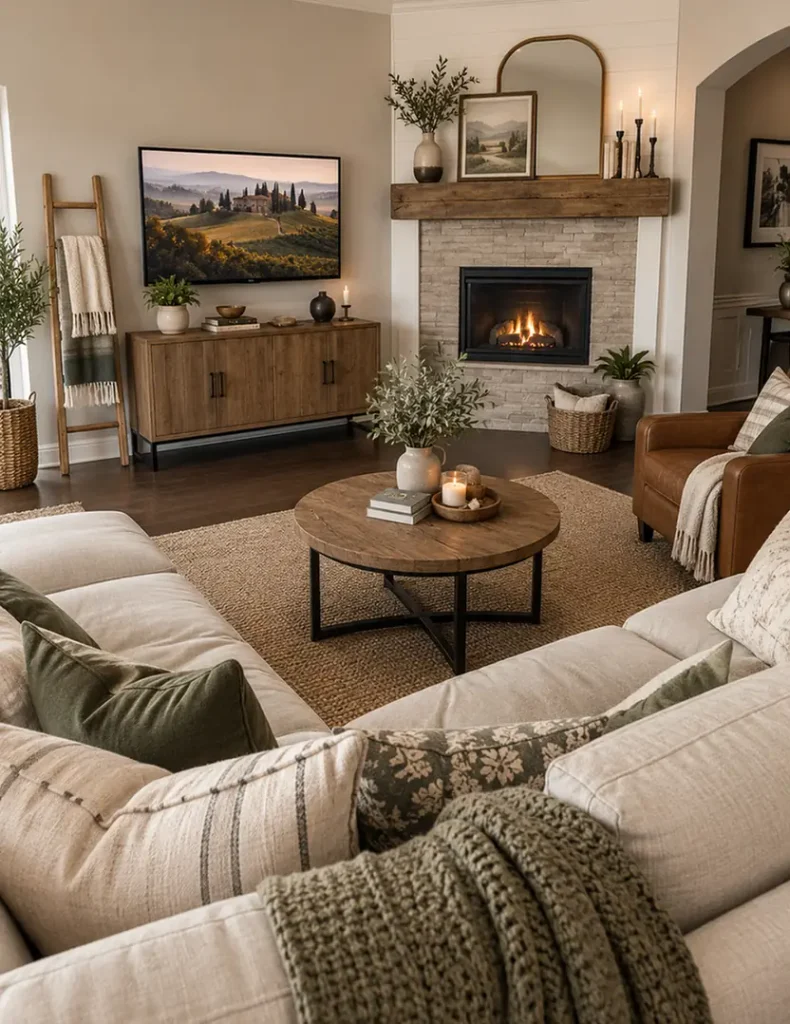
One job per piece fills a small room fast.
A table holds things. A chair holds a person. Then a guest arrives with nowhere to set a drink.
Here, every piece works two shifts:
- Seats someone, then holds their drink
- Stores a throw, then softens a hard edge
- Stays put all week, then slides aside in one lift
Buy fewer pieces. Ask more of each.
4. Repeat Yourself On Purpose
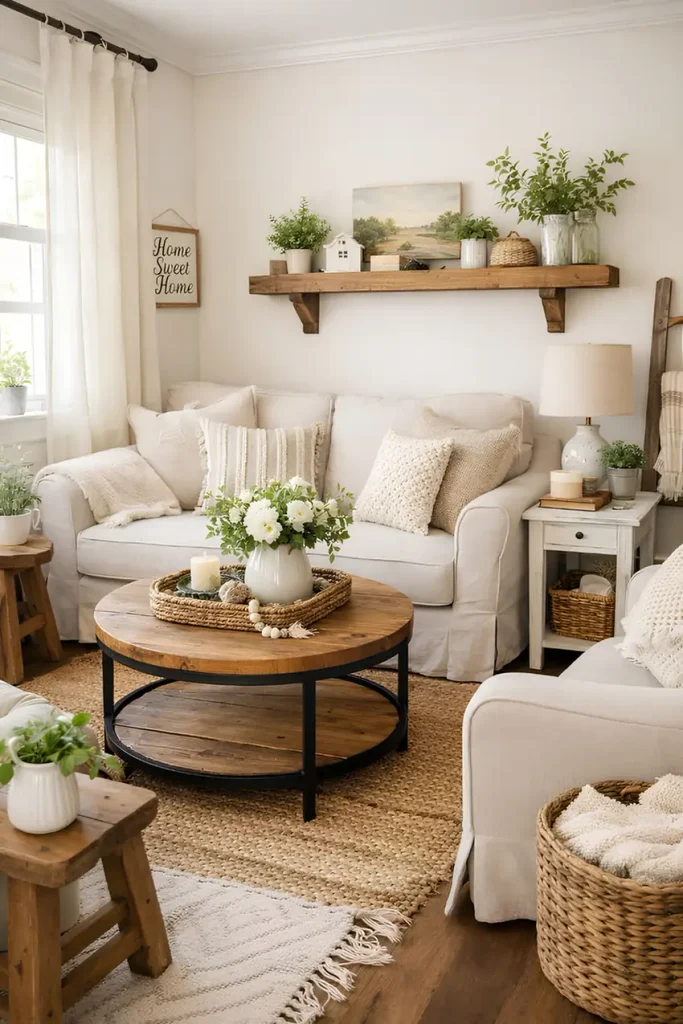
Clutter is usually variety with no plan.
Repeat something instead, and the eye reads one big idea, not twelve small ones.
That’s the logic behind a matched set of frames over the sofa. It also runs through the whole room, in the same weave, the same wood tone, and the same muted green turning up again and again.
Small rooms can carry a lot if the things rhyme.
Repeat three things. Vary one.
Match the frame, the height and the gap. Change only the picture, and the set looks collected instead of bought.
5. Let One Wall Lead
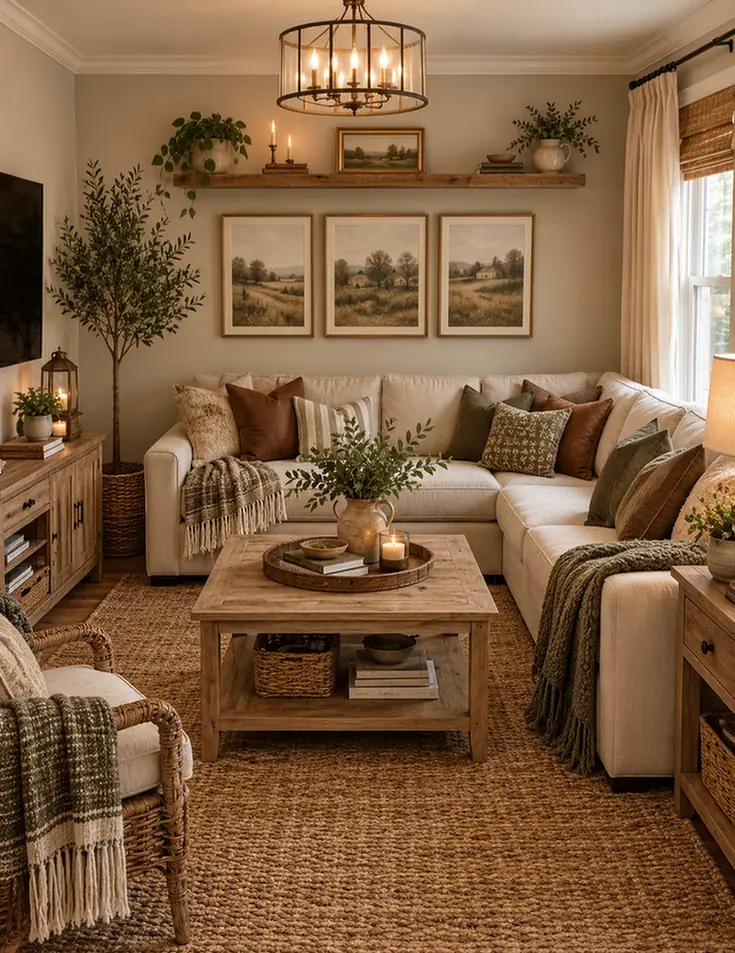
Every wall wants a spotlight. A small room can only afford one.
Here, the fireplace takes it. Stone, timber, and a little firelight pull the eye over once, and it rests.
Everything else steps back, which is why the room feels bigger than it is.
To copy the idea:
- Pick the wall you see first from the door
- Put the drama and the glow there
- Keep the other walls quiet
A room with one real feature, like a hearth, a built-in or a big window.
A wall with no doors cutting into it.
Rooms where every wall is a doorway or a window.
A feature that ends up behind the sofa.
6. Swap Art, Skip Holes
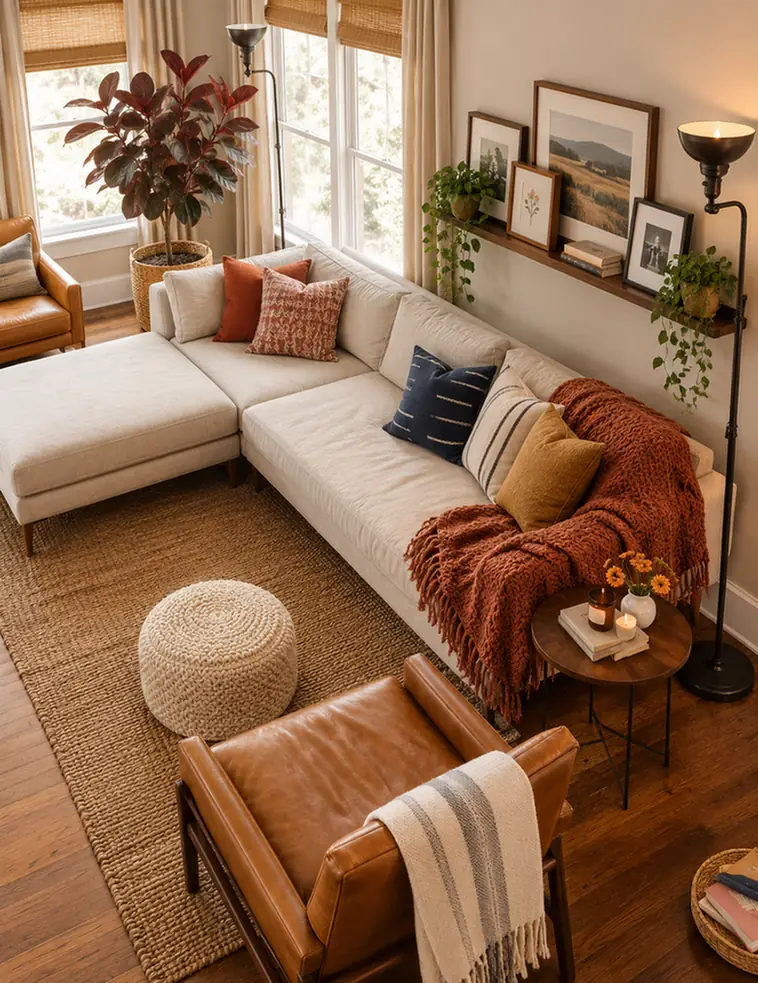
Every nail you drive is a promise.
A long, narrow ledge along the sofa wall skips it. Frames lean, overlap and trade places whenever the mood shifts.
Rentals love it. So does anyone who rearranges on a whim.
Let a trailing plant spill off one end, and the wall reads relaxed instead of fixed.
The smallest frame, or a leafy trailer.
Medium frames, overlapping just a little.
The biggest piece, leaning against the wall.
7. Rooms That Forgive Mess
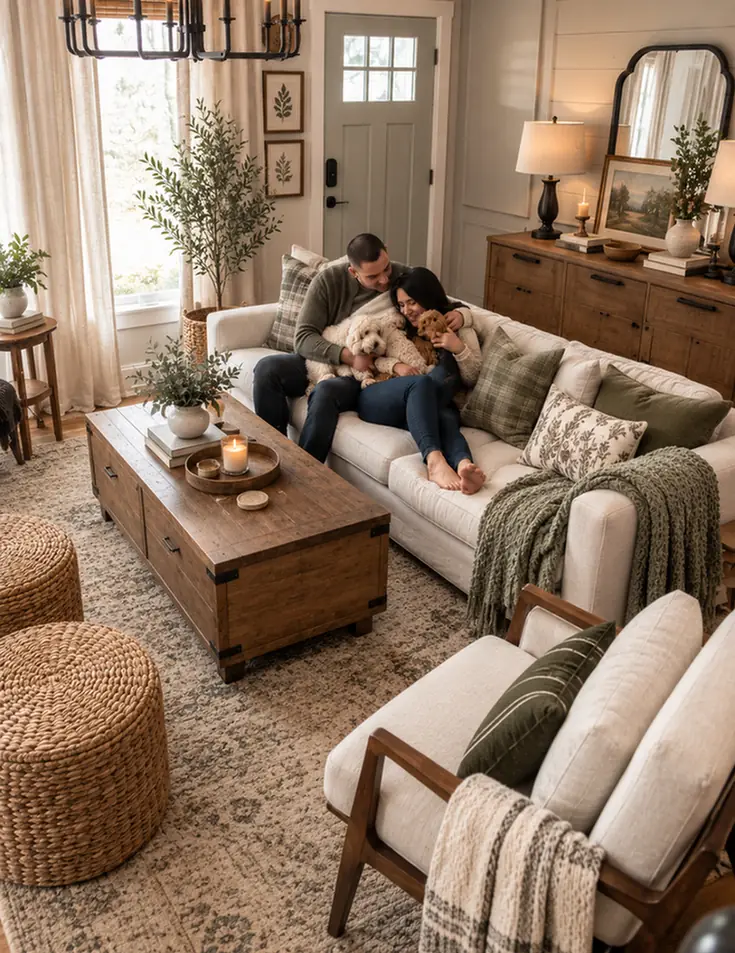
A small room with pets, kids or a roommate takes a beating.
So choose finishes that look better with a few scuffs. Rooms that forgive mess share three habits:
- Wood that already has character
- Fabrics you can wash or brush clean
- Patterns that hide the daily crumbs
Then nobody has to tiptoe in their own living room.
Rub a fabric hard with a dry palm before buying. If it pills or sheds right there, it won’t survive a sofa.
Chunky loops on the sofa. Claws hook in, and the snag spreads. Keep loops to a throw you can fold away.
8. Daylight Is Free Square Footage
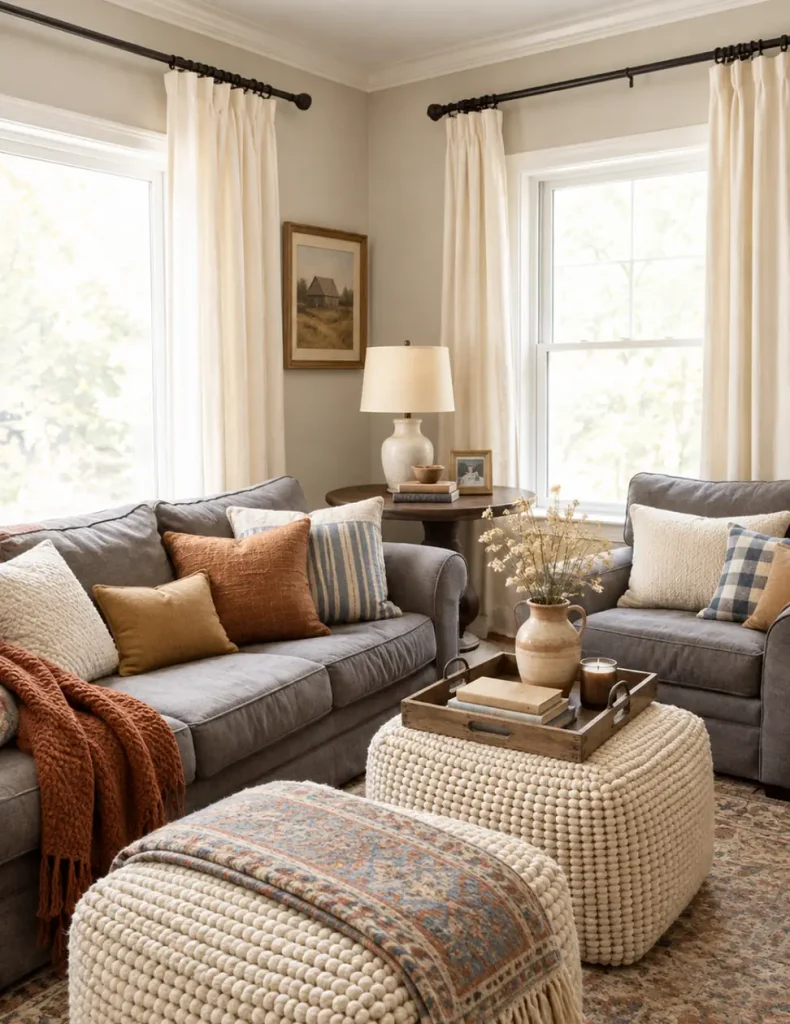
Windows are the one thing you can’t buy more of.
So make the ones you have look bigger.
Hang the rod close to the ceiling and run it wider than the frame. The glass stays fully clear, the walls look taller, and the curtains frame the light instead of eating it.
Pick pale, loose fabric. Let the sun do the decorating.
▸ Ceiling to floor, so the hem skims the ground without dragging.
▸ Wall left on each side, so the stacked fabric parks off the glass.
▸ Where midday glare lands. Sheers filter light but won’t stop a bright screen.
9. Closed Below, Open Above
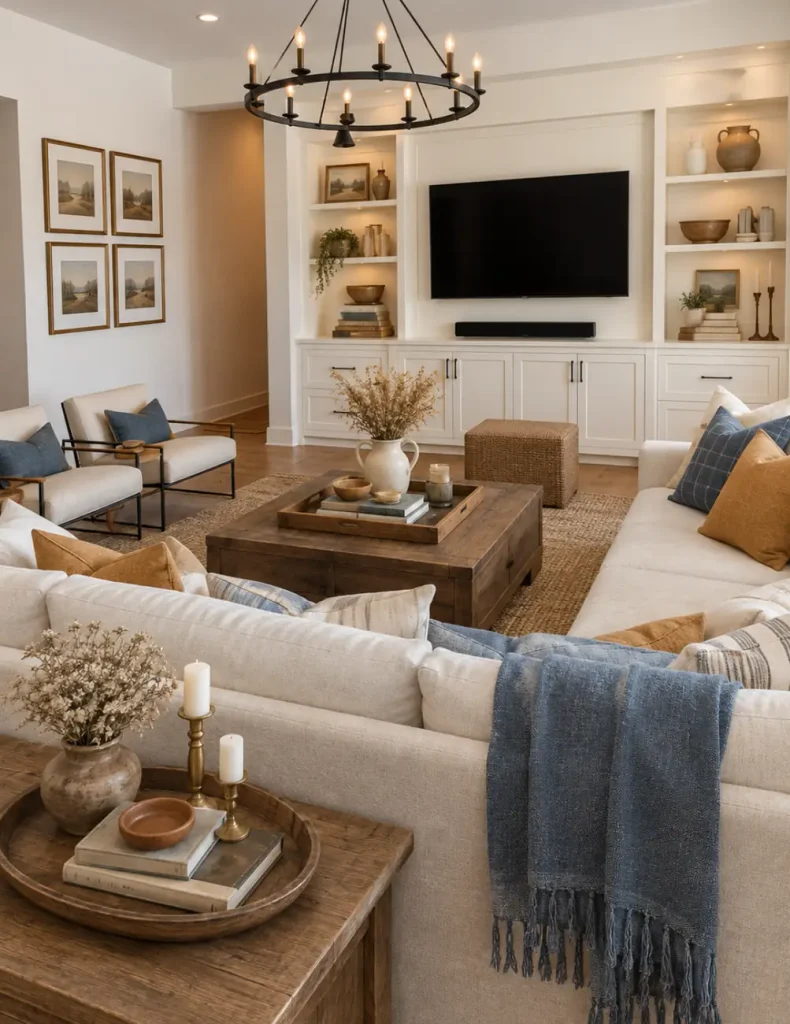
Built-in walls look like a luxury, but they run on one simple rule.
Hide the messy stuff low. Show the good stuff high.
Doors take the remotes, cords, and spare blankets. Open shelves get only what’s worth looking at, with a small light tucked in.
Try it on any wall:
- Sort what lives there into “ugly but needed” and “nice to see”
- Give the first group doors
- Give the second group shelves
Cabinet doors that close flush. They’re what hides every cord, so they carry the whole wall.
Whatever sits on the shelves. Thrifted bowls and old frames look collected, not bought.
10. Anchor The Room With Pattern
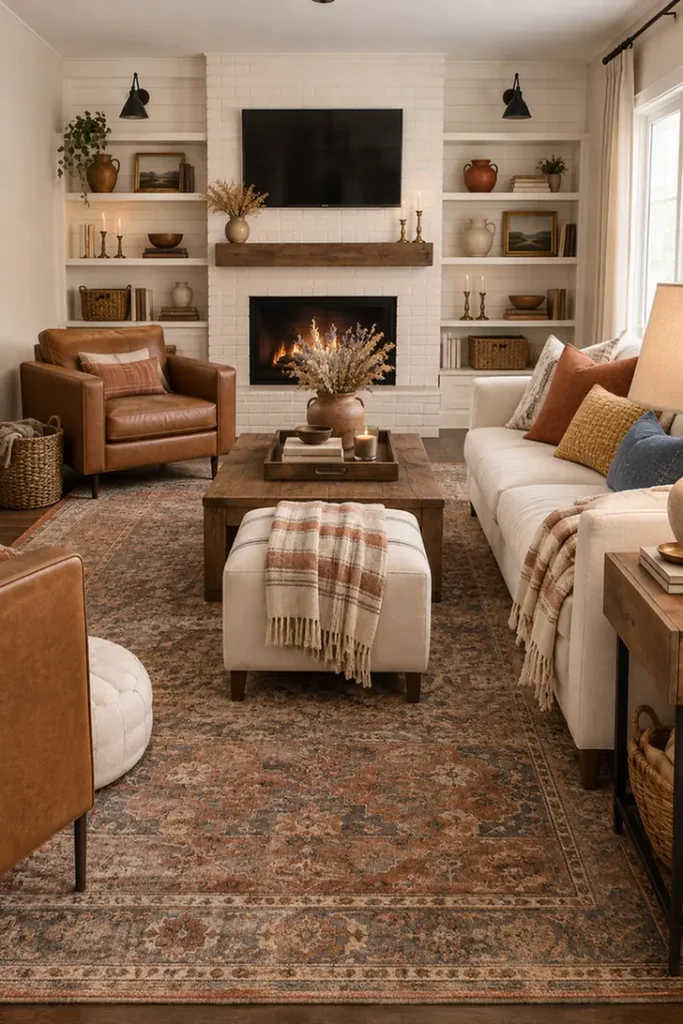
Small rooms tempt us to buy a small rug.
Don’t.
A big, busy rug pulls every seat onto one island, so the floor stops chopping the room into pieces. The pattern hides wear too, which means it earns its keep.
Aim for the front legs of the sofa and chairs to rest on it.
Still unsure? Tape the outline on the floor and live with it for a day before you buy.
11. Float The Sofa, Gain A Surface
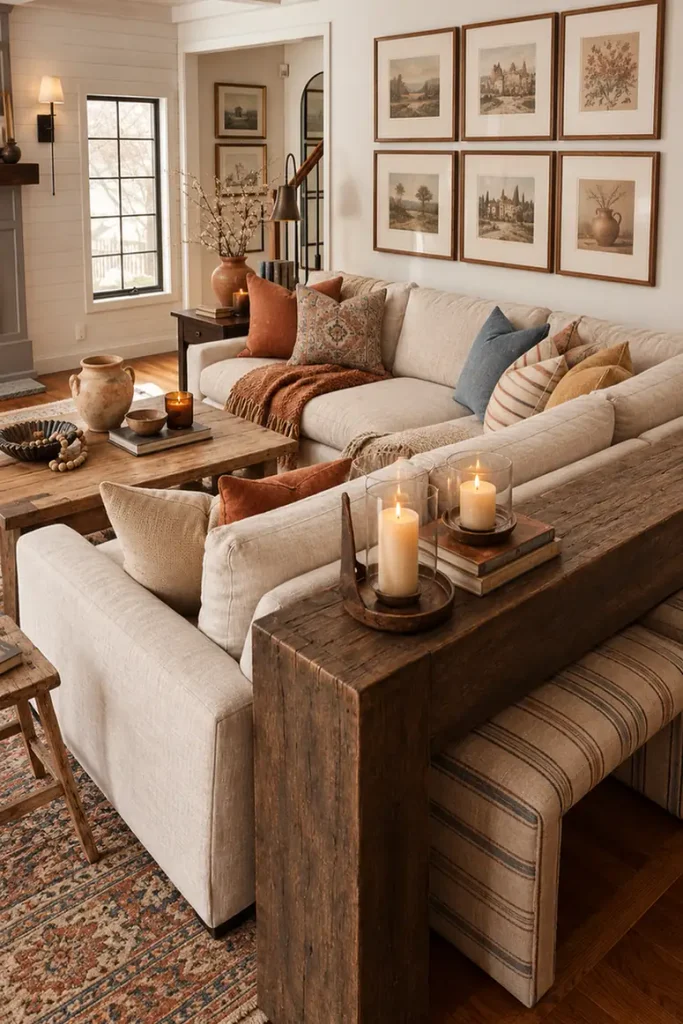
Pull the sofa off the wall, and the room suddenly has a back.
Here the sectional floats, and a chunky console runs behind it like a low wall. It splits one open room into zones with no partition at all.
The top becomes the surface a small room never gets. Tuck benches underneath, and you’ve added seats that cost no extra floor.
Leave a walkway wide enough for two people to pass without turning sideways.
12. Lift The Eye Upward
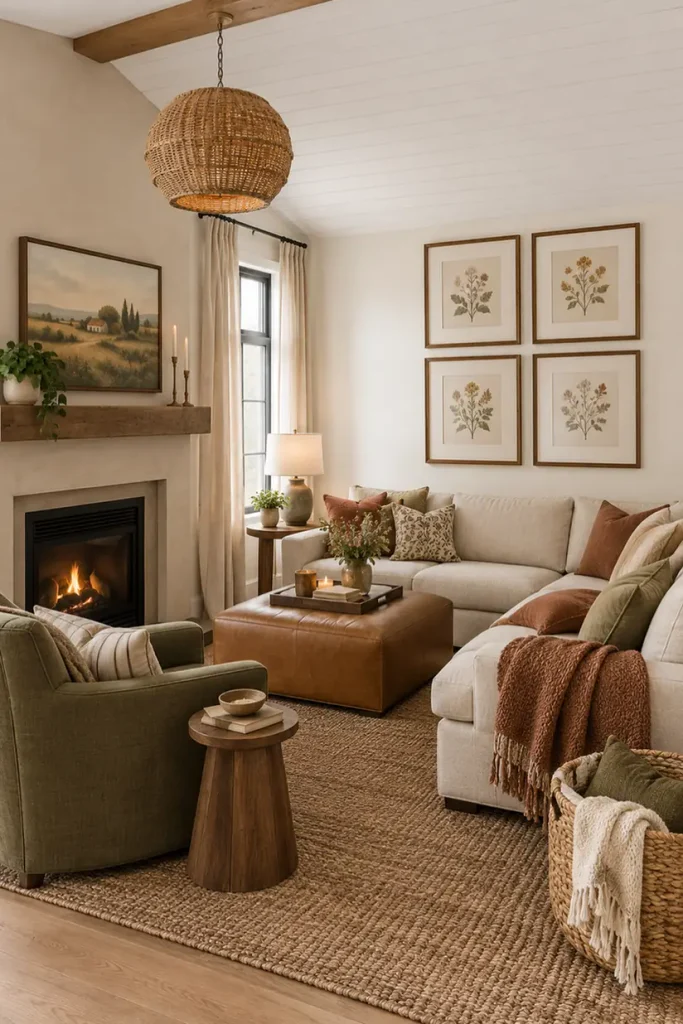
Floor space is fixed. Ceiling space is not.
When the footprint is small, borrow height. Three moves draw the eye up:
- A pale overhead surface that bounces light
- One strong beam to run a line across
- A single big light hung low enough to matter
Heavy fixtures go into the framing, never just the drywall.
Conclusion
A small room isn’t a shrunken big one.
It’s a different puzzle, and it rewards people who stay curious.
You don’t need to try everything at once. Start with the idea that fits how you actually live, then let the room tell you what’s next.
If one of these made you look at your own living room differently, save it to your Pinterest board so it’s there when the mood strikes.
Small rooms can feel generous. They just need a plan.