A desk with no drawers turns into chaos by day two.
Pens roll off with every turn, cords tangle under the laptop, and paper ends up wedged wherever there’s a gap. Most desk organizers aren’t built for a space that moves.
Rv office supply storage ideas usually assume a drawer is available. Tiny rigs don’t offer that luxury.
Every idea here works with wall space, cabinet doors, seat cushions, and the underside of the desk itself. Nothing needs permanent damage, and nothing needs a full renovation weekend, though a couple of the sturdier setups are worth a Saturday afternoon.
What ties them together: everything stays put once the rig starts moving, and the desk surface stays clear enough to actually work at.
Here are 12 ways to get there.
1. Pegboard Above The Desk
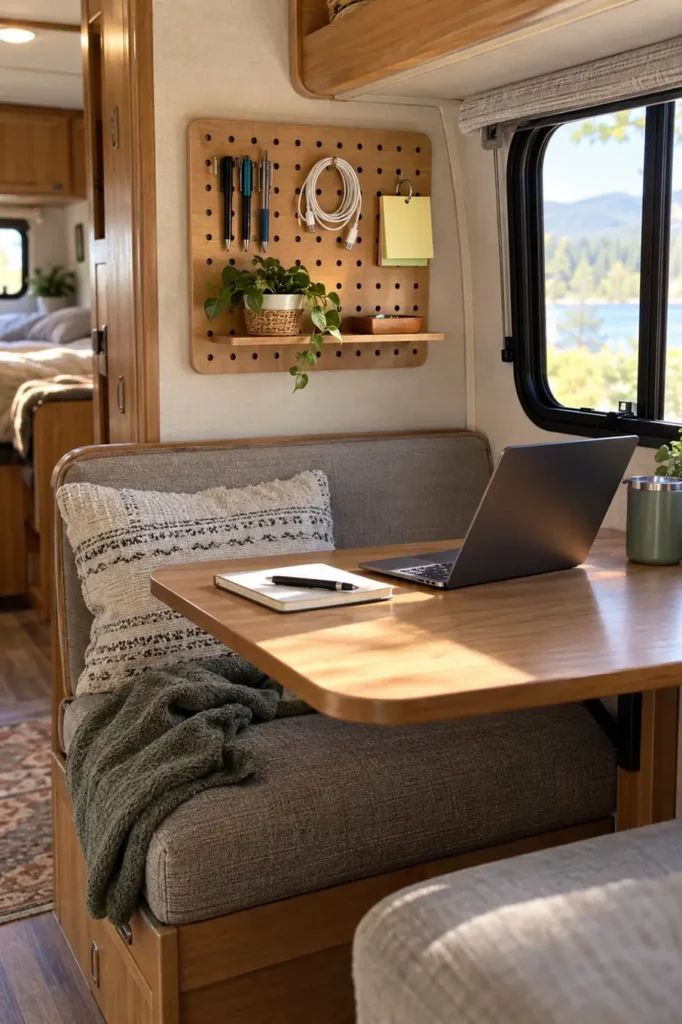
A dinette desk with no drawers turns into a dumping ground fast.
Mount a small pegboard above the workspace with Command strips instead of screws, and the surface finally has somewhere else to send things. Pens hang on S-hooks, the charger cord loops over a peg, and sticky notes clip to a binder ring.
Nothing has to shift once the rig starts moving, since everything is off the desk and hooked in place. Skip anything heavier than a notebook or two though, since Command strips have a weight limit and a loaded pegboard can peel off a curved RV wall over time.
2. Under-Desk Slide-Out Tray
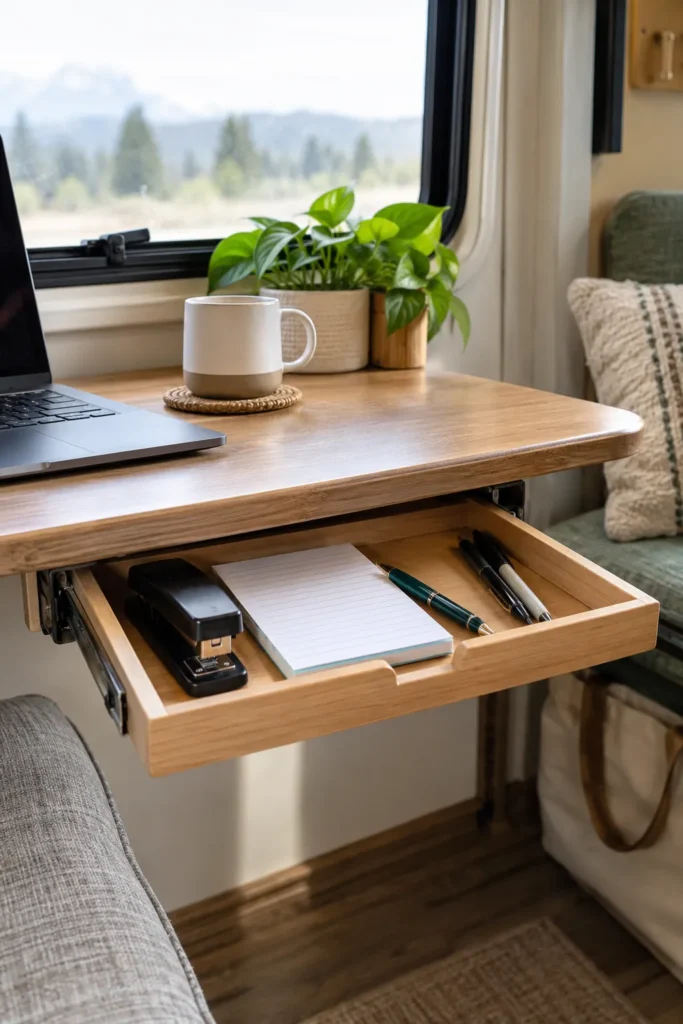
Hiding supplies under the desk keeps the surface clear without adding a single visible box.
Screw a shallow drawer slide to the underside of the desk overhang, then attach a small tray to it. Pull it out to grab supplies, push it back in and everything disappears again.
A stapler, a notepad, and a handful of pens fit easily without ever touching the desktop.
It’s a weekend project, not a five minute one. Renting the rig? Skip the screws and hook a slide-out basket over the shelf lip instead, no drilling needed.
▸ Depth of the desk overhang, so the slide has something solid to anchor into.
▸ Full extended length of the slide against your legroom, so it doesn’t hit your knees.
▸ Tray height against the desk clearance, so it still tucks flush when closed.
3. Ottoman That Hides Paper
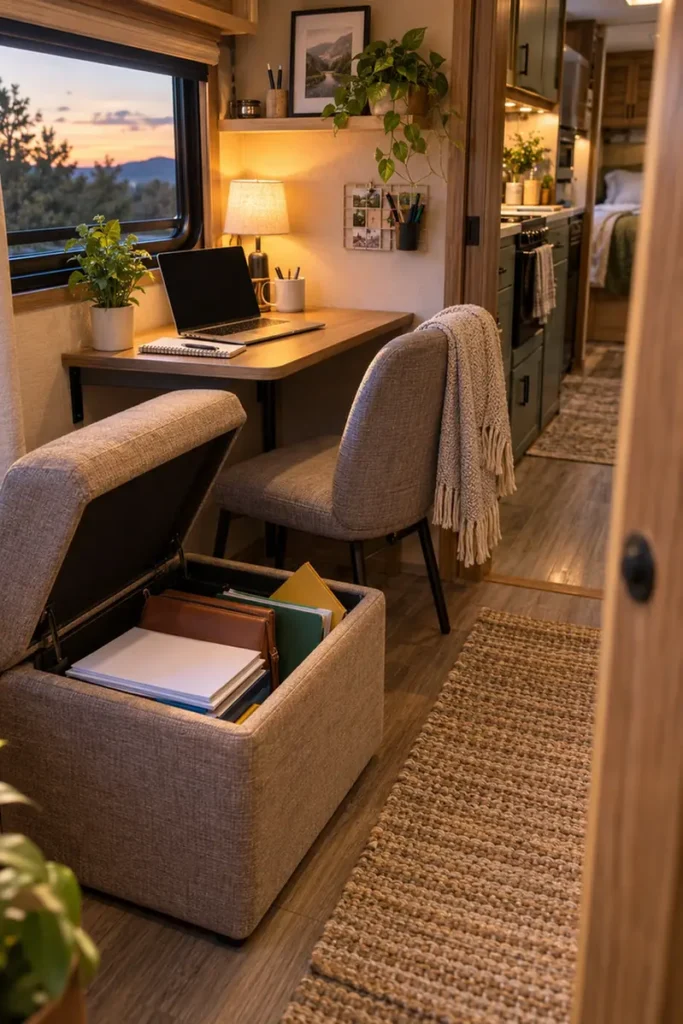
Where does a ream of printer paper live in a rig with no closet? Under the seat cushion, if that seat happens to be a storage ottoman with a flip up lid.
Printer paper, a stack of folders, and a spare notebook slide right inside, and the top still works as extra seating when someone visits.
No more digging through a cabinet before a print job. It’s already sitting under whoever just sat down.
4. Cable Clips Down The Edge
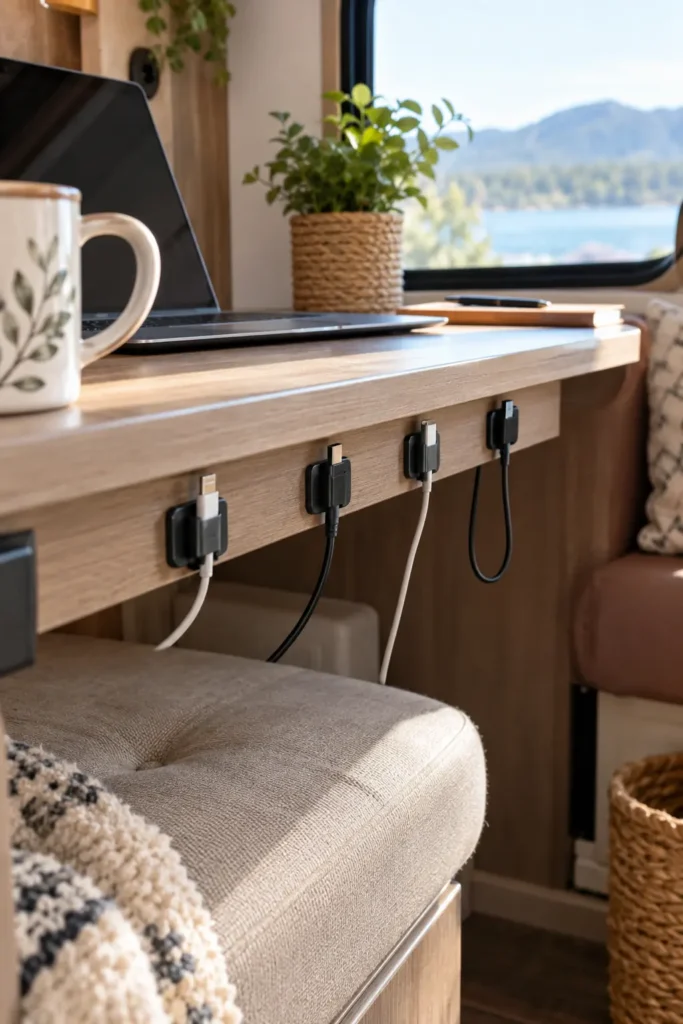
Chargers and cords are the one thing that always end up in a tangle by the time you sit down to work.
Run a strip of small adhesive cable clips along the underside of the desk edge, and each cord gets its own lane instead of one messy pile. Laptop charger on one side, phone cable on the other, headphones clipped in the middle.
Nothing drags on the floor, nothing gets stepped on, and nothing shakes loose on a rough road.
5. Acrylic Caddy On Command Strips
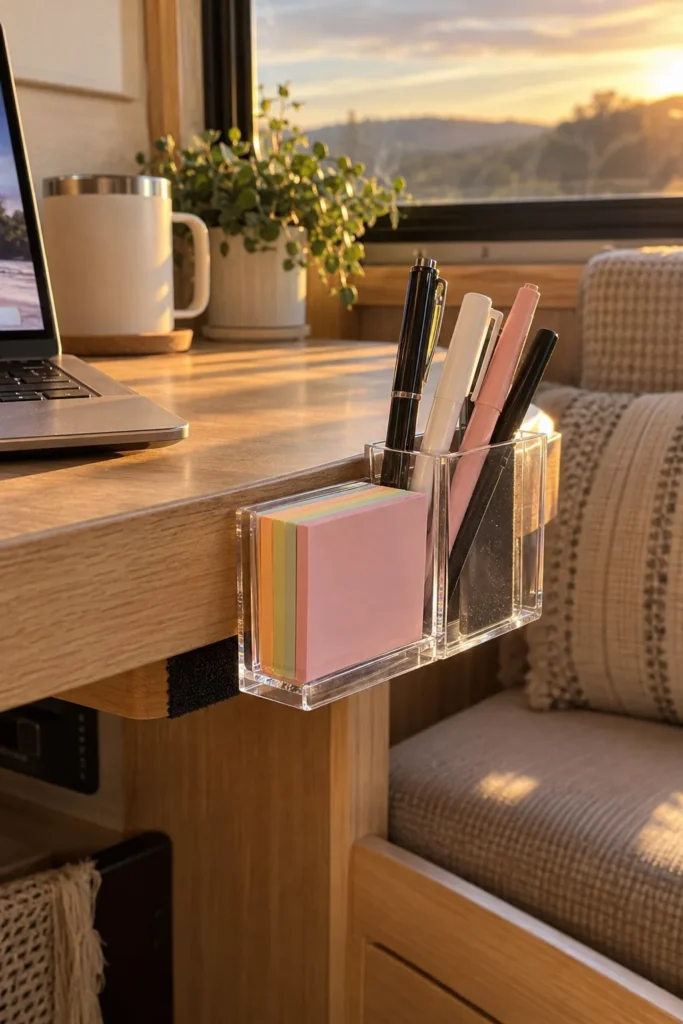
Loose pens and a pad of sticky notes sliding across the desk gets old fast on a moving rig.
A small clear acrylic caddy fixed down with a strip of Command Velcro solves it without a single screw. Pens stand upright, sticky notes sit flat, and the whole thing lifts off clean if you ever want to rearrange.
6. Rotating Desktop Organizer
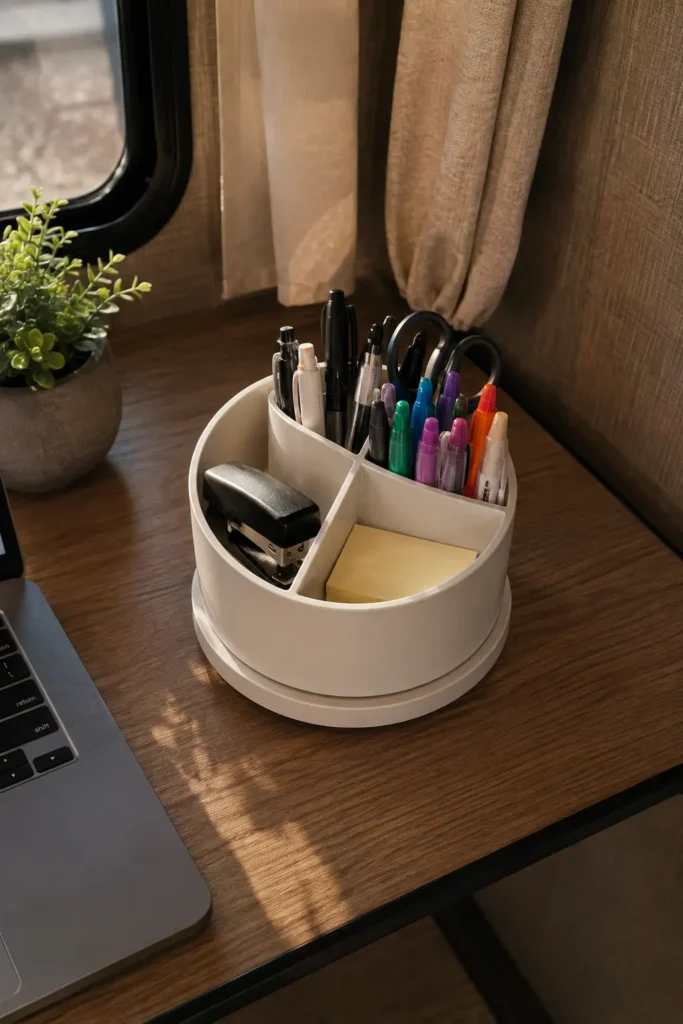
Reaching across a tiny desk to grab a stapler buried behind three other things gets old fast.
A small rotating organizer, the kind built like a mini lazy susan, holds several supplies in one footprint and spins to bring whatever’s needed to the front. Pens in one section, sticky notes in another, a mini stapler in the third.
It takes up less desk space than three separate containers would, and nothing has to be lifted or dug through to get to it.
One rotating base replaces three separate holders and still fits in the same footprint as a single mug.
7. Hanging Organizer Inside A Cabinet Door
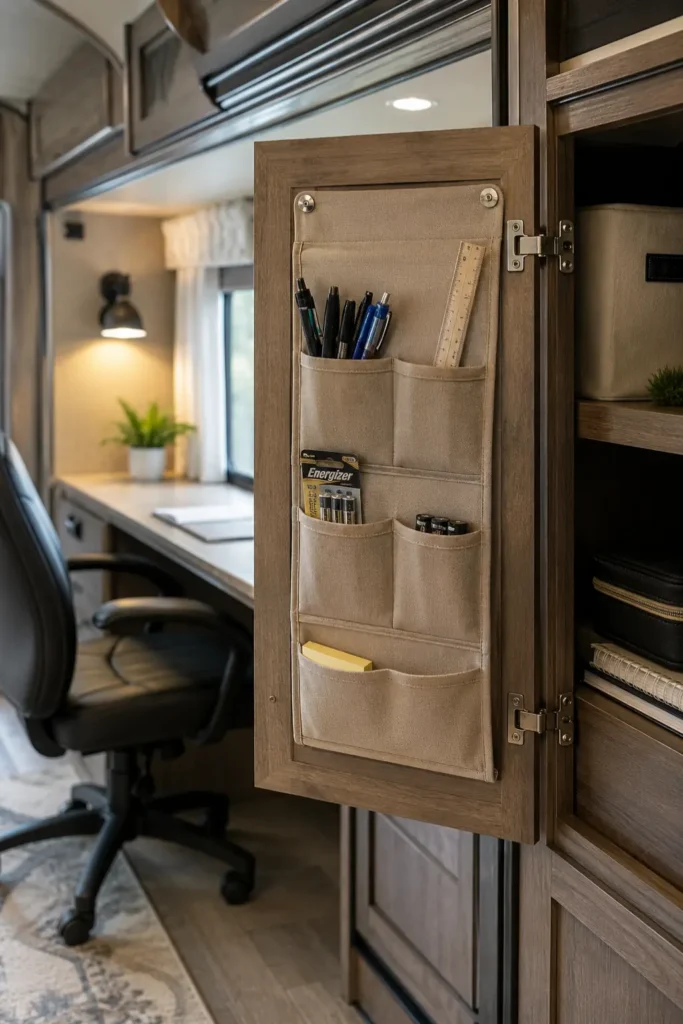
Supplies don’t have to sit out at all if there’s a cabinet door close to the desk.
Screw a shallow over-the-door pocket organizer to the inside panel, and the door itself becomes a second storage wall that closes away completely. Pens, a ruler, spare batteries, all tucked behind the door instead of cluttering the desk.
Check the hinge weight rating before loading it up, since a full organizer swinging on a light cabinet hinge can strain the mount over time.
Recreate this setup
8. Magnetic Whiteboard That Doubles As Storage
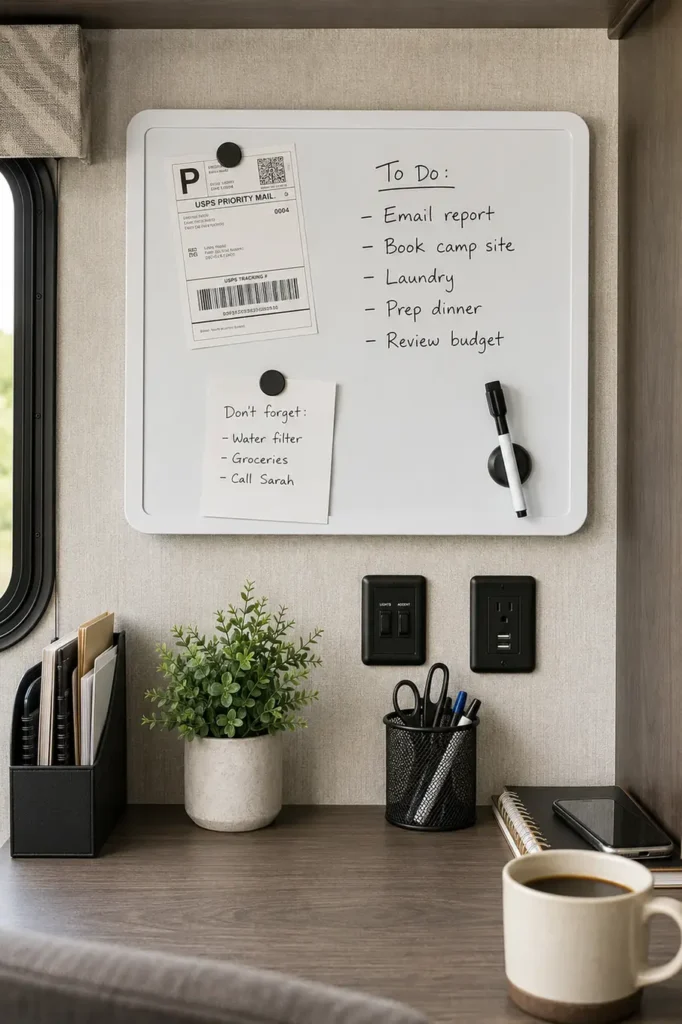
A blank wall above the desk can do more than hold a to-do list.
Mount a small magnetic whiteboard there, and it works as both a note surface and a holding spot for anything that needs to stay visible. Receipts, a shipping label, a reminder note, all pinned up with a few small magnets instead of floating loose on the desk.
Nothing gets buried under a keyboard again, since it’s stuck to the wall in plain sight the moment you sit down.
Keep the board out of direct afternoon sun, since prolonged heat can weaken the magnet strength over months of daily use.
One mounted piece replaces both a note pad and a paper holder.
Whatever’s pinned up stays in view instead of sliding under other papers.
9. Repurposed Tackle Box For Tech
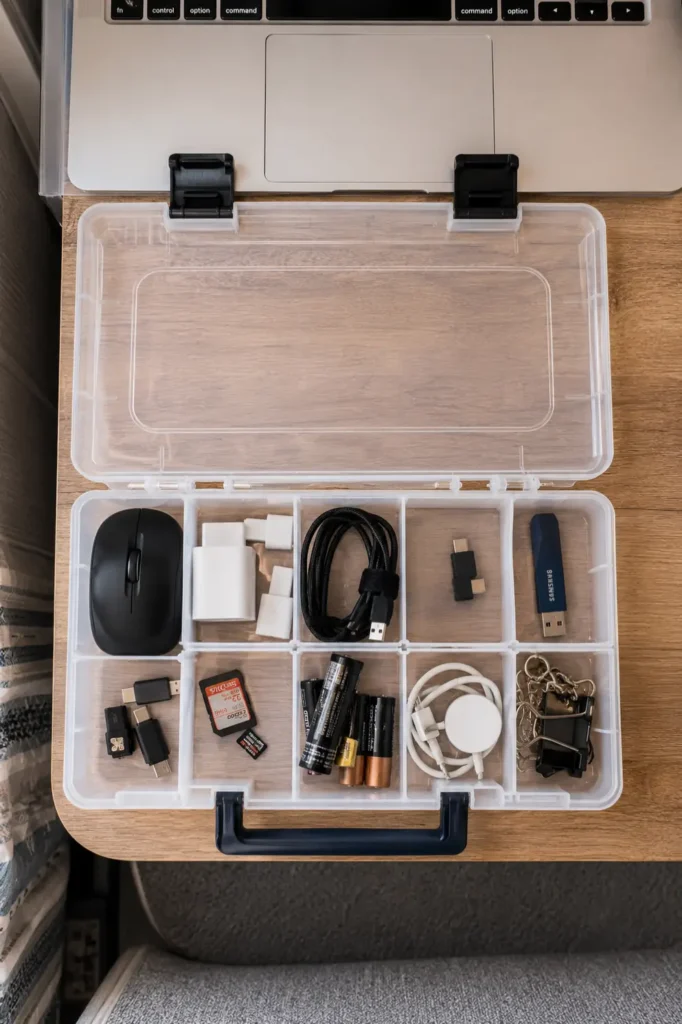
Fishing tackle boxes were built for tiny compartments and a road that shakes, which makes them a better tech organizer than most things sold for a desk.
Adapters, SD cards, a spare mouse, and extra cables each get their own latched compartment instead of a shared drawer. The whole box lifts out and slides under the seat when it’s time to pack up and drive.
Pick up a small tackle box with adjustable compartment dividers, not a fixed grid.
Sort by category first, cables in one row, adapters and cards in another.
Stash it under the seat or in a cabinet once the desk closes down for the drive.
10. Magnetic Strip For Loose Supplies

Paperclips, screws, and a spare stylus tip always end up rolling into the nearest gap.
A thin magnetic strip stuck along the underside of a cabinet or the edge of the desk catches loose metal supplies before they disappear. It costs less than most desk organizers and takes about ten minutes to put up.
Cheap, fast, and it actually holds through bumpy roads.
⚠️ Watch Out
Keep the strip a few inches away from laptops, external drives, and speaker magnets. A strong magnet sitting too close can mess with electronics or wipe a swipe card.
11. Felt Wall Pockets By The Window
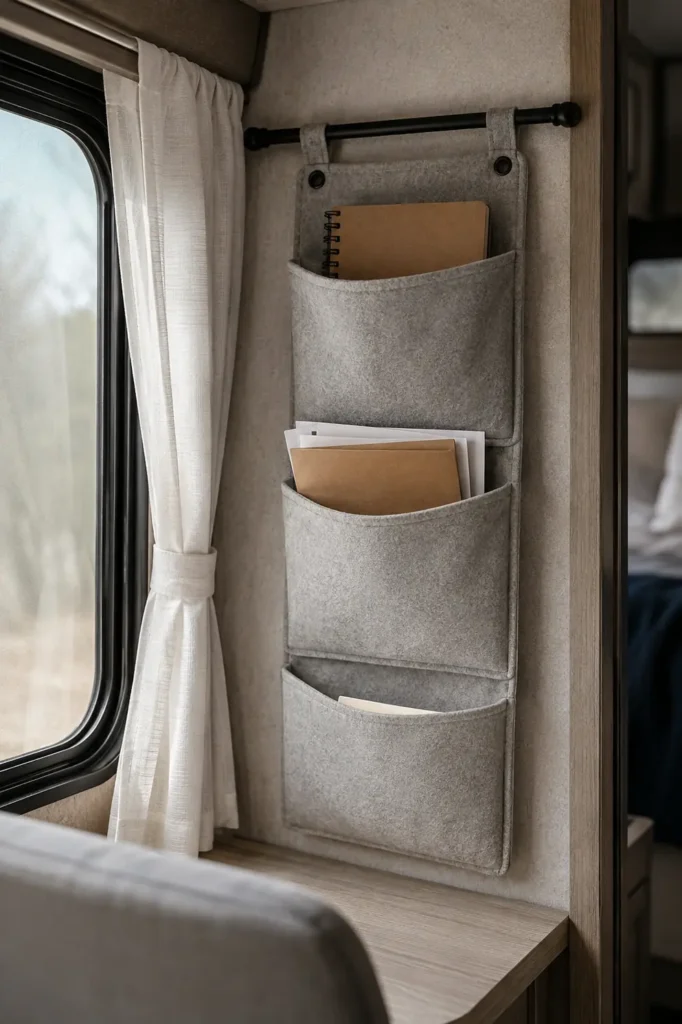
Notebooks and loose paper don’t have anywhere flat to lean once the desk is full.
Hang a row of felt wall pockets beside the window using a tension rod, no drilling into the wall at all. Slide a notebook into one pocket, mail or receipts into another, and a spare notepad into the third.
Soft felt won’t scratch the wall finish, and the whole rod lifts out in seconds if the rig needs to be sold or the setup needs to change.
One tension rod, three pockets, done in under fifteen minutes.
Add a second rod lower down for a two-tier pocket wall with more room to sort.
12. Suction Cup Window Shelf
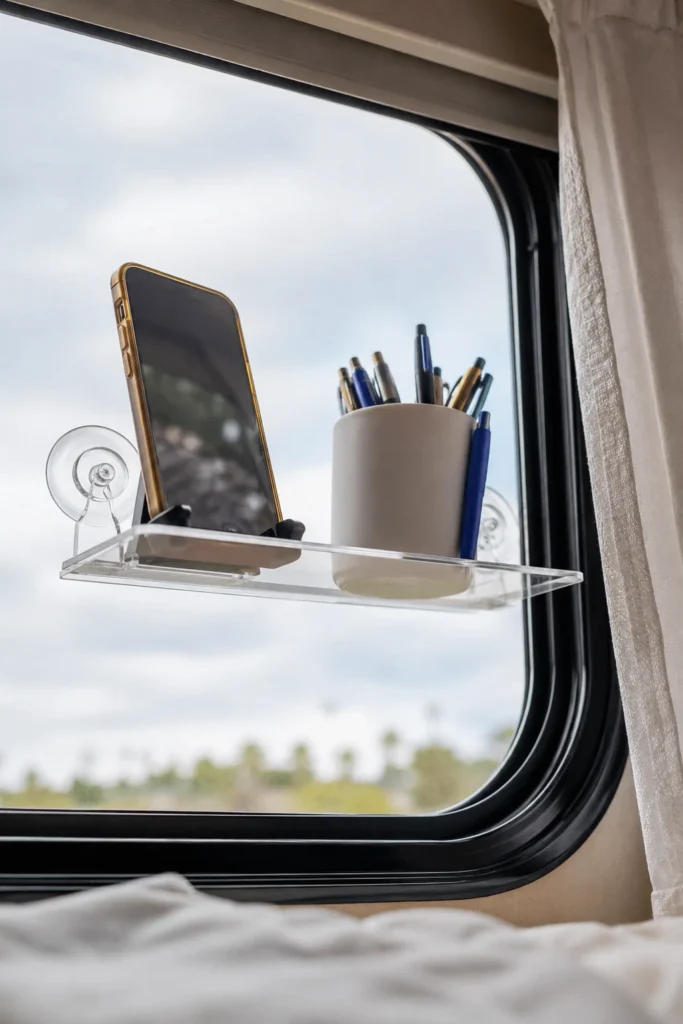
RV windows sit right next to most desks and go completely unused as storage space.
A small floating shelf with suction cup mounts sticks straight to the window glass, no adhesive and no screws involved. Set a phone stand, a small notepad, or a mug of pens on top and the desk surface below gets noticeably clearer.
Direct sun through the window can warp thin plastic shelves over time, so a shaded window works better than one that bakes all afternoon.
Conclusion
A cluttered desk is one of the easiest things to fix in a tiny rig, and one of the easiest to let slide.
Pick two or three ideas that match how you actually work, not every idea on this list. A pegboard and a cable clip strip alone can clear most of a desk.
Test anything new on a short drive before trusting it on a long one.
A tidy desk in a small space isn’t really about looking neat. It just means you can sit down and start working instead of digging around first.