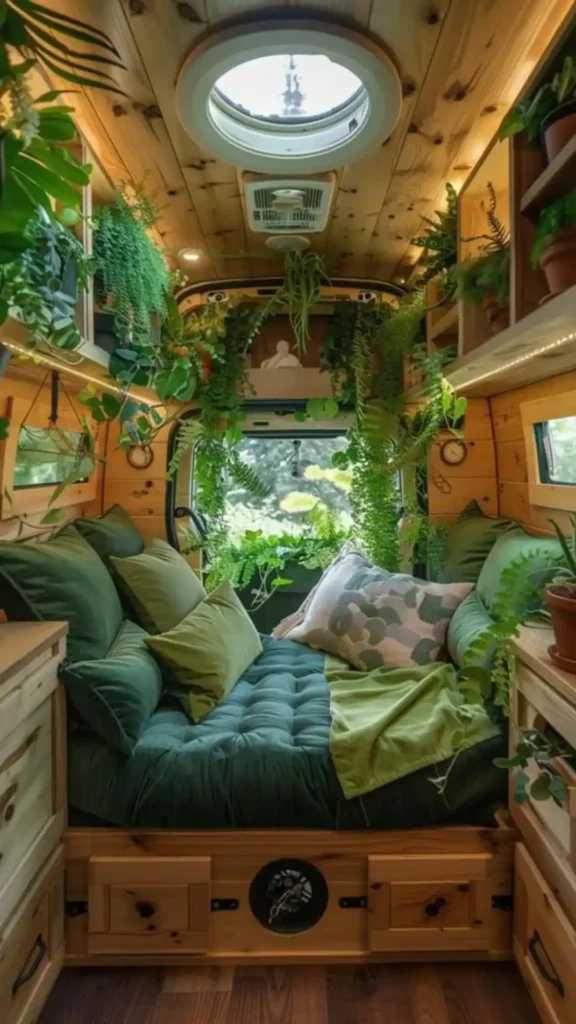
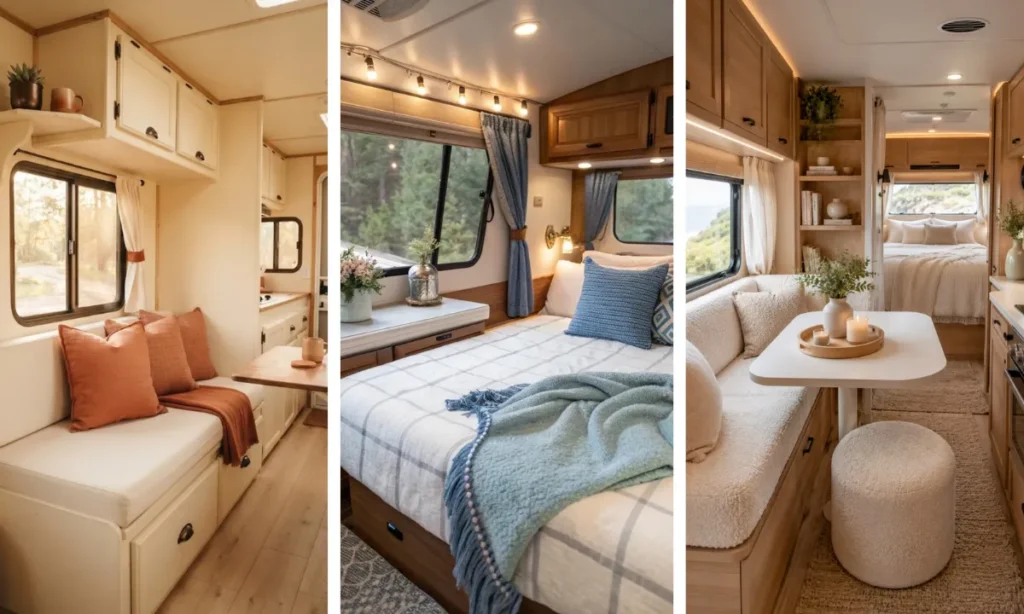
Living in 200 square feet sounds simple until the clutter starts creeping in from every direction, shoes by the door, mismatched bins under the bench, a dinette table that never folds away.
Full-time RV life asks for a different kind of decorating, one where every object earns its spot and empty space counts as much as anything on a shelf.
These minimalist RV interior ideas come from real rigs that got this balance right, open shelving with room to breathe, a single accent wall instead of six competing surfaces, a curtain that quietly divides a room without adding a wall.
None of it asks for a full renovation. Most of it is a weekend project or a single smart swap, the kind of change that gives a small space back its floor, its light, and its calm.
1. A Shelf That Breathes
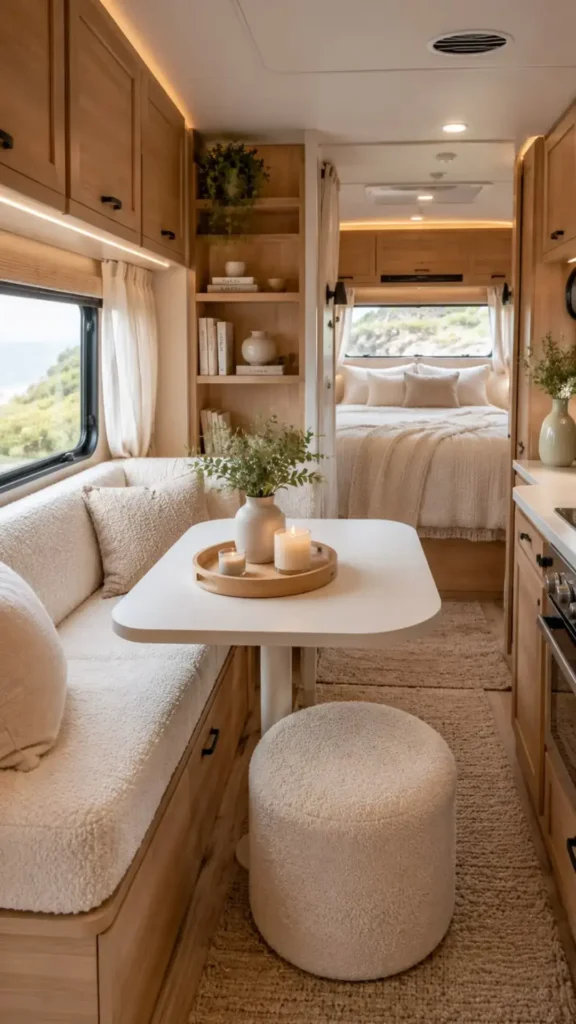
Open shelving does the heavy lifting in this nook, and it works because it stays half empty. A trailing plant softens the top corner. Below it, three cream book spines lean against a small ceramic bowl, then a single vase and a stack of white pottery finish the run. Nothing touches the back panel, so the wood grain itself becomes part of the display.
Recreate this look
Skip the urge to fill every inch. The empty space is doing just as much work as the objects.
2. String Lights, Soft Layers
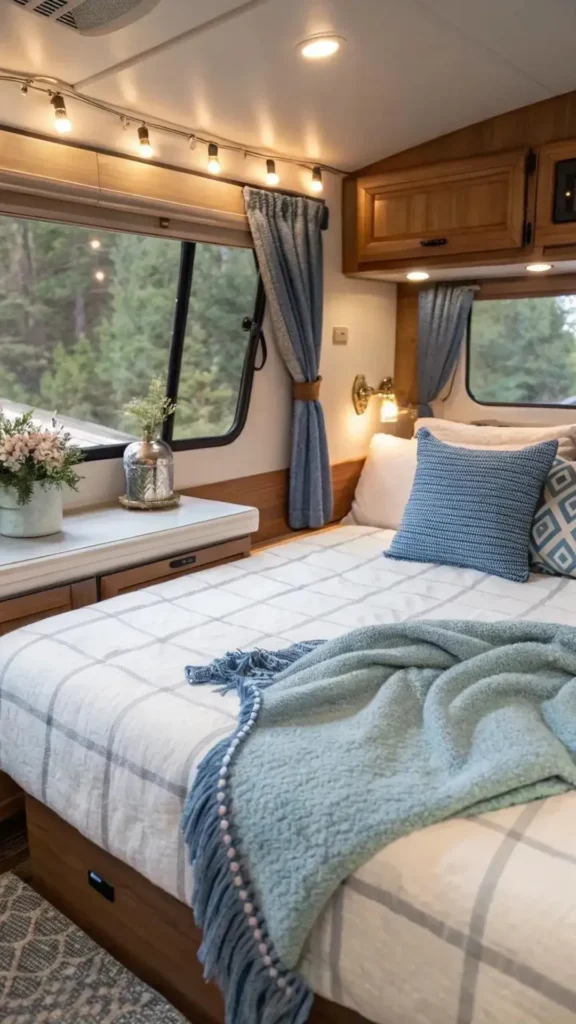
A string of exposed bulbs runs along the ceiling seam instead of hiding inside a fixture, giving the sleeping nook a warm, uneven glow that overhead lighting rarely gives.
Below it, the bed does the real work. A windowpane check duvet stays neutral, then a chunky knit pillow and a diamond print sit side by side without matching. A slouchy sage throw gets tossed across the foot, half folded, half falling open.
Two things make this feel intentional instead of cluttered:
- Every fabric stays in one color story: cream, blue, and sage, so patterns can mix freely.
- Nothing gets folded too neatly. The throw is meant to look grabbed, not staged.
A small vase of fresh stems on the nightstand keeps the whole corner from reading like a hotel room.
📌 Good To Know
String lights on a low-power line pull barely any battery, which matters more than it sounds like in a rig with limited power.
3. One Bold Wall Only
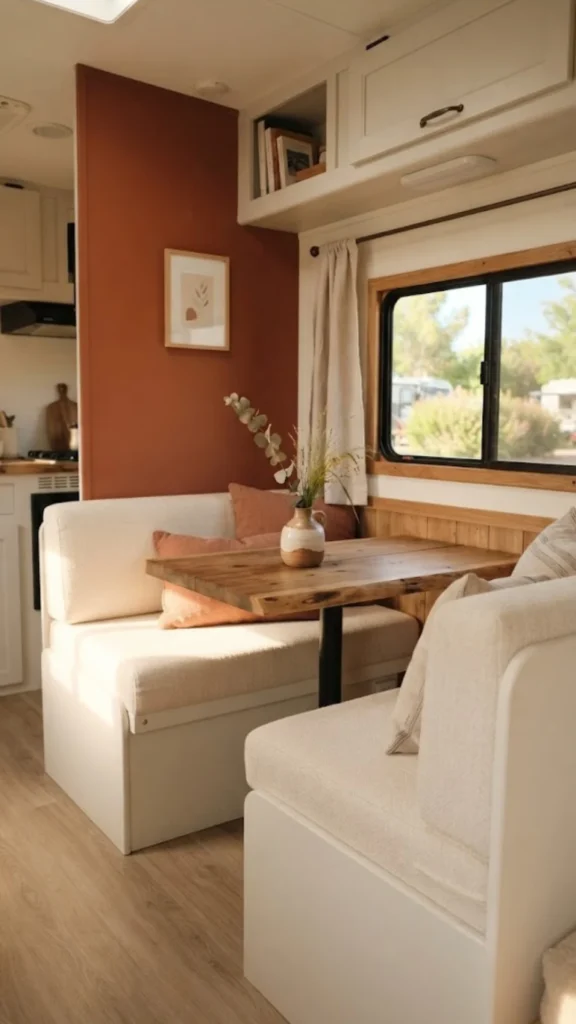
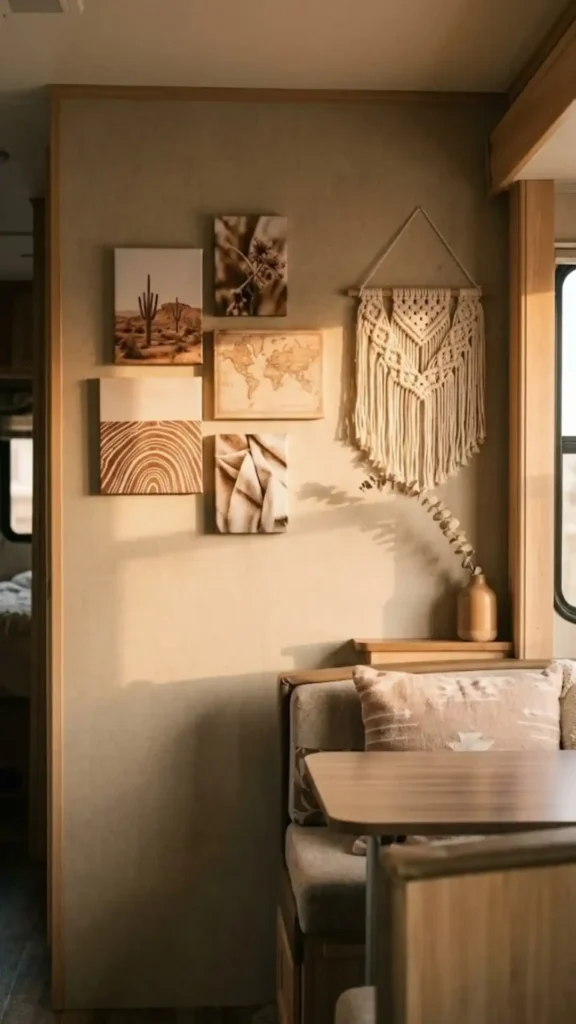
Most small RVs get busy fast when every surface tries to say something. This idea flips that. Pick one wall, maybe behind the bed or along the dinette, and let it carry a single confident finish: a deep clay paint, a wood accent panel, or a bold peel-and-stick print.
Every other wall stays quiet in white or cream. The eye lands on one spot instead of bouncing around a small space trying to process six different textures at once.
- Choose the wall the eye hits first when entering the room
- Keep every surrounding wall in one neutral tone
- Let furniture and textiles stay simple so the wall gets the spotlight
The result reads intentional, not busy, even in 200 square feet.
4. Cabinets Over Open Baskets
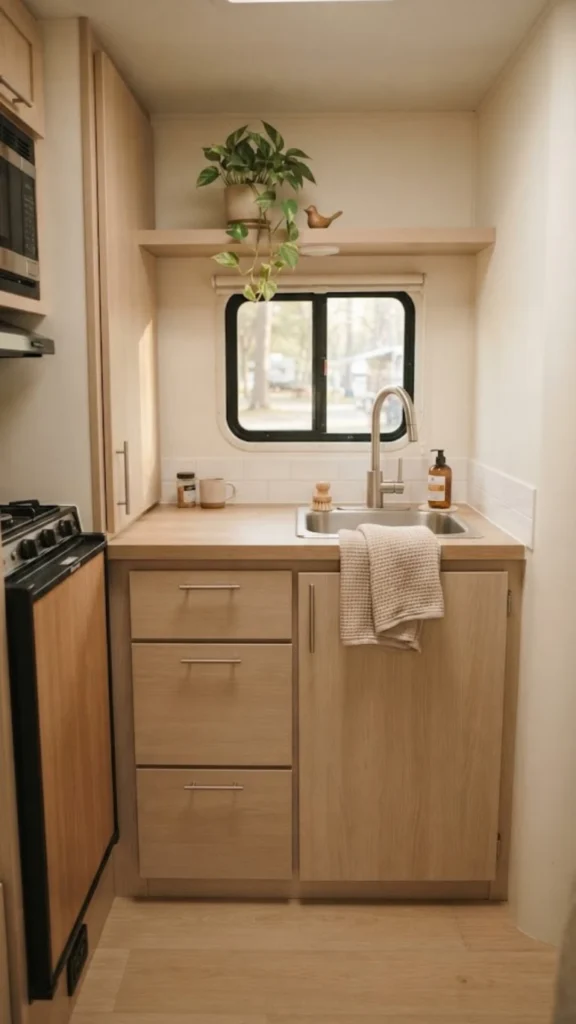
Open baskets look charming in photos but collect dust and clutter fast on the road. Full cabinet doors, even simple flat-panel ones, keep the same storage without the visual noise of stacked bins.
| Open Baskets | Closed Cabinets |
|---|---|
| Shows every item, tidy or not | Hides mess behind one clean line |
| Collects dust while driving | Stays sealed during travel |
| Needs constant re-folding | Needs one glance, done |
For full-timers logging real miles, the cabinet wins twice over: less to dust, less to restyle every time something shifts in transit.
Choose flat-panel cabinet doors over open shelving for daily items.
Keep one open shelf max, for display only.
Stacking multiple open baskets across the whole kitchen wall.
Storing daily-use items somewhere without a door.
5. A Mirror That Multiplies Space
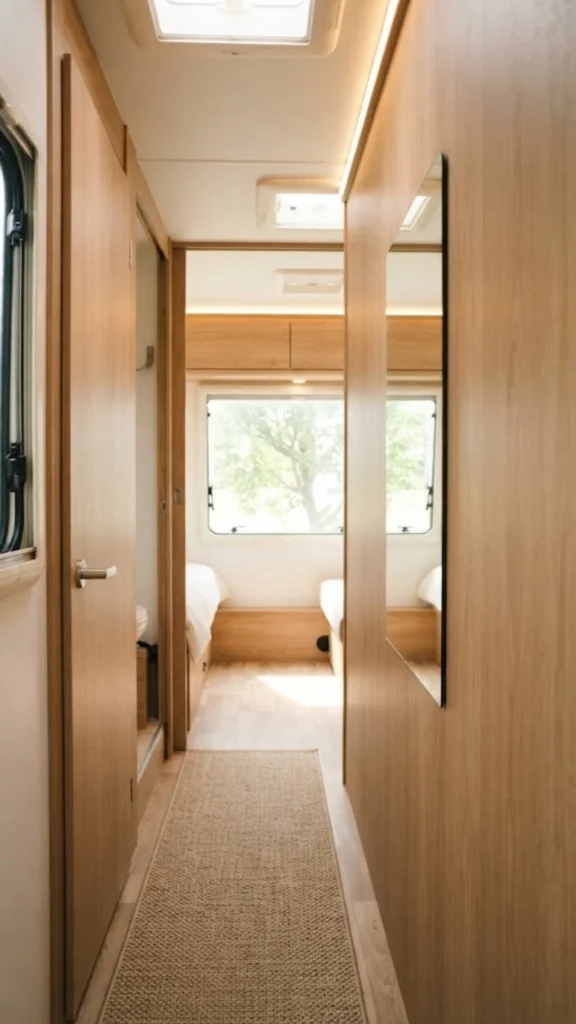
Hallways in a rig are usually the tightest stretch of the whole build, and they are also the easiest place to fake extra square footage. One well-placed mirror, framed simply and mounted where it catches the window light, doubles the sense of depth without adding a single object to dust or store.
Heads up: skip anything with a heavy frame or beveled edge here. A busy mirror frame competes with the reflection instead of disappearing into it, and in a narrow hallway, that visual competition reads as clutter, not light.
Aim for a slim frame, or none at all, mounted flush to the wall.
Pick the narrowest stretch of hallway or corridor.
Mount a slim or frameless mirror facing the nearest window.
Leave the wall around it bare so the reflection reads clean.
6. Shoes Vanish Into One Basket
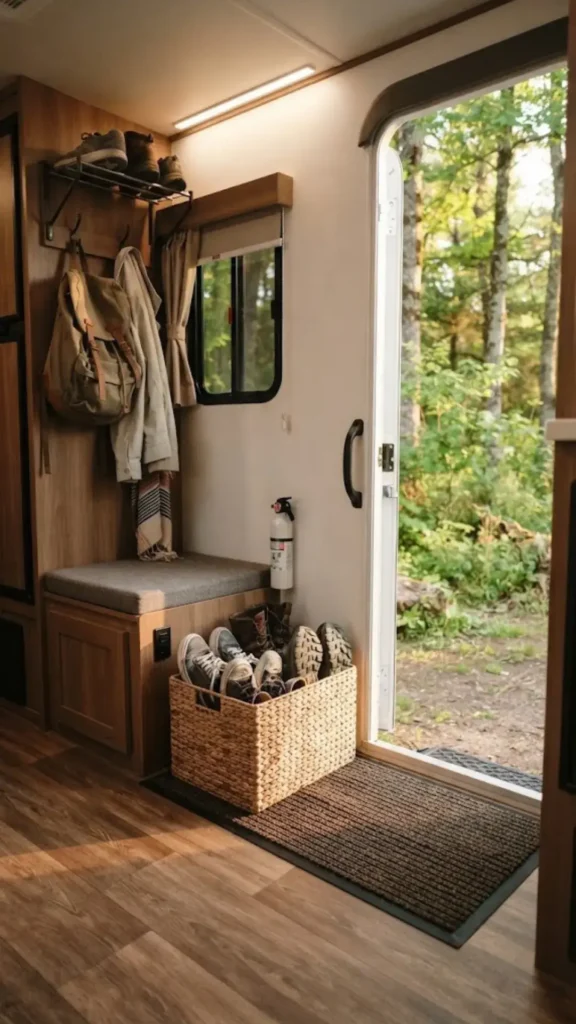
Before: a jumble of shoes by the door, kicked off in different directions, taking up floor space that a small rig cannot spare. After: one woven basket, sized to the entry nook, holding every pair upright and out of sight the moment someone steps in.
The fix costs almost nothing and takes one trip to a home store. What it buys back is floor space and a calmer first impression the second the door opens, which matters more in 200 square feet than it would in a house with a mudroom to hide the mess in.
Loose shoes scattered across the entry floor.
One woven basket holding every pair upright.
7. A Fold-Down Table, Gone
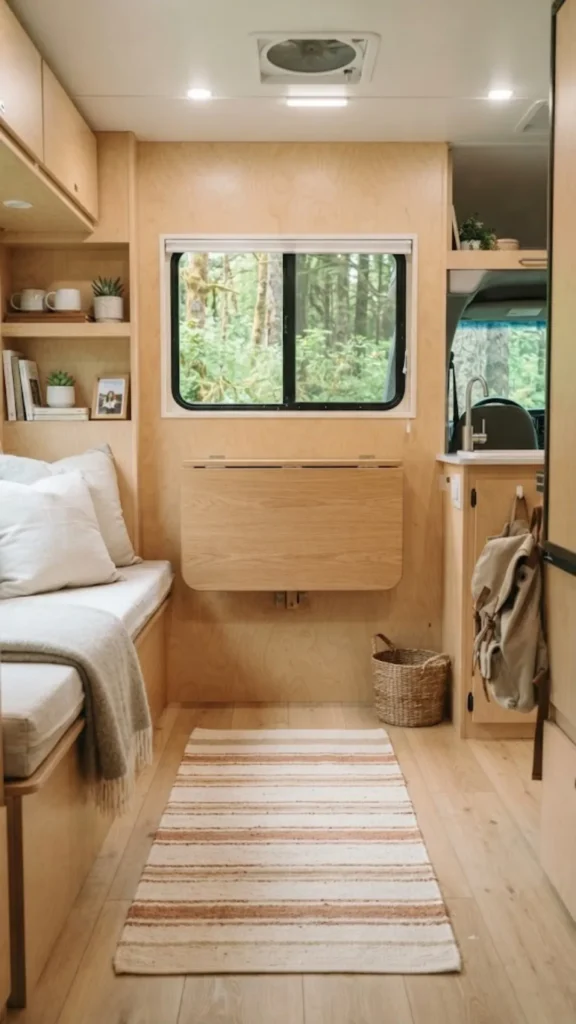
Fixed dinette tables eat floor space every single hour they are not in use. A wall-mounted drop-leaf version solves this in seconds: pull it up for meals, fold it flat against the wall the rest of the day, and suddenly the whole center of the rig opens up for stretching, yoga, or just walking through without turning sideways.
💡 Quick Tip
Mount the drop-leaf bracket at counter height so the folded table doubles as a prep surface, not just a dining spot.
8. Three Colors, No More
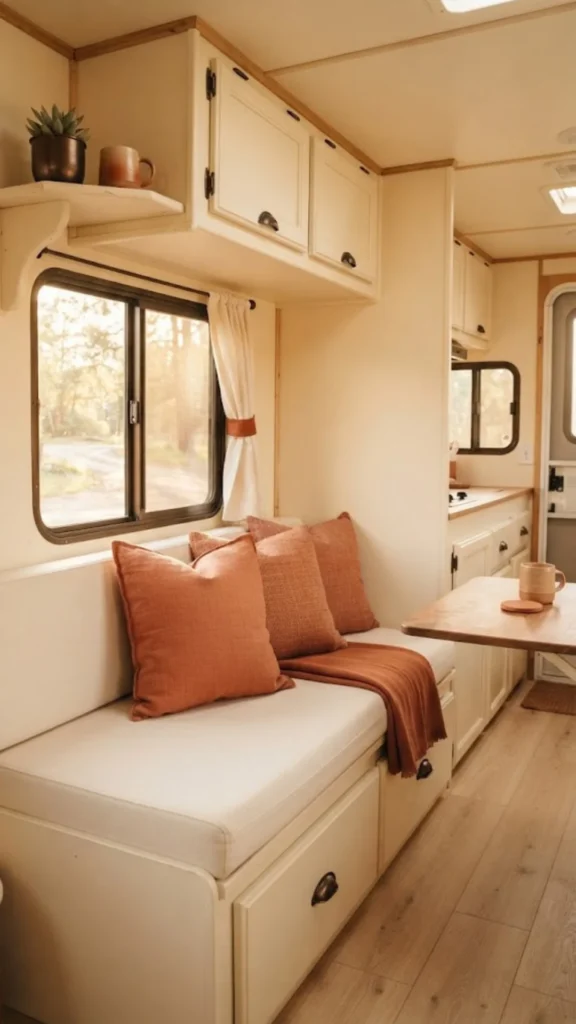
Full-timers who repaint or restyle their rig often reach for whatever catches their eye at the store, and the interior starts to feel like a mood board instead of a home.
The fix: pick three colors before touching anything, one neutral base, one warm accent, one deeper anchor tone, and run every textile, cushion, and small object through that filter before it comes on board.
The three-color test
Anything that does not fit one of the three stays at the store, no matter how good it looks alone.
9. Curtains That Do Double Duty
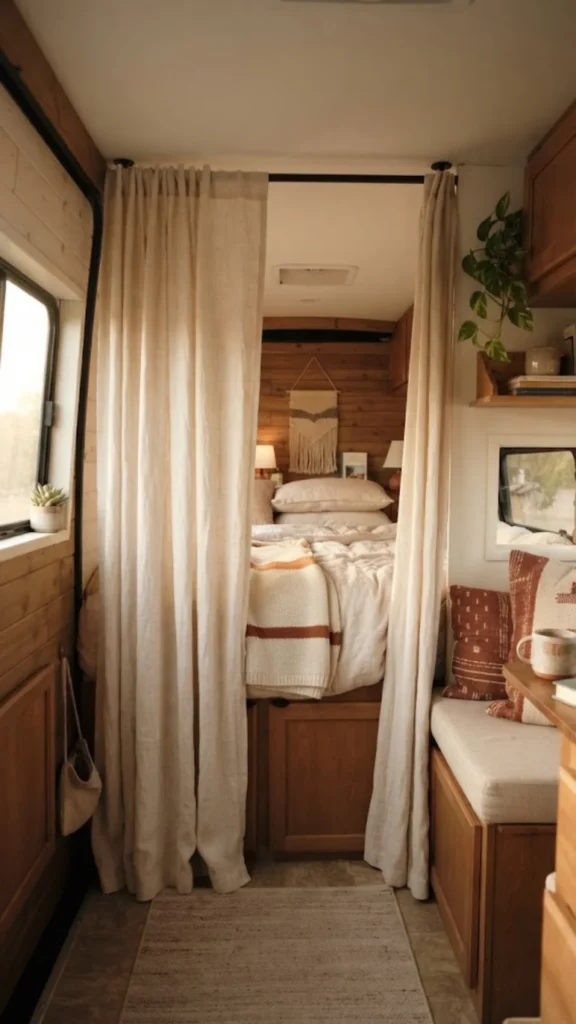
A single curtain rod stretched along a stretch of wall, not just over a window, gives full-timers a soft divider between the sleeping area and the living space without adding a permanent wall or door.
Pull it closed for privacy at a campsite with neighbors close by, push it open the rest of the time for one continuous room.
Mount the rod flush to the ceiling along the divider line.
Choose a heavier fabric that blocks light when closed.
Match the fabric to the wall tone so it blends when open.
The trick works because it is not trying to look like furniture. It just looks like a wall until it needs to be a door.
10. Under-Bench Bins, Labeled
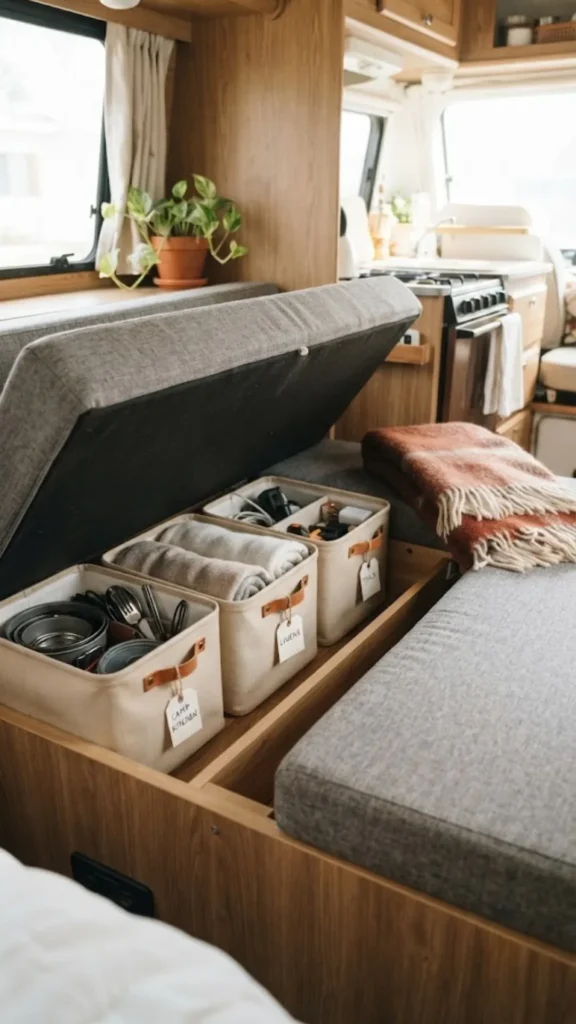
The storage hides under the seat cushions where every full-timer already knows to look. What changes the game is treating that space like a small pantry instead of a junk drawer: uniform bins, each one holding a single category, with a simple label facing up so nothing gets forgotten at the bottom.
⚠️ Watch Out
Mismatched bin sizes waste real capacity. Measure the bench first, then buy bins to fit it exactly, not the other way around.
11. One Statement Light, Nothing Else
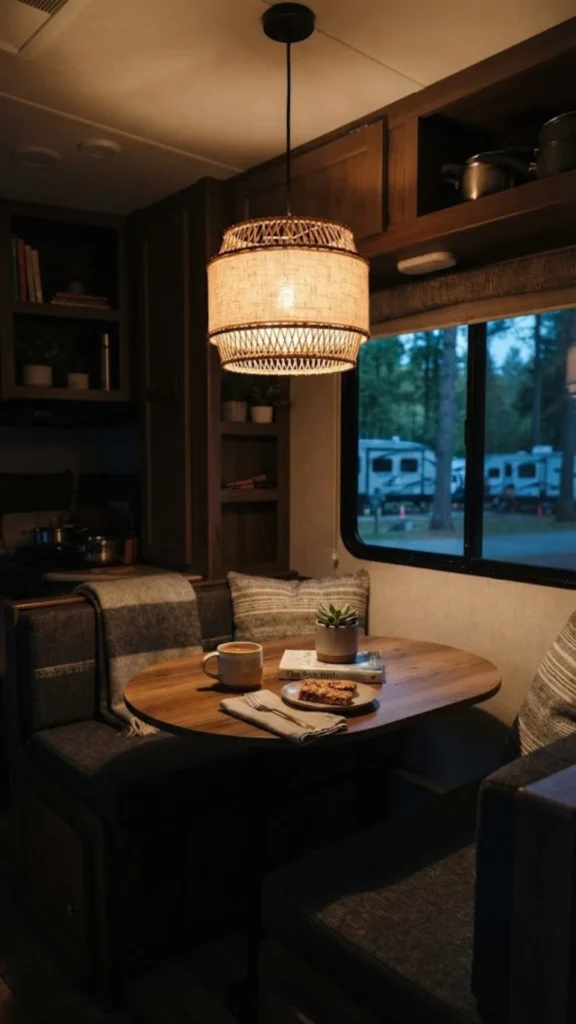
Overhead lighting in most rigs is purely functional, a flush-mount fixture doing its job without adding anything to the room.
Swapping just one, usually above the dinette or the bed, for a small pendant or a woven drum shade gives the whole space a single point of visual interest without cluttering the walls or shelves with more objects to secure before driving.
The rest of the lighting stays simple and built-in. One fixture gets to be the moment; everything else fades back.
12. A Bathroom That Feels Bigger
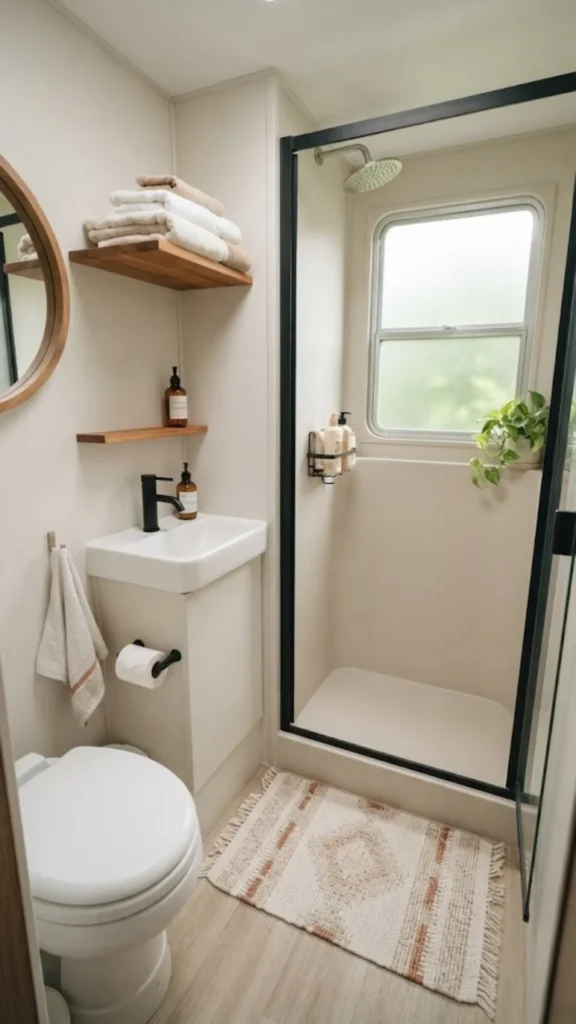
Bathrooms in most rigs are the smallest room by far, and busy tile or patterned surfaces make them feel even tighter. Keeping every surface, walls, shower surround, and counter, in the same light neutral tone lets the eye read the whole room as one continuous shape instead of a chopped-up box.
Common questions on this one:
Does this feel cold or sterile? Not if one warm material, like a wood shelf or a woven bath mat, breaks up the neutral run.
What about storage? A single small shelf or a slim over-toilet unit holds daily items without adding visual clutter.
One continuous neutral tone tricks the eye into reading a small bathroom as one open shape, not a chopped-up box.
Conclusion
Small space living rewards restraint more than any other style of decorating, and every idea here proves it in a different way: a folded table, a neutral bathroom, one pendant doing the work of five fixtures.
Pick two or three that fit your rig and your route, not all twelve at once. Save this one for your next stop at the hardware store, and pin it for the next full-timer figuring out how much a little less can actually give back.
📌 Good To Know
Start with whichever idea costs the least. Small wins build the momentum to tackle the bigger ones later.