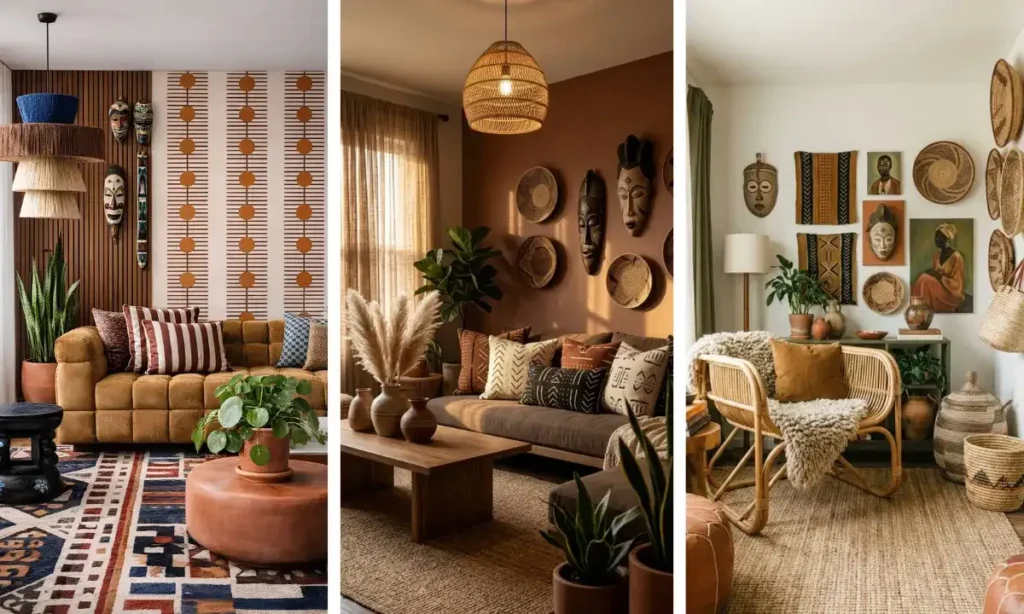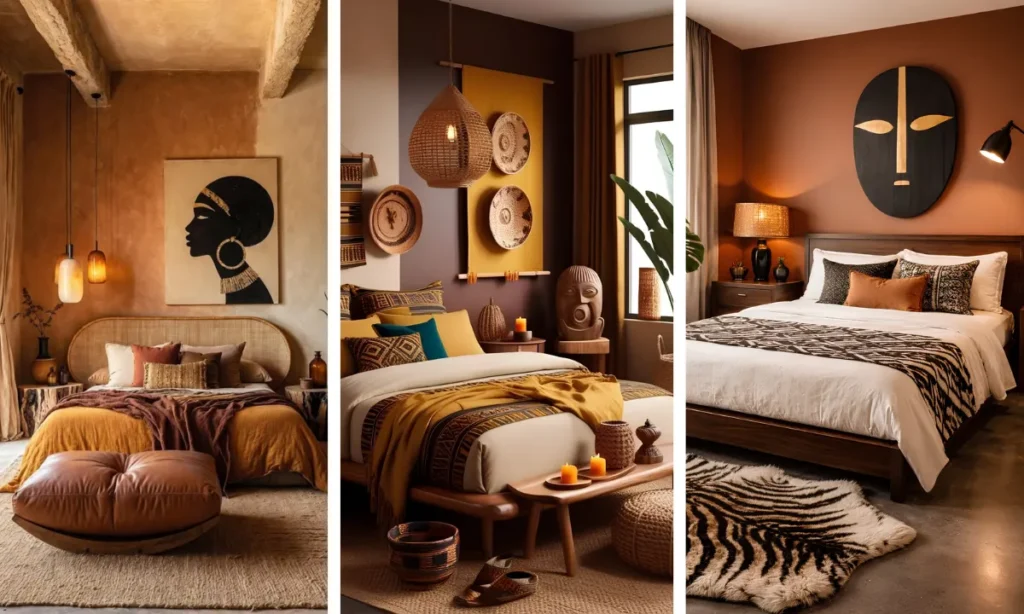
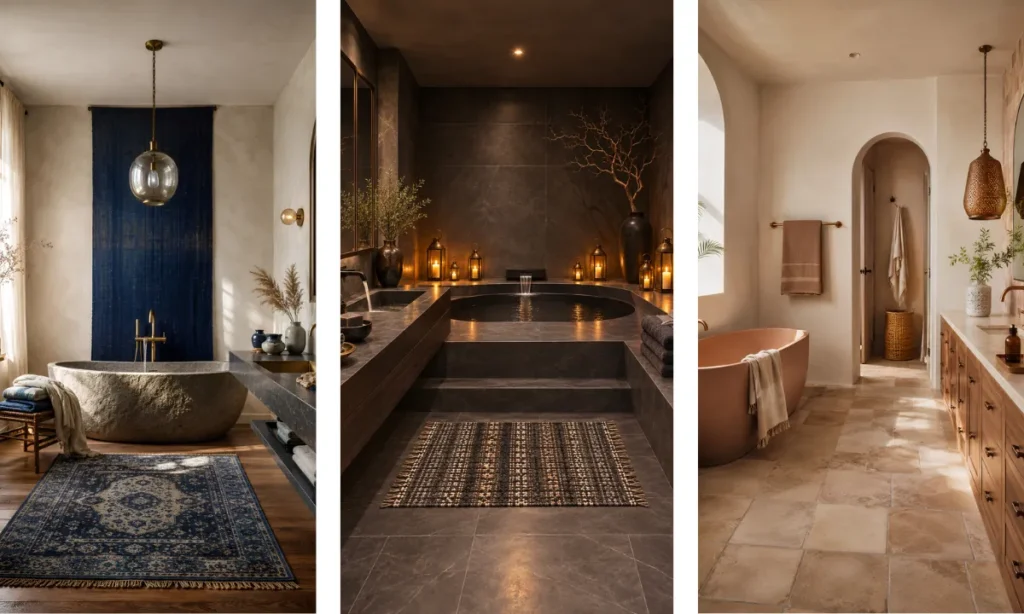
Most master bathrooms end up feeling more clinical than calming. White tile, a mirror, maybe a candle nobody ever lights, and a room that gets used in a rush every morning instead of enjoyed.
The usual fix people reach for is a new rug or a scented soap dispenser, and neither one changes how the room actually feels.
The real shift happens when the whole room commits to a mood instead of borrowing pieces from a dozen different styles.
That is what these Afrocentric master bathroom ideas are built around: full room designs rooted in warm materials, rich color, and natural texture, the kind of details that turn a space you rush through into one you actually want to sit in.
Some of these looks lean toward deep clay and terracotta. Others go bold with pattern, quiet with charcoal stone, or bright with morning light and greenery.
None of them are about adding a single accent piece here or there. Each one is a complete direction for the room, so you can look through all twelve and find the one that already sounds like home.
1. Mudcloth Monochrome Spa Bath
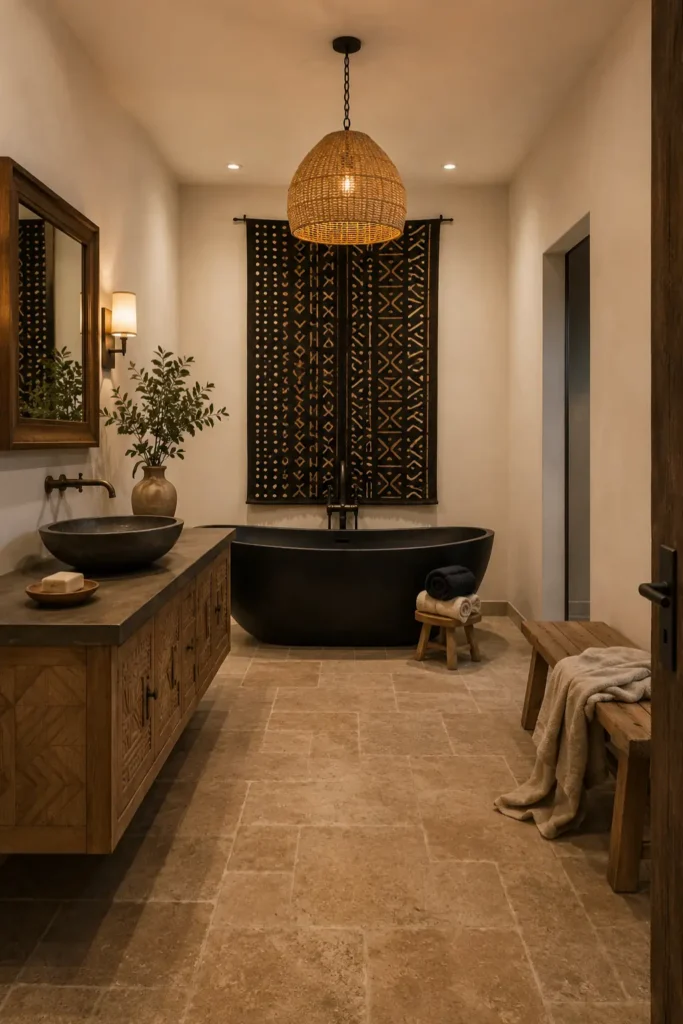
This one strips the palette down instead of layering it up. Think ivory walls, matte black fixtures, and a single oversized mudcloth-inspired panel behind the tub as the room’s quiet focal point.
Everything else stays deliberately calm so that one graphic textile gets to do the talking.
A freestanding tub in matte black sits under a pendant light with a woven shade, and the floor is a soft, warm stone rather than glossy porcelain, which keeps the room from feeling clinical.
It is a good direction for anyone who loves bold African pattern but does not want a busy room.
2. Kente Color Block Bathroom
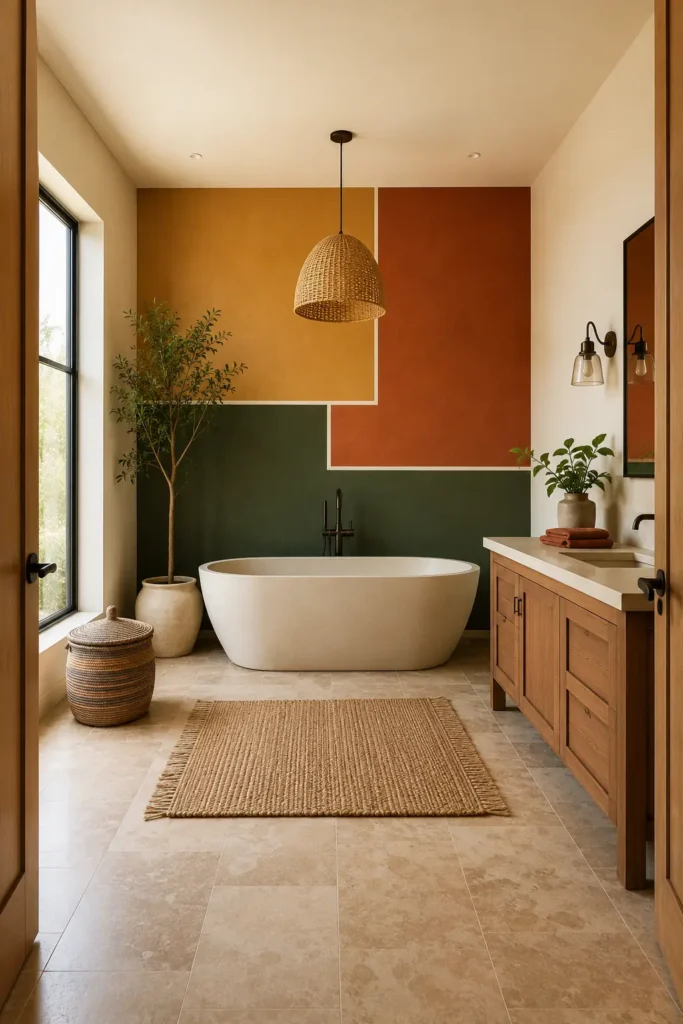
Most people assume bold pattern and a relaxing bathroom cannot coexist.
This design proves otherwise by treating kente-inspired color blocking as architecture, not decoration.
Warm gold, deep rust, and forest green appear in structured blocks across one accent wall, while the rest of the room, tub, tile, and vanity, stay in warm neutrals so the color has room to breathe.
The tub sits opposite the accent wall so it is the first thing you see when you walk in.
Keep color blocking to one wall so the pattern reads as a feature.
Use warm neutral tile everywhere else to balance the boldness.
Repeating the pattern on multiple walls, which crowds the room.
Pairing it with cool toned fixtures that clash with the warmth.
A confident choice for anyone who wants their bathroom to feel unmistakably their own the moment guests walk past it.
3. Terracotta Clay Wellness Retreat
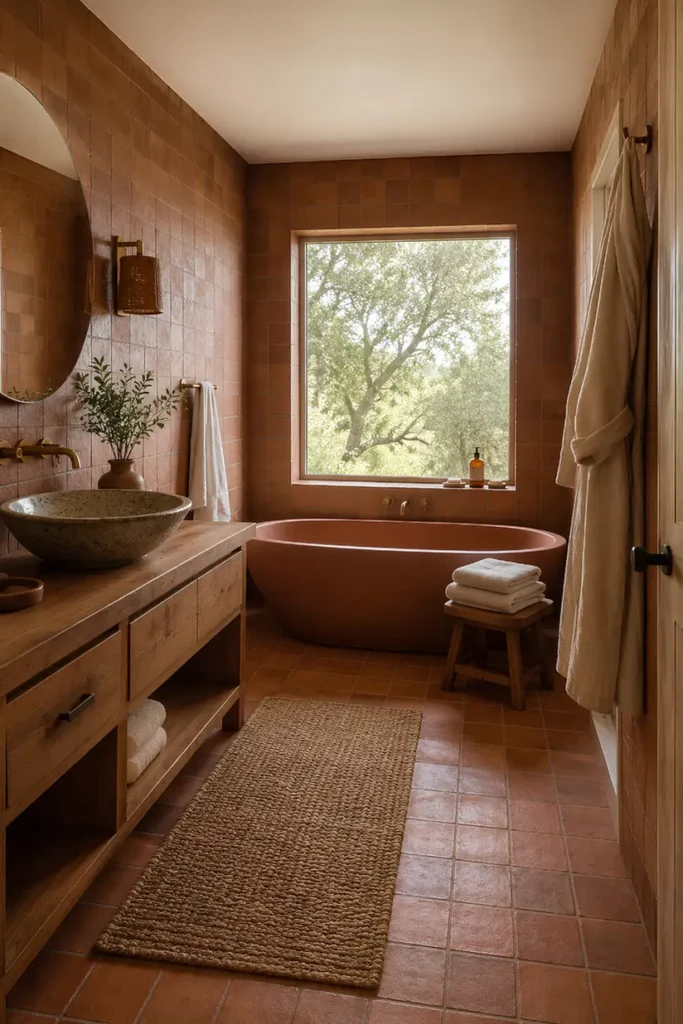
Some bathrooms feel like they were designed by committee, all sharp edges and cold surfaces with nothing that invites you to linger. This first look among our Afrocentric master bathroom ideas takes the opposite approach.
Picture warm terracotta tile running floor to wall, paired with a deep clay soaking tub set beneath a window that pulls in soft natural light.
The vanity is unlacquered wood with visible grain, topped with a single hand-thrown stoneware basin instead of a standard sink.
Walls stay in a muted clay tone rather than stark white, so the whole room reads warm even under evening light.
A few things anchor the look:
💡 Quick Tip
Stick to two or three clay based tones throughout the room. Too many earthy shades competing with each other flattens the effect instead of deepening it.
Best for anyone who wants their bathroom to feel like a private hot spring rather than a place they rush through.
4. Carved Wood Safari Bathroom
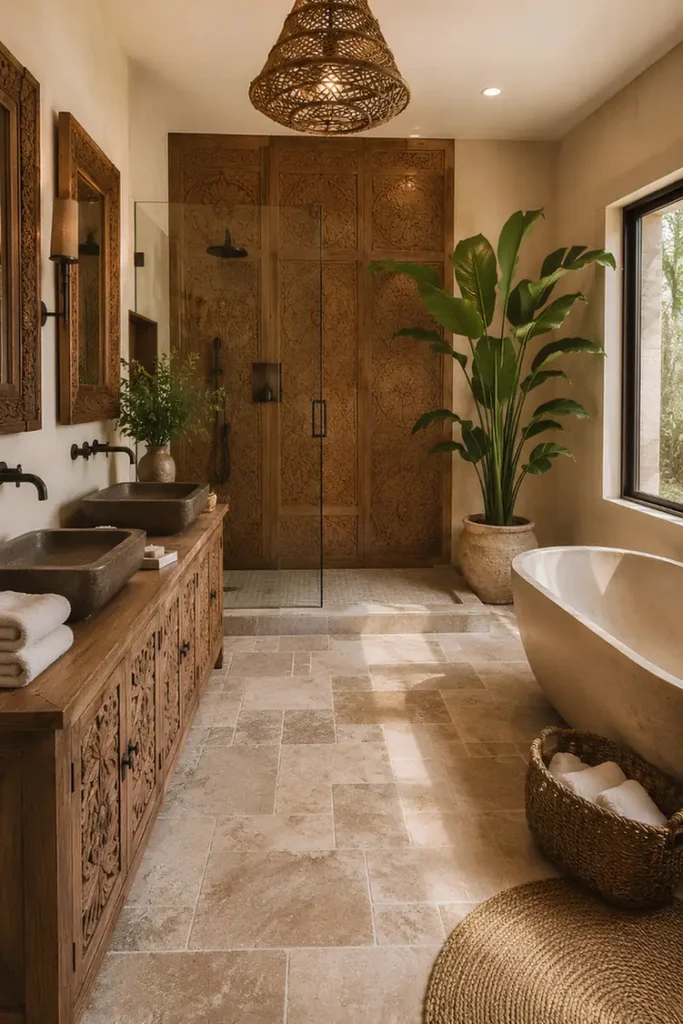
Here is a full bathroom look built around wood grain and texture instead of color.
Every surface plays a role: a carved wood vanity with deep grooves, matching carved wall panels behind a walk-in glass shower, and a stone floor in a warm sandy tone that ties it all together.
The glass shower stays open and unobstructed so the carved panels remain visible from across the room, which keeps a heavily textured space from feeling closed in.
A few moves make this style work:
Keep the shower glass clear, not frosted, so the carved wall stays visible.
Match the vanity wood tone to the flooring so nothing competes for attention.
Add one plant in the corner for contrast against all that wood.
Works especially well for bathrooms with strong natural light, since the wood grain catches it.
5. Copper and Clay Oasis
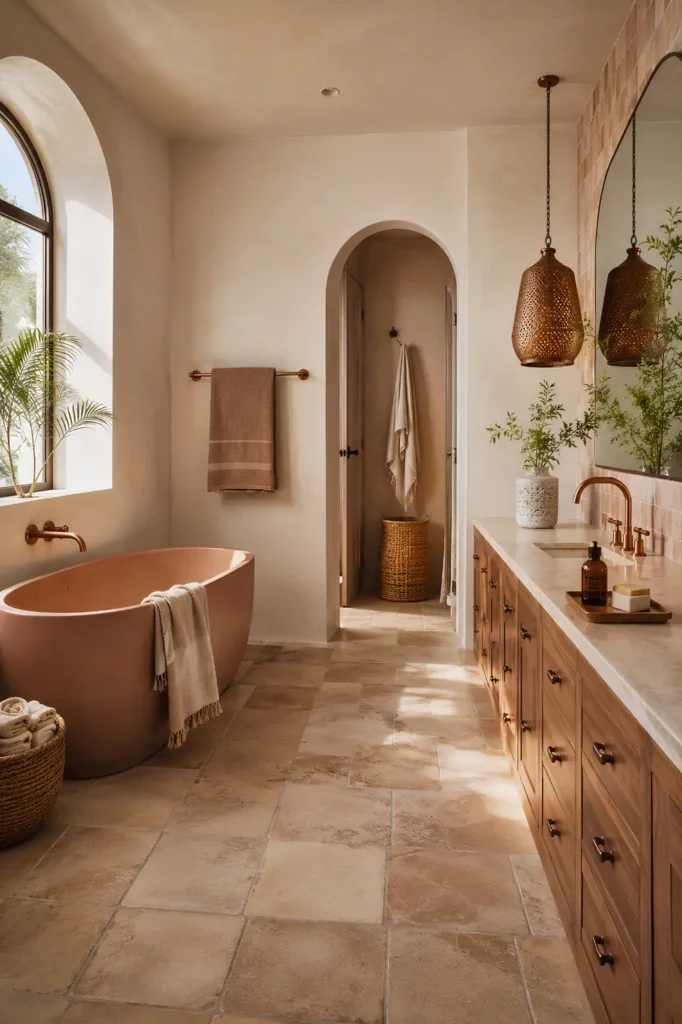
One simple rule holds this whole look together: warm metal, warm clay, nothing cool-toned allowed in the room.
That means brushed copper fixtures, a clay colored freestanding tub, and warm terracotta accents on an otherwise neutral tile floor.
Skip anything chrome or silver here, even small hardware, since one cool-toned piece breaks the warmth of the whole room.
What makes this room read as warm
A dependable choice for anyone who wants warmth without committing to bold pattern.
6. Adinkra Symbol Statement Bath
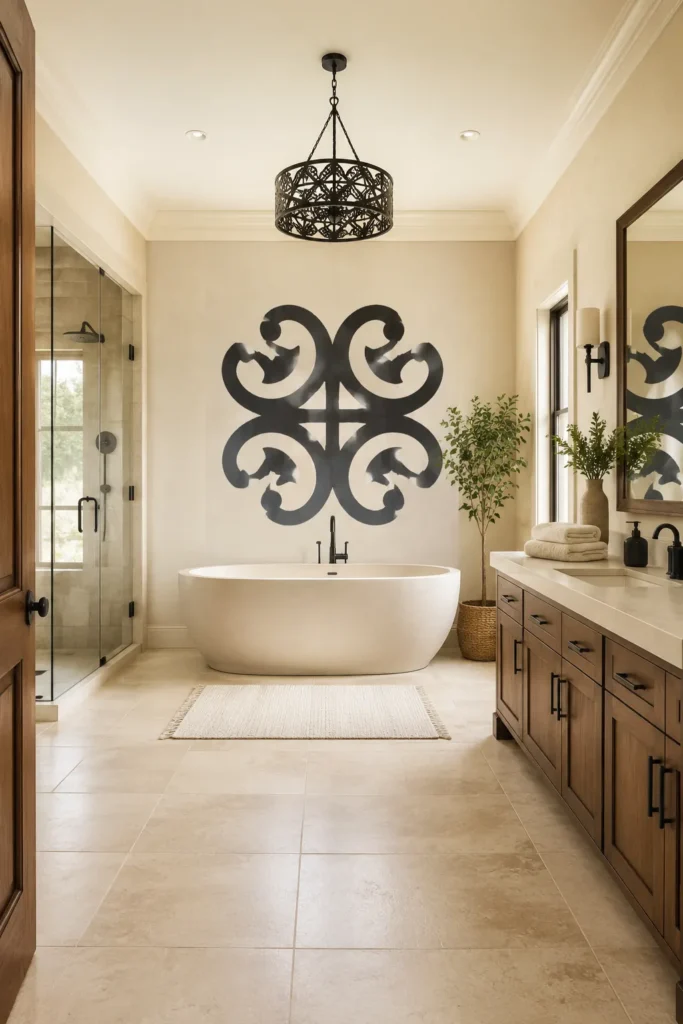
The mistake most people make with symbol-based decor is scattering it everywhere: a small print here, a coaster there, until the room looks busy instead of intentional. This design does the opposite.
One large adinkra symbol appears as an oversized wall motif behind the vanity, painted or tiled in a single deep charcoal tone against cream walls, and the rest of the room stays completely plain so that one symbol carries real weight. The tub, floor, and vanity all stay in soft neutrals.
Best suited for anyone drawn to meaningful symbolism who wants it to feel like a statement, not a pattern.
7. Woven Raffia Textural Bathroom
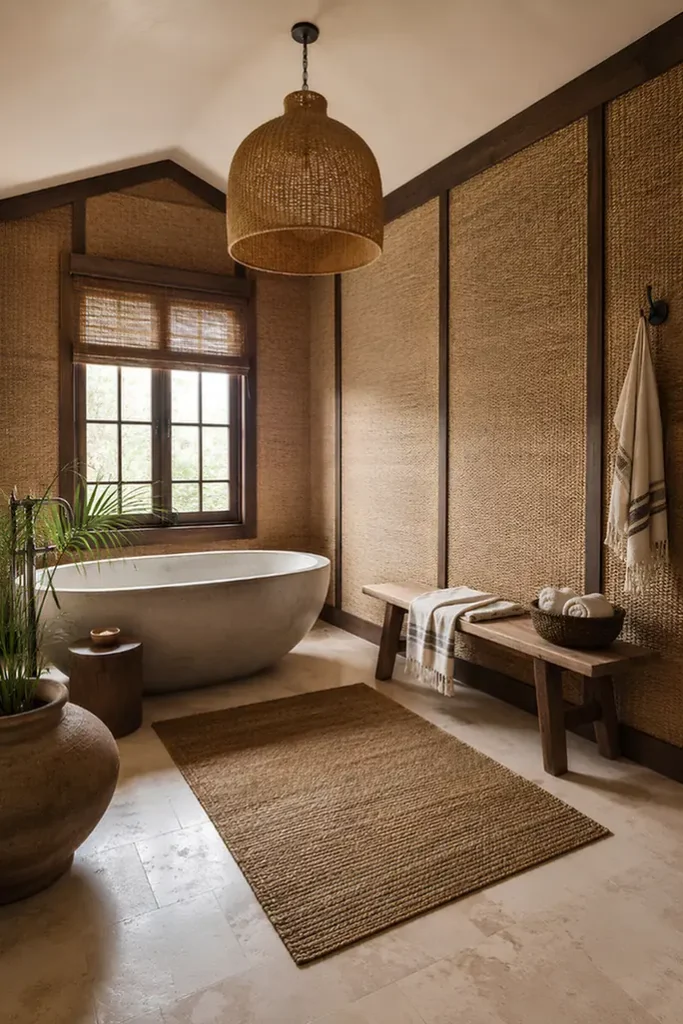
There is something about a room built entirely from natural fiber that feels calmer the second you walk in: no glossy surfaces competing for attention, just texture everywhere you look.
This design leans on raffia and jute across the walls, floor, and even the ceiling light shade, paired with a simple stone tub and a low wood bench instead of a traditional vanity.
Nothing here is polished. Everything has a slightly rough, handmade quality that photographs beautifully in natural light.
| Woven Fiber Look | Smooth Tile Look |
|---|---|
| Feels rustic and warm, softens hard water fixtures. | Feels sleek but can read cold without added warmth. |
| Needs sealed or moisture safe fiber panels. | Low maintenance, easy to wipe clean. |
Not the lowest maintenance option, but the texture payoff is hard to match with anything smooth.
8. Ebony and Gold Bath
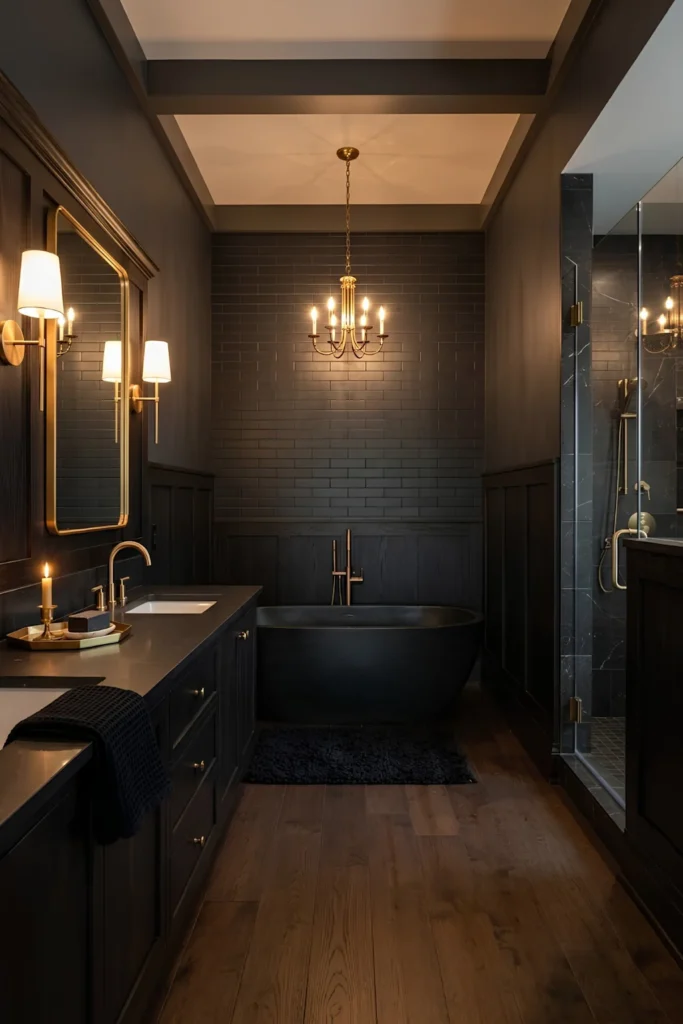
Walk into this bathroom at night with the lights dimmed low and it feels closer to a boutique hotel suite than a home bathroom.
Deep ebony stained wood covers the vanity and lower walls, brushed gold fixtures catch what little light there is, and a black stone tub sits centered beneath a small statement chandelier.
It is a dramatic direction, built for evening use more than bright morning routines, and it rewards anyone willing to commit to full darkness rather than softening it with lighter accents.
This look only works if you commit fully to the dark palette. Half measures read as unfinished instead of dramatic.
Best for a bathroom with strong artificial lighting, since the drama depends on contrast, not daylight.
9. Ivory and Indigo Coastal Bath
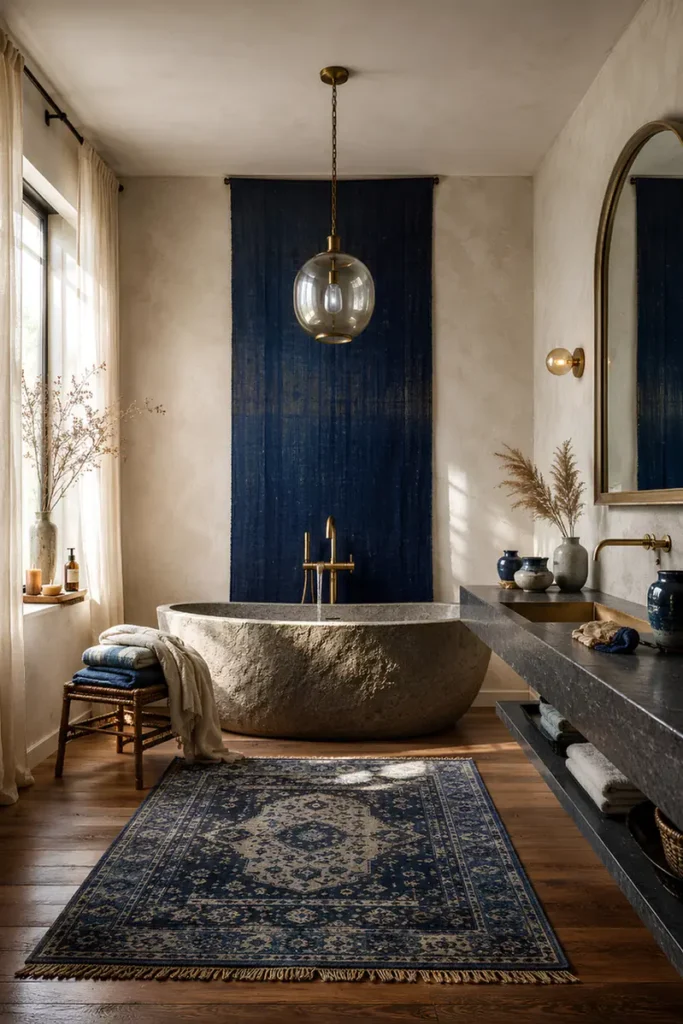
This one takes a different route than the earthy tones we have covered so far, leaning into deep indigo instead of terracotta while still keeping the room warm and grounded.
Ivory plaster walls meet a rich indigo-dyed textile panel behind the tub, and the color repeats in smaller doses across the room: a woven indigo bath mat, a stack of dip-dyed towels, small ceramic vessels along the windowsill, so the whole space feels tied together instead of scattered.
It leans slightly cooler than the rest of the list, but stays warm through wood tones and natural light.
A quick reference for keeping this balance right:
📌 Good To Know
Indigo can read cold fast. Anchor it with warm wood, brass hardware, and natural light so the room still feels like the rest of your home, not a separate color experiment.
A strong pick for anyone who wants pattern and depth without staying inside the usual terracotta and rust range.
10. Golden Savannah Sunrise Bath
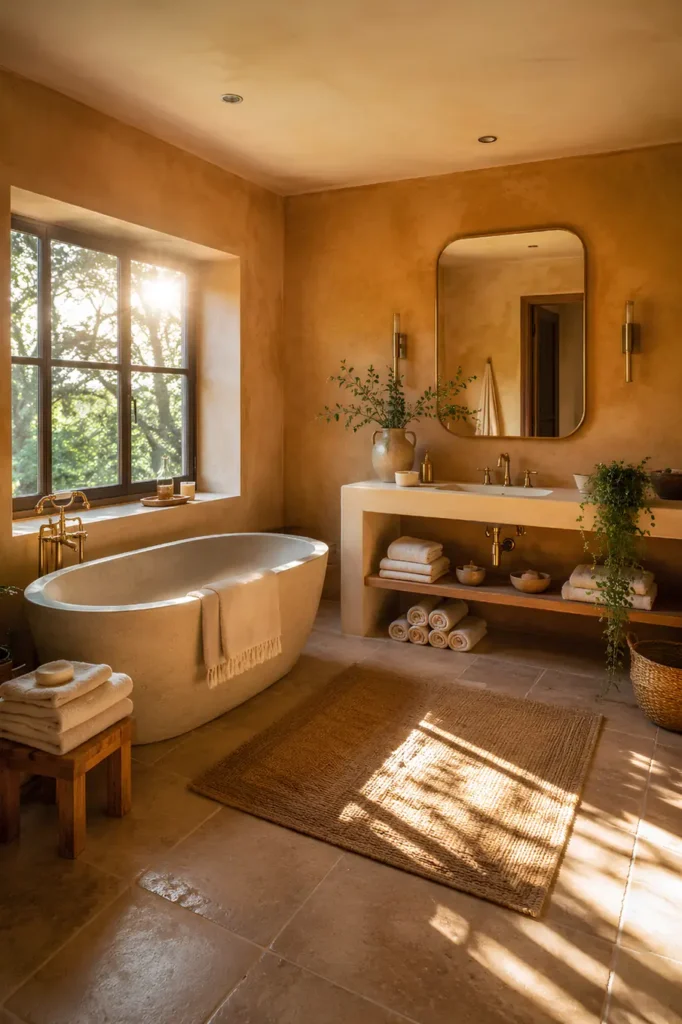
Some bathrooms are designed for evening soaks, and this one is built for the opposite: a room meant to be walked into at sunrise with the light pouring in gold and low.
Warm ochre walls, a brass-framed mirror, and a stone tub positioned directly beneath an east-facing window make the most of that early light.
The vanity holds an open shelf instead of closed cabinets, styled with rolled towels, small clay dishes, and a single trailing plant, so the room feels lived in rather than staged for a photo.
Works especially well for east-facing bathrooms, since the whole design is built around catching that early sun.
11. Charcoal Stone Meditation Bath
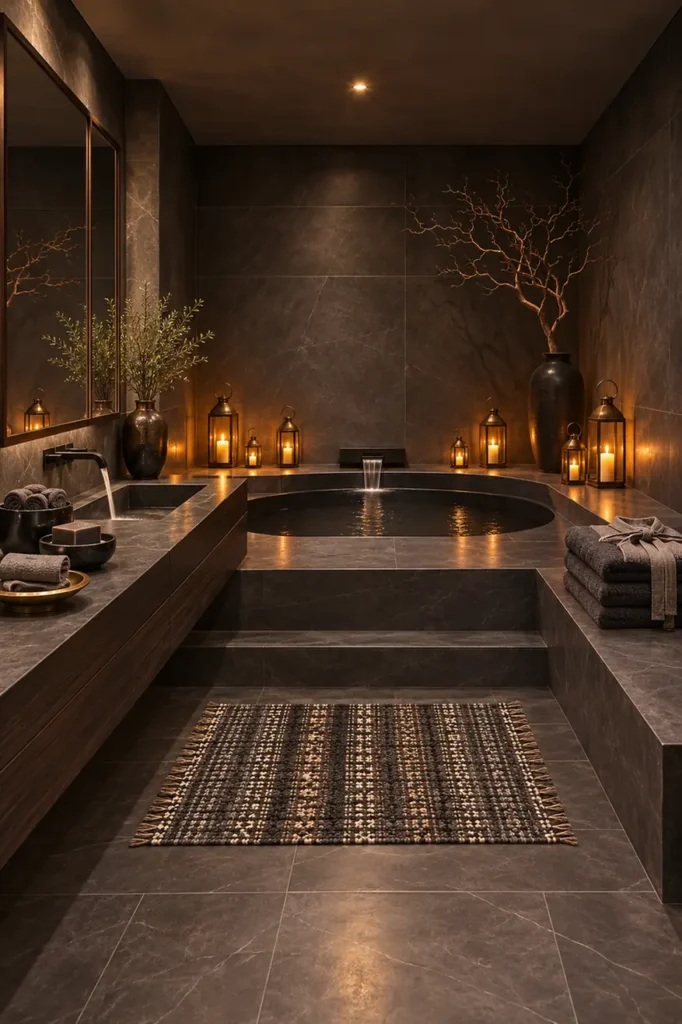
If the last two ideas leaned bright and sunlit, this one goes the opposite direction on purpose: a bathroom built for quiet and dim, not brightness and cheer.
Honed charcoal stone covers the floor and lower walls, a matte black soaking tub sits low to the ground rather than raised, and the only warmth comes from small pools of amber light rather than daylight.
It reads less like a bathroom and more like a private meditation space that happens to have plumbing.
What to gather before starting this look:
Before you start this room
Best suited for a primary bathroom without much natural window light, since darkness is the whole point here rather than a limitation.
12. Terra Rosa Garden Bath
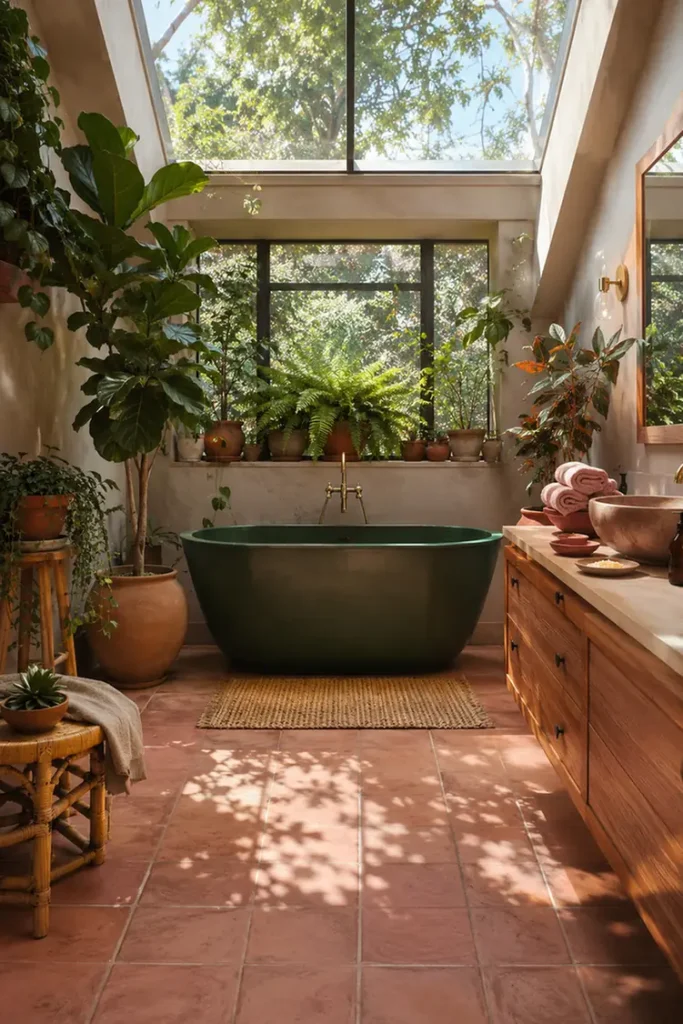
This design treats the bathroom like an extension of a garden rather than a separate room entirely.
Dusty rose clay tile covers the floor, a deep green tub sits surrounded by a cluster of tall leafy plants in terracotta pots, and a skylight overhead lets the whole room feel like it is half indoors, half greenhouse.
It is a softer, more romantic take than most of the earlier looks, built around the idea that a bathroom can feel alive rather than static.
Group plants in clusters of three or five for a fuller look.
Choose humidity loving plants so they actually thrive in the room.
Scattering single plants randomly instead of grouping them.
Choosing delicate plants that cannot handle steam and humidity.
A rewarding choice for anyone who already loves plants and wants their bathroom to feel like part of that habit, not separate from it.
Conclusion
Twelve very different bathrooms, and not one of them looks like the other. That is really the point.
A master bathroom does not have to choose between feeling like a functional room and feeling like a retreat.
Terracotta and clay, mudcloth and monochrome, carved wood, kente color, copper, adinkra symbols, woven raffia, ebony and gold, indigo, golden light, charcoal stone, or a garden full of plants- each one shows a full room built around one clear idea instead of scattered decor thrown together.
The best starting point is whichever look you kept scrolling back to. That is usually a sign of what your own space is actually asking for.
Afrocentric master bathroom ideas work best when the whole room commits to one mood rather than borrowing a little from everywhere.