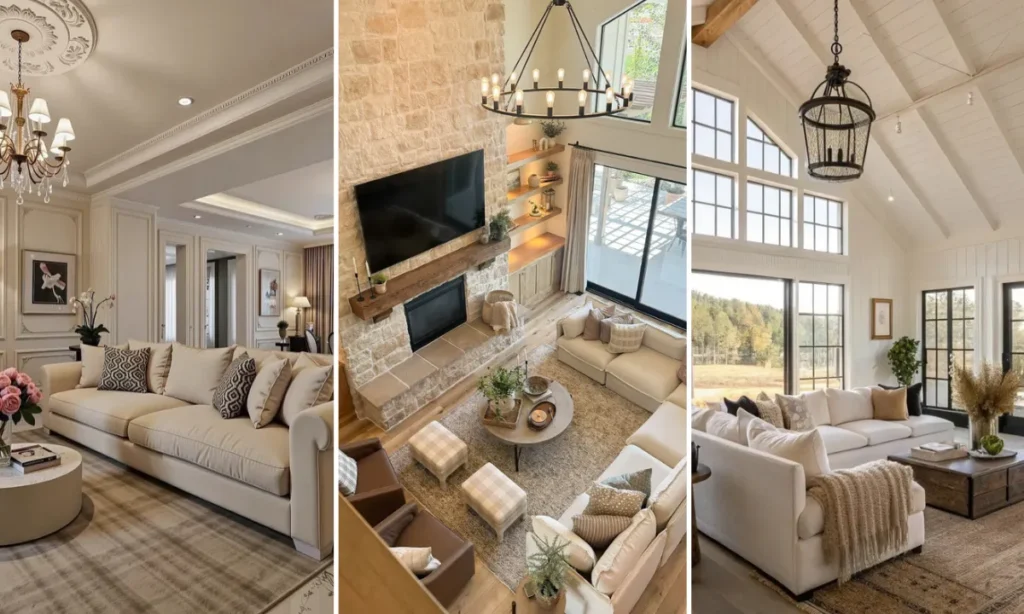

Black and white can make a farmhouse look sharp or look cold, and the line between them is thin.
Most rooms get stuck in the same three spots:
- Dark paint that makes everything feel heavy
- White that goes flat with nothing to catch the eye
- Patterns that start fighting each other
These black-and-white farmhouse decor ideas fix all three, mostly through small details instead of a full remodel.
The palette stays strict on purpose. Black, white, and a little wood or woven fiber to soften the edges.
Some ideas need only a screwdriver and an afternoon. A few are real projects. Others cost next to nothing.
Entryways, kitchens, bedrooms, and living rooms all get a turn, so there’s something for whichever corner has you stuck.
Pick one corner and start there. Take what suits your home, skip the rest, and save the ones you keep going back to.
1. Stone Chimney, Black Shiplap
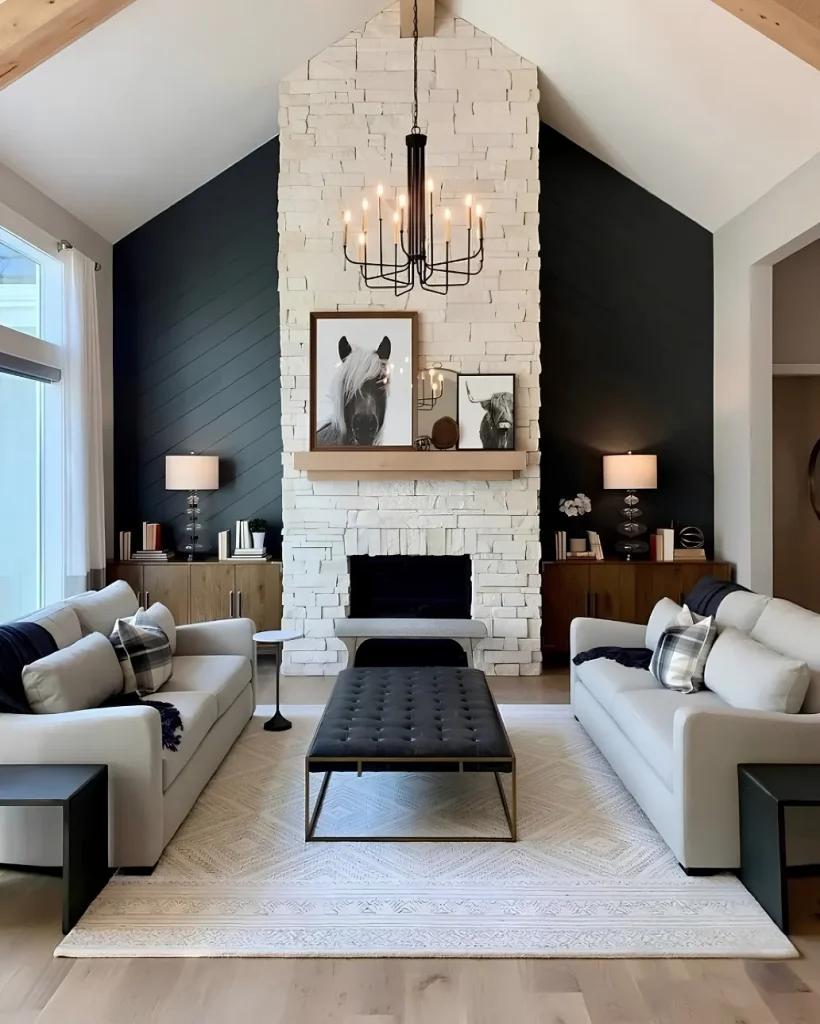
A pale stone chimney climbs to the peak, and the black shiplap on either side makes it glow.
The slanted boards follow the roofline, so the dark walls feel tall instead of heavy.
Three things keep it balanced:
- Stone and shiplap sit side by side, so neither one has to compete.
- Two sofas face each other, which leaves the fireplace as the only star.
- Black shows up again low down, in the ottoman and side tables, so the walls never stand alone.
Dark paint shows dust faster than white, so keep a microfiber cloth close.
creamy stone and upholstery
ink black walls and leather
plaid, throws, framed prints
Light wins by volume. Dark wins by edges.
2. Black Frames, Pale Walls
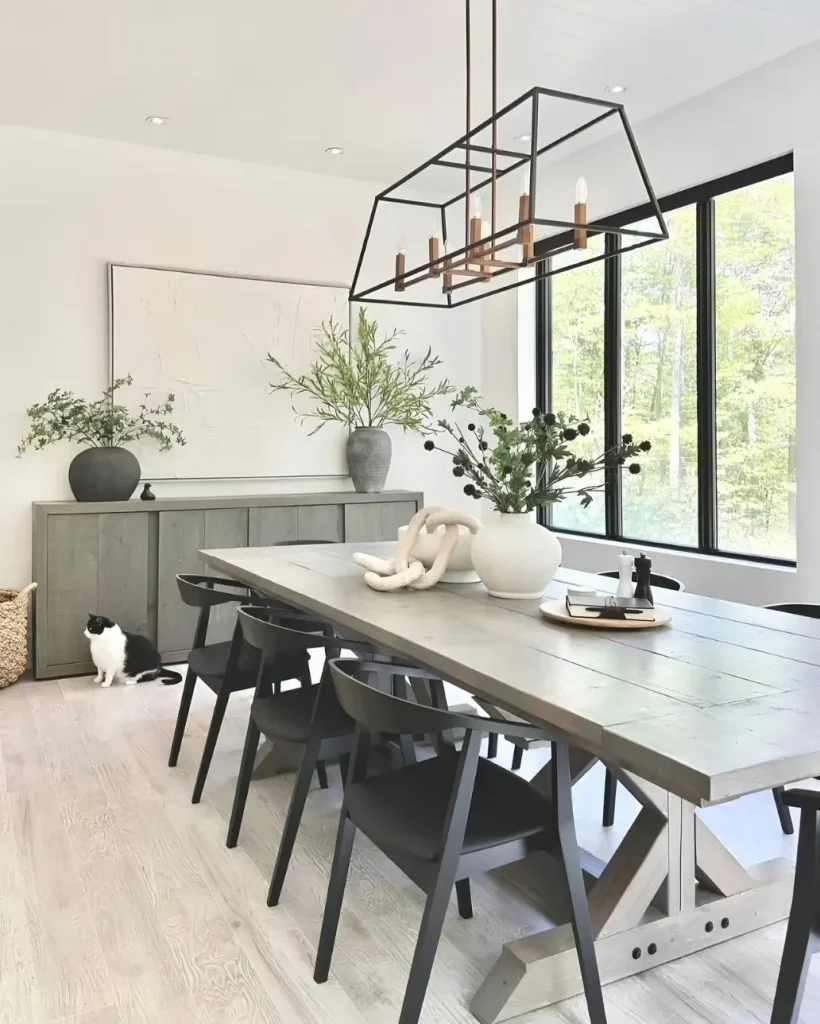
Black shows up in thin lines here. A chandelier cage, window frames, chair legs. Nothing in the room is a solid dark block.
That’s why it still feels bright. Dark outlines on pale walls read like a pencil sketch, and the eye follows the lines instead of getting weighed down.
Then comes the weathered gray table, rough and a little worn. It stops the crisp black from looking too neat for farmhouse. Slim legs do scuff, so keep a touch-up pen nearby.
3. Drapes That Frame Daylight
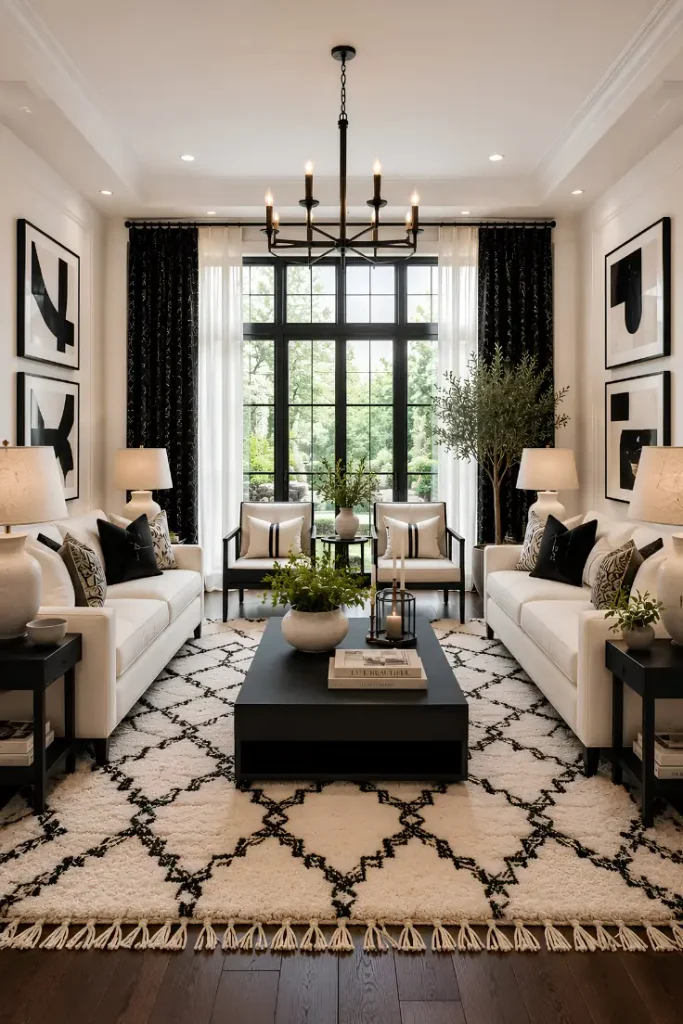
Tall black windows can feel stern, and these drapes quietly fix that.
Dark patterned panels frame the glass at the edges. White sheers hang just inside them and keep the daylight coming.
The rod sits high, close to the ceiling line, which stretches the window upward.
Black fabric can fade in strong sun, so check which way your window faces first.
Dark panels pulled wide, so none of the glass gets blocked.
White sheers left closed. They give daytime privacy and still pass light.
The black window grid stays bare. Its bars are part of the pattern.
4. White On White Layers
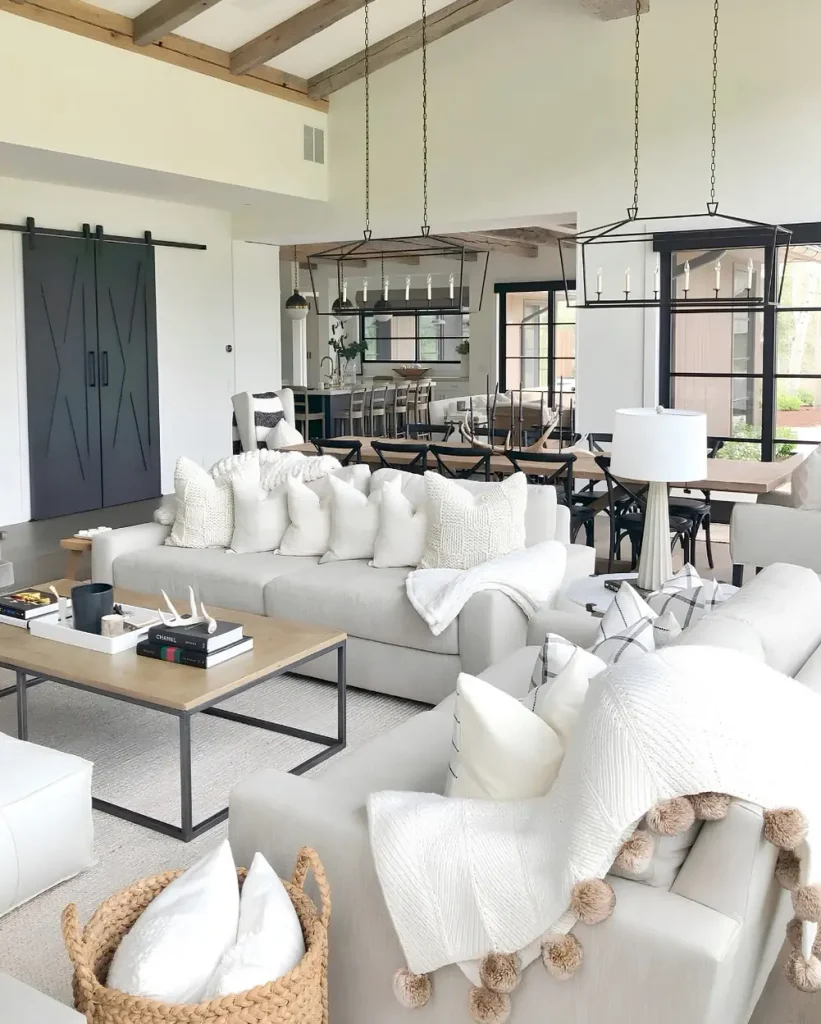
Nothing on this sofa matches, and that’s exactly why it works.
Each white is a slightly different shade in a different weave. One black check keeps it from going blank.
Stack yours like this:
- A chunky knit pillow for bulk
- Two smooth ones in a brighter white
- One plaid pillow with thin black lines
- A throw with a pom-pom edge
White shows everything, so choose washable covers if kids or pets share the sofa.
5. Shiplap Above The Island
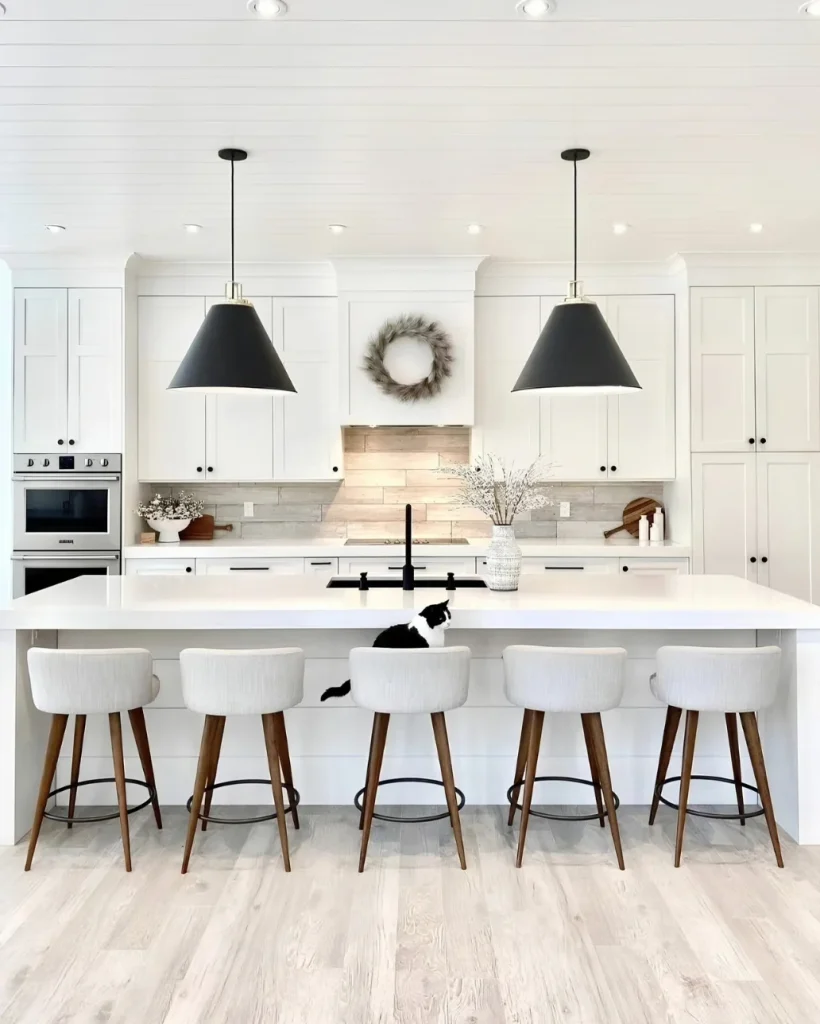
Look up in this kitchen and the farmhouse part is hiding in plain sight.
White shiplap runs across the ceiling, so the black cone pendants hang against crisp horizontal lines instead of a blank sheet.
To copy it:
- Paint the boards before you nail them up.
- Find the joists and nail into them, never just the drywall.
- Cut each recessed light opening as you reach it.
Fill the nail holes last and touch up the paint. A weekend job if the room is empty.
Flat ceilings where the joists are easy to find.
Kitchens with a vent fan that actually works.
Rentals, since nail holes make it permanent.
Rooms where steam builds up and never escapes.
6. Daisy Print On Dark Stools
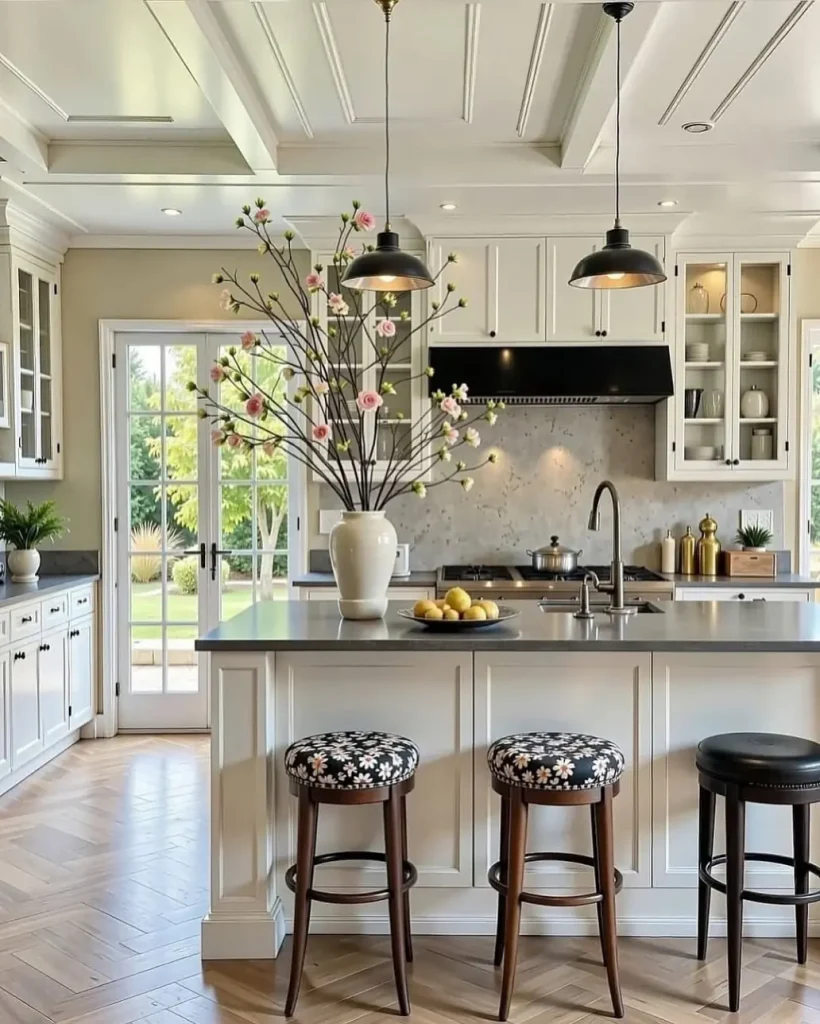
Where does a pale kitchen hide its pattern? On the stools.
Small white daisies on black cover two seats, and the cream cabinets finally have someone to play with.
Why it works:
- A small print reads as pattern from across the room
- The black ground echoes the dome pendants and range hood overhead
- Only two seats carry it, so everything else stays quiet
Choose a tightly woven, wipeable fabric. Seats collect crumbs and spills.
Cut fabric a few inches wider than the seat, pull it taut over the old cushion, and staple it underneath.
Unscrew the seat, swap worn foam for fresh padding, then cover it so the shape stays firm.
7. Mirror Wall With Black Grid
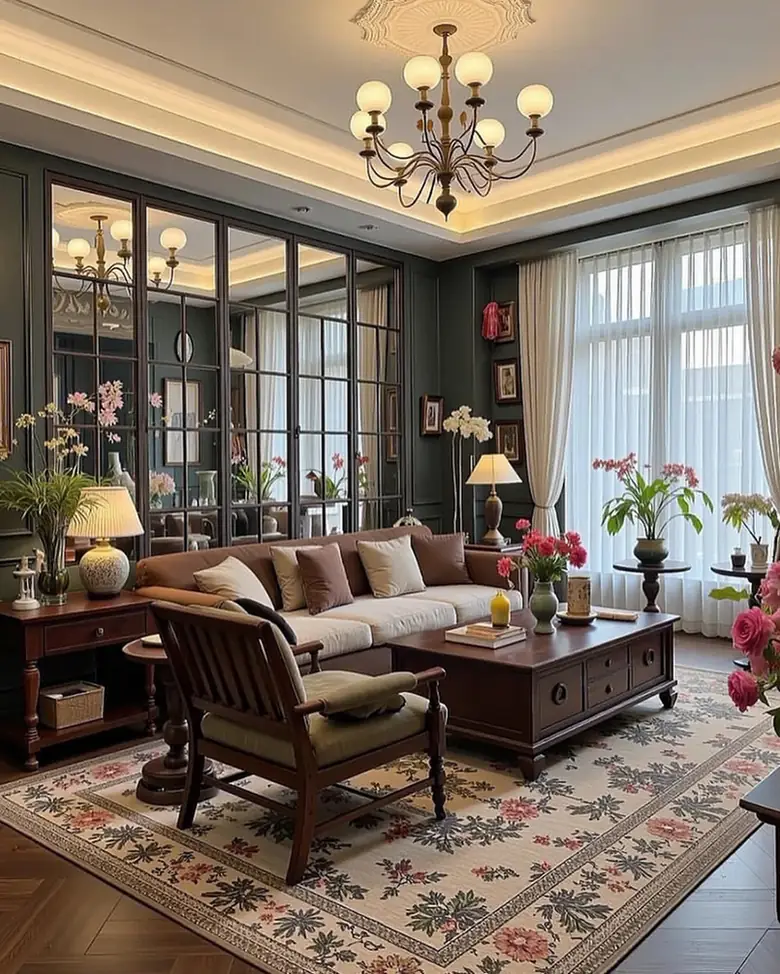
Thin black lines can turn a mirror into a second window wall.
Here, tall mirrored panels sit across from the real windows. They throw daylight back over the dark wall and double the chandelier.
The grid is the farmhouse part. It borrows the look of black-framed windows without cutting a single new one.
Glass this big shows every fingerprint, so keep a cloth close.
▸ Match the grid’s height to your window frame, so the two read as a pair.
▸ Heavy glass belongs in studs, never in drywall alone. Mark them before you buy.
▸ Leave a hand’s width around any lamp or vase so nothing knocks the edge.
8. Every Other Shelf Goes Dark
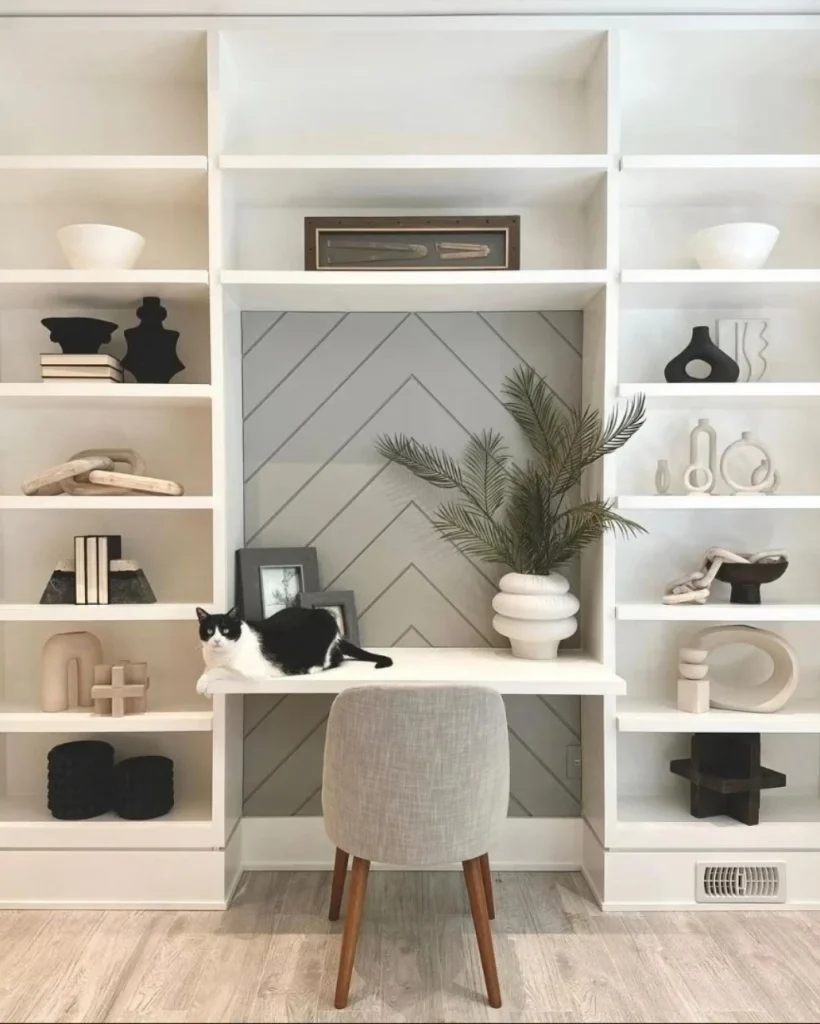
Count the dark pieces on these shelves and a pattern shows up.
Black and cream objects take turns, row by row, and the same rhythm repeats on both sides of the desk nook.
That repeat keeps a packed wall from feeling crowded. The wooden chain links keep it farmhouse instead of gallery.
Open shelves collect dust fast, so pick pieces you can wipe in seconds.
Light, dark, light, dark. Flip the order if you own more black.
9. Candlelight At Every Height
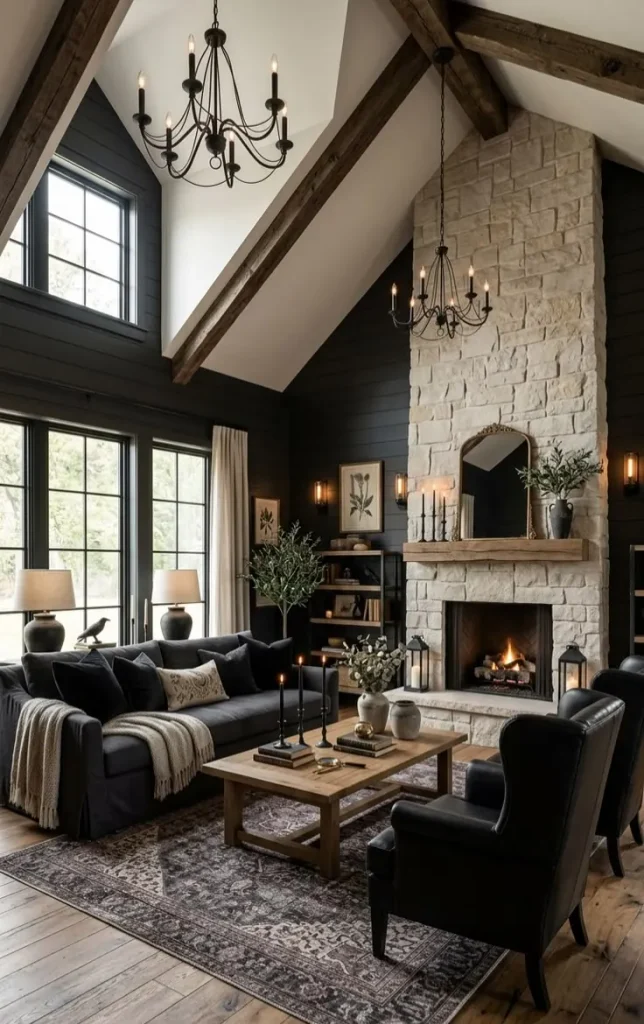
Dark walls swallow light, so this room feeds them in small flickers.
No single source is bright. Together they keep the black shiplap from turning into a wall of nothing.
Build the glow from the top down:
- Chandelier first, on a dimmer if you can.
- Sconces at eye level, near art or a mirror.
- Lamps beside the seating.
- Tapers or lanterns low, on the table and hearth.
Best low on a table or hearth, where you can watch it and keep it off the linen.
Best in sconces and tall fixtures you can’t reach easily.
Real tapers on the table, flicker bulbs everywhere else.
10. Rug With A Black Border
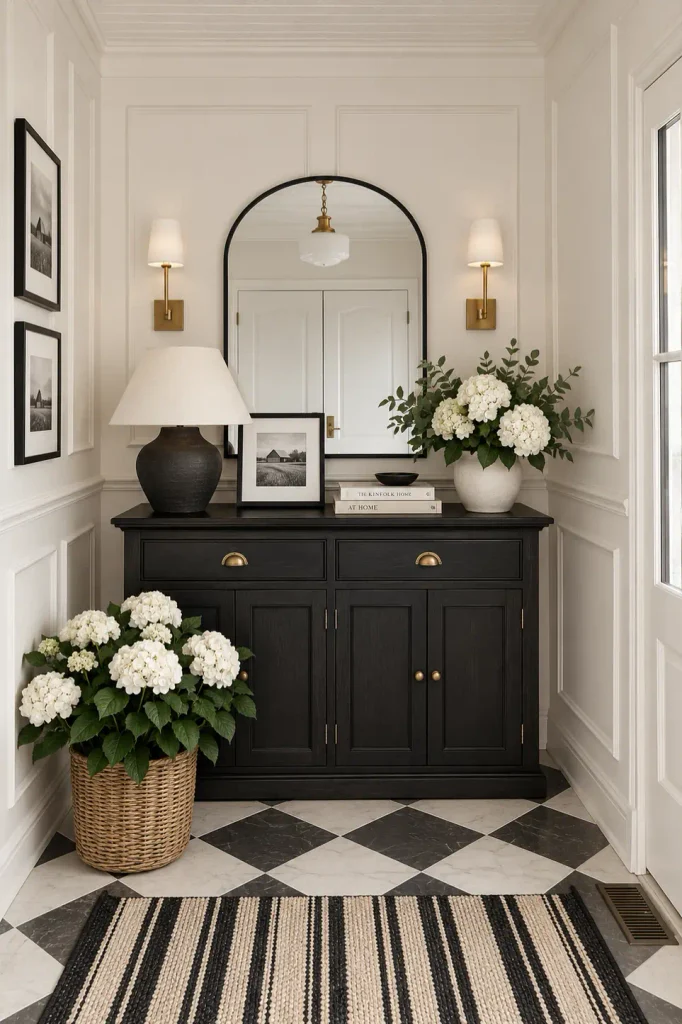
Pale rugs tend to float, and a black edge nails them down.
That wide border frames the seating area like a mat around a photo. The sofa, chair, and table suddenly read as one group.
To pull it off:
- Pick a rug big enough for the front sofa legs to sit on.
- Match the border’s black to your coffee table.
- Keep the middle plain so the edge gets all the credit.
Light rugs with dark edges show crumbs along the border, so vacuum it often.
Pale rug, pale floor. The edges melt together and the furniture drifts.
A crisp outline, and a table that looks planted instead of parked.
11. Console Plus Tucked Bench
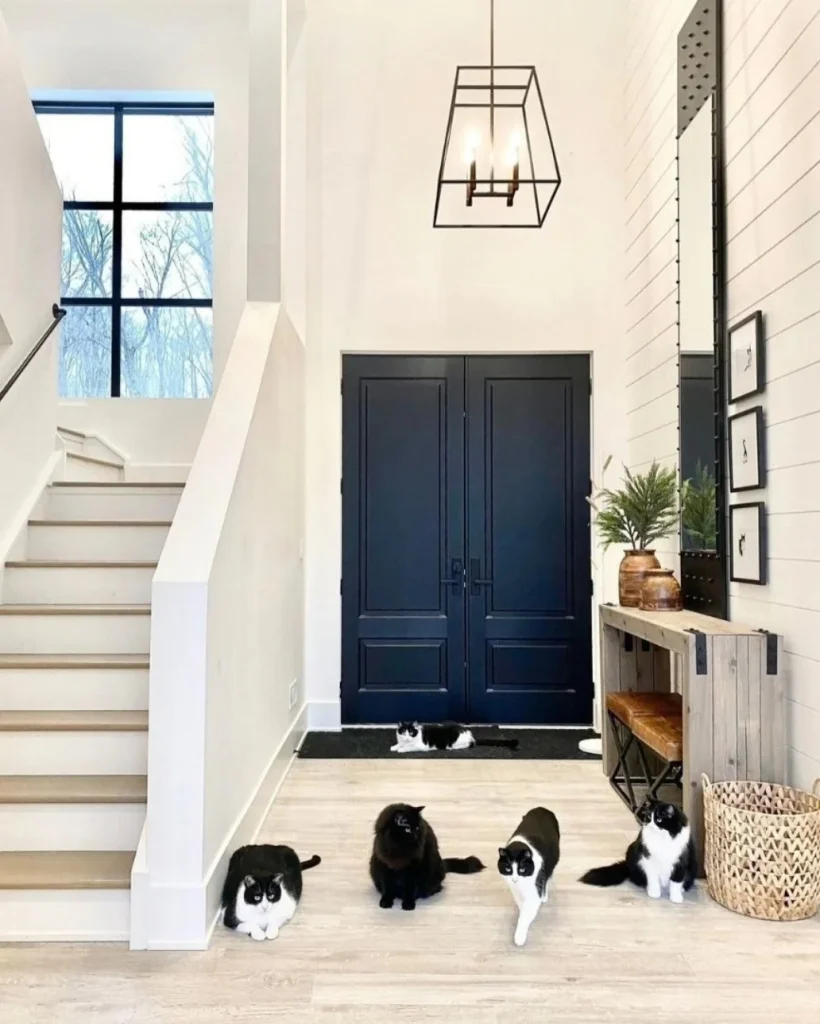
Entries rarely have room for much furniture, so this console works two jobs.
Weathered gray wood on top, black iron straps at the corners, and a bench slid underneath for shoe time.
What makes it work:
- A bench low enough to tuck all the way in
- A top deep enough for a plant and a tray
- A basket on the floor nearby for muddy boots
Wet umbrellas leave rings on wood, so the tray earns its keep.
Leave a hand’s width between the bench and the console top.
That gap lets you grab the bench without scraping your knuckles on the wood above.
12. Hardware Does The Black Work
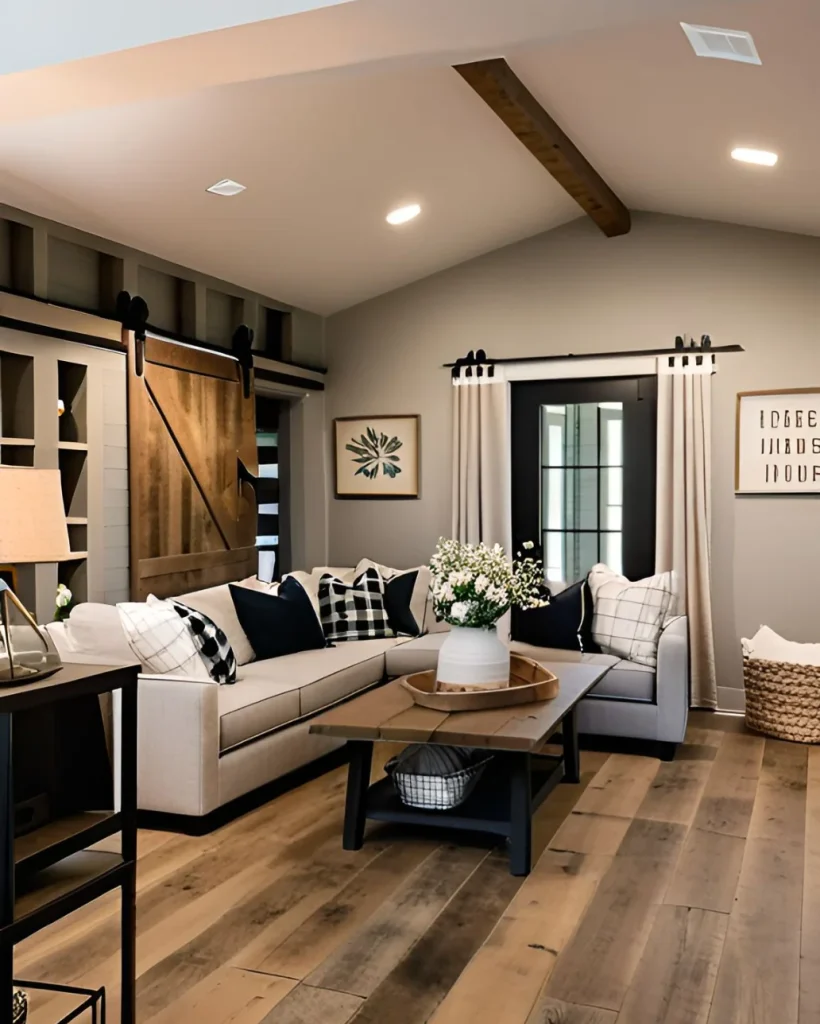
Paint isn’t the only way to get black into a room.
Here it arrives as metal. A track over the barn door, a rod over the glass door, and the legs of the coffee table.
Each piece is thin, so the room stays light. Against rough planks and linen, the iron looks like it came with the house.
One catch: match the finishes. A shiny black rod beside a matte track reads like a mistake.
The barn door track. It carries a heavy door every single day, so thin hardware is a risky place to cut corners.
Curtain rods and rings. They only hold light linen, so a slim, basic black set does the same visual job.
13. Dark Spindles Up Pale Stairs
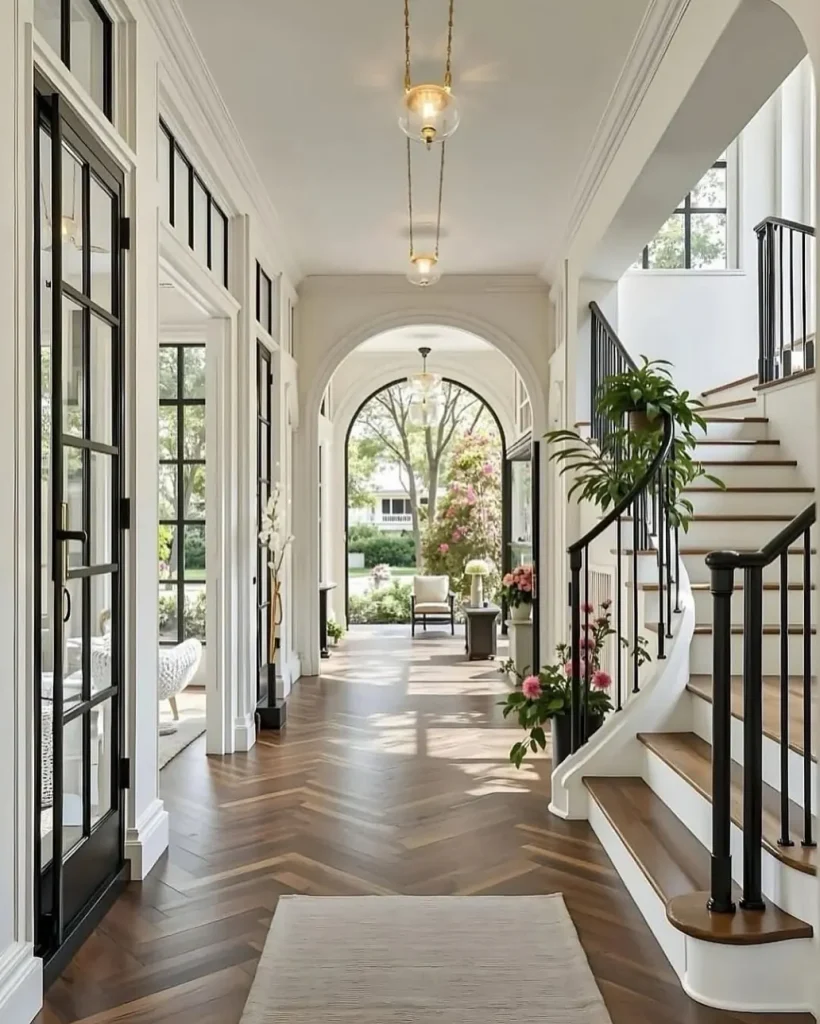
Stairs are the biggest thing in this hall, yet they look light as a sketch.
Thin dark spindles let the eye slide through to the white wall behind. A solid dark panel would have blocked it.
The formula stays simple:
- Black on the spindles, posts, and rail
- White on the risers and walls
- Warm wood on the treads only
Spacing between spindles is regulated, so check local code before changing any.
14. Wavy Mirror, Boxy Vanity
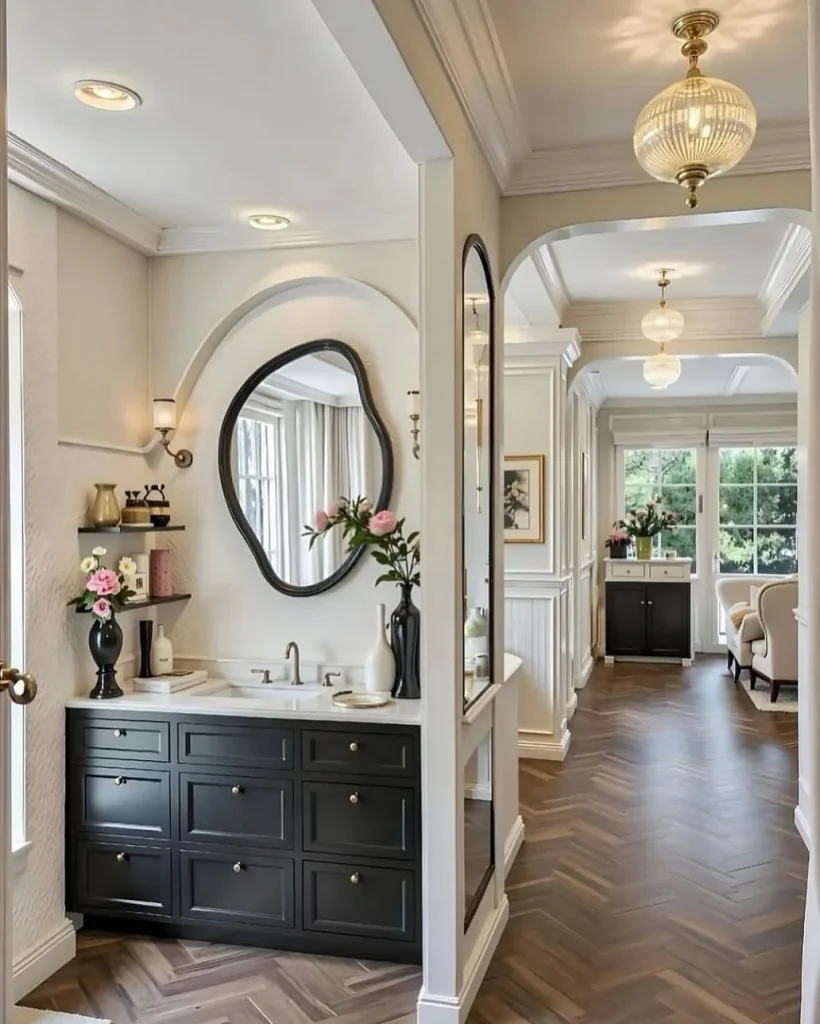
Straight lines run the whole vanity, so the wobbly mirror above it does the softening.
Its thin black frame ties back to the drawers. Without that link, it would look pasted on.
Pull it off in this order:
- Start with a plain, boxy vanity.
- Add one curved piece, never two.
- Repeat the vanity’s black in a vase or two.
Gold-toned knobs add the only metallic note. Dark drawers show water spots, so wipe splashes dry.
15. Mix Patterns In Two Colors
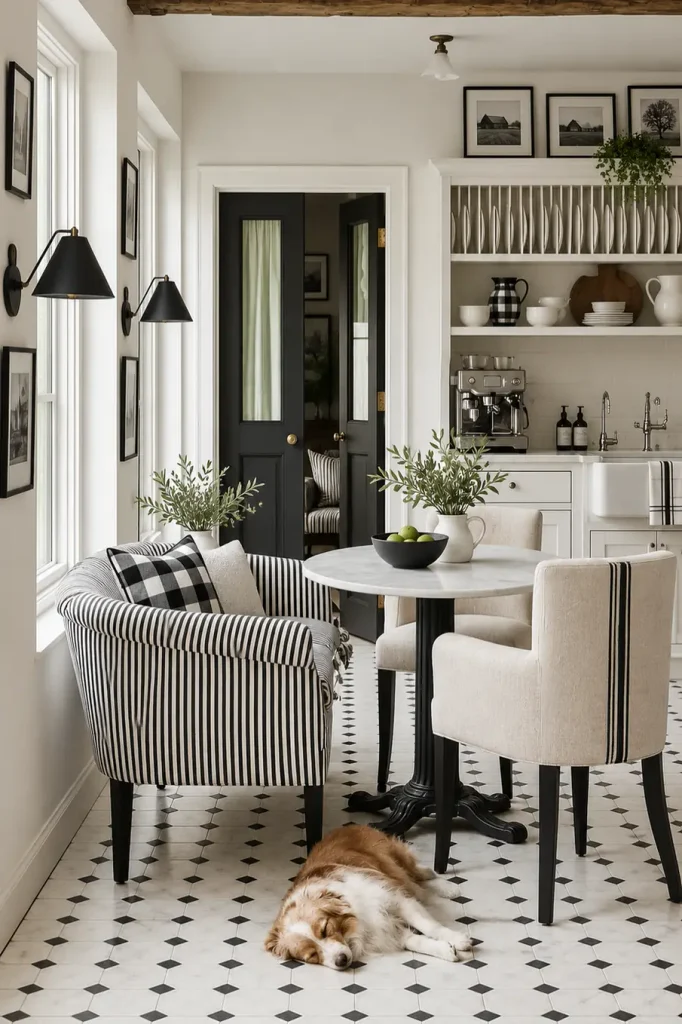
Three patterns share this corner, and none of them fight.
They get along for two reasons. Every one is black and white, and each is drawn at a different size.
Break either rule, and it turns noisy fast. A second stripe at the same width as the first would do it.
A busy floor also hides crumbs and paw prints better than a plain one.
Floor tile with dark dots spaced wide apart
Chair stripes, narrow and regular
Gingham pillow with a tiny check
16. Linens Edged In Black
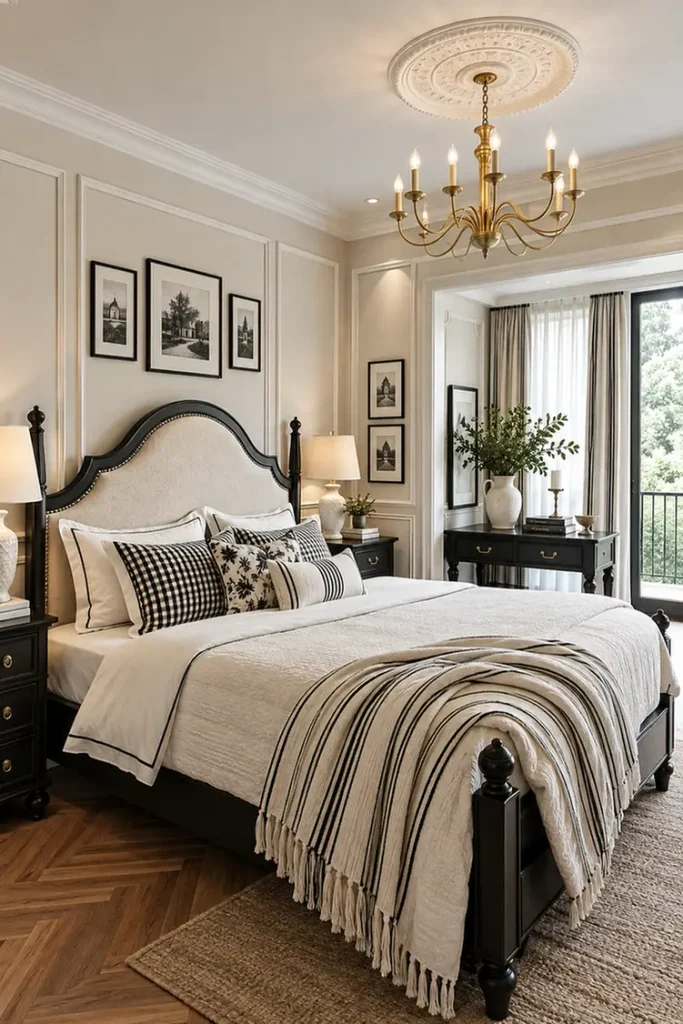
Look closely at the pillowcases, and you’ll spot a thin black border.
It’s a tiny detail. It’s also the reason the black bed frame doesn’t look dropped onto a white bed.
Find the line in three places:
- Around the edge of each pillow sham
- Along the folded back duvet
- Echoed in the stripes of the throw at the foot
White linens with dark trim collect lint, so keep a roller nearby.
You want it ready tonight.
You plan to wash it often and skip the sewing.
You already own plain white sets.
You want the trim width to match your bed frame.
17. Hydrangeas Against A Black Cabinet
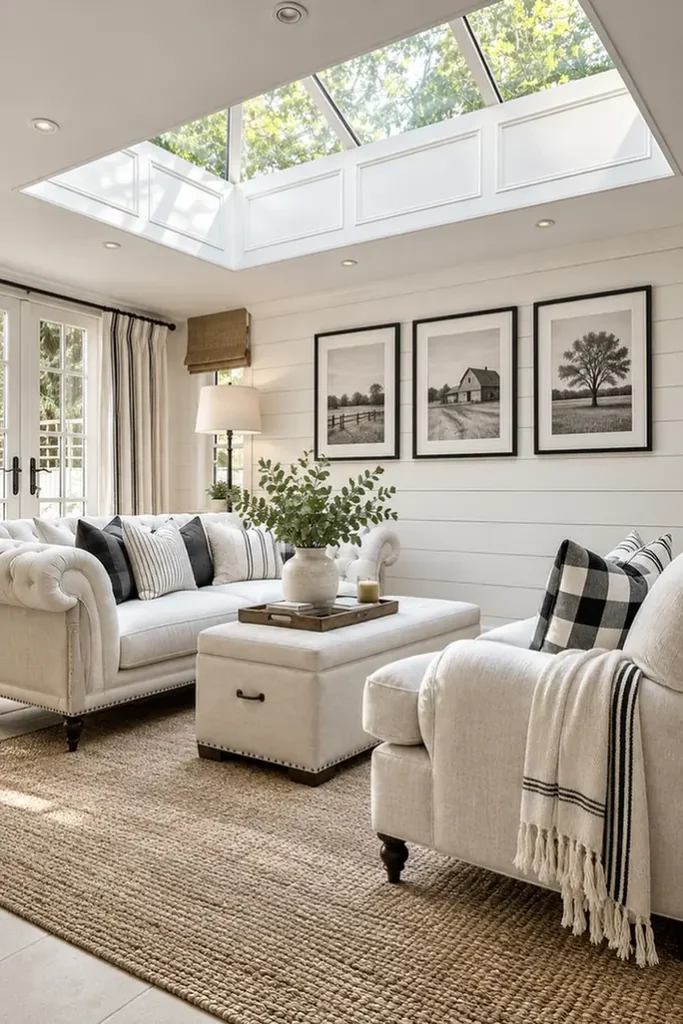
A black cabinet looks heavy until something round and white sits next to it.
Big hydrangea heads do the lightening here. One bunch stands on top, and a second fills a basket at the cabinet’s foot.
The basket matters most. It gives the cabinet a landing spot at floor level and hides the awkward corner beside it.
Real hydrangeas drink heavily and droop fast without water. Faux stems skip that drama.
A woven laundry basket or tall planter.
A plain white pitcher for the top.
Big white blooms, real or faux.
A few leafy stems to fill the gaps.
18. Three Frames, One Story
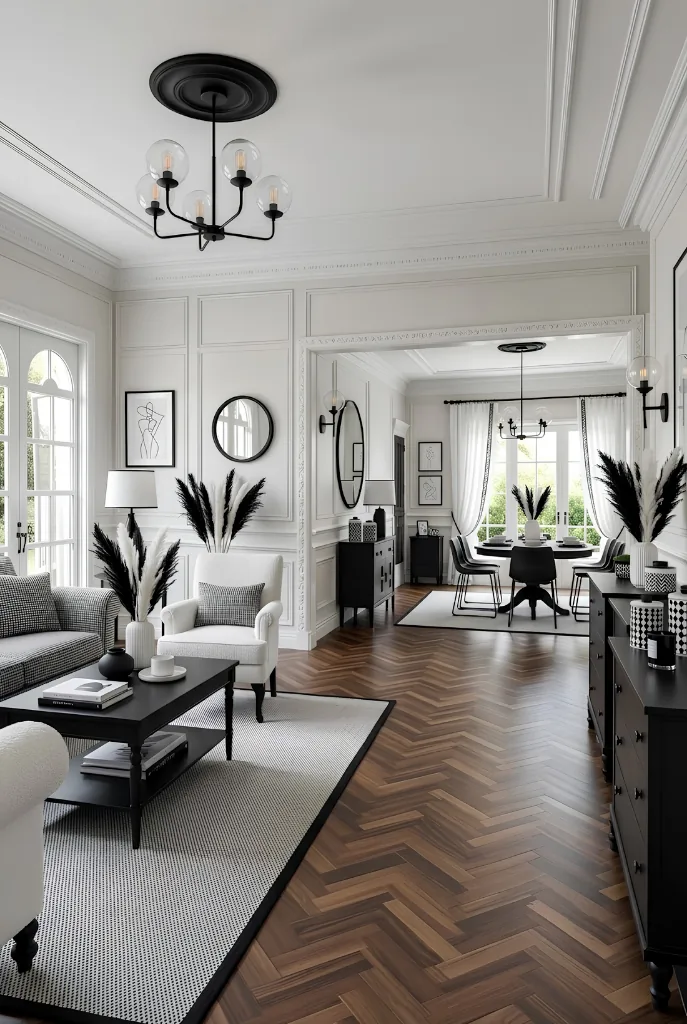
What does a farmhouse wall say without any color?
Fence, then barn, then a single tree. Three grayscale farm scenes read like one short story.
Matching black frames and deep white mats hold the set together. The white shiplap behind them quietly supplies the farmhouse.
Mats make frames heavier than they look, so hang them on proper anchors, not a lone nail in drywall.
Conclusion
The best black and white farmhouse decor ideas are the quiet ones. A dark line here, a pale wall there, and one rough, honest material to keep it human.
Nothing here asks you to start over. Your sofa, your floors, and your old pulls can stay put while you test the look.
Start with the corner that bugs you most. Change one thing, live with it for a week, then decide what’s next.
If a few of these caught your eye, save them to your Pinterest board and come back when you’re ready to rearrange.