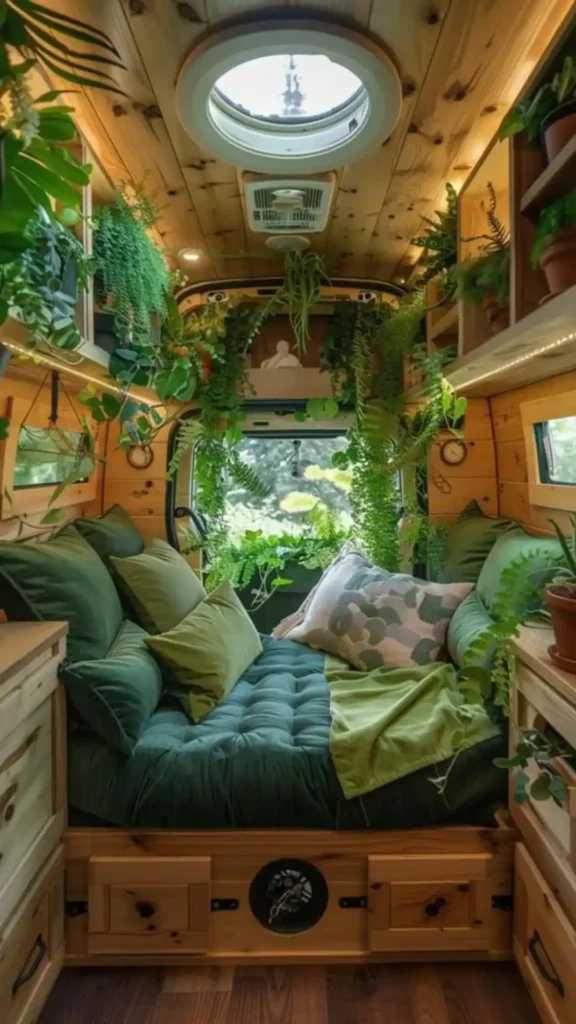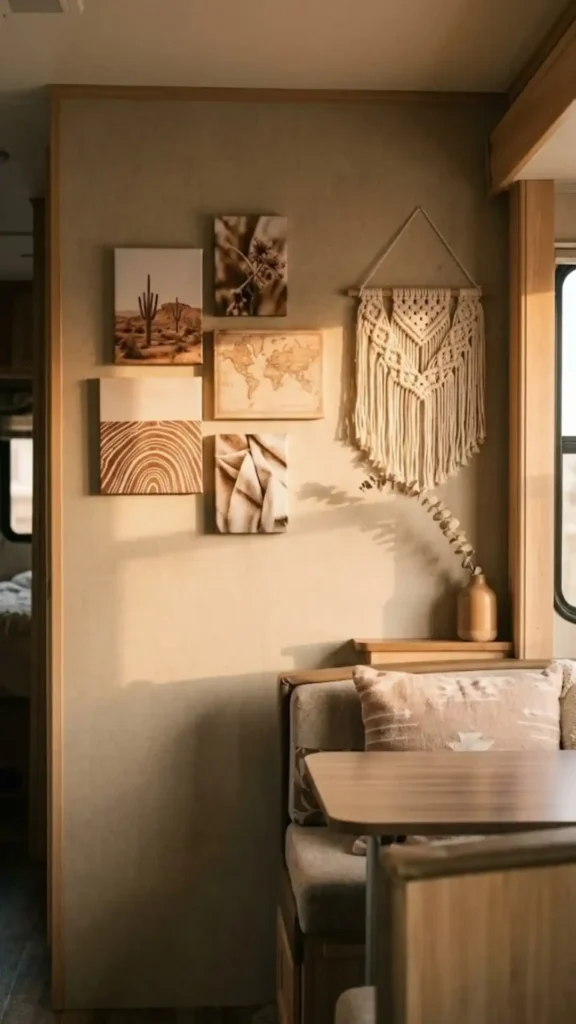
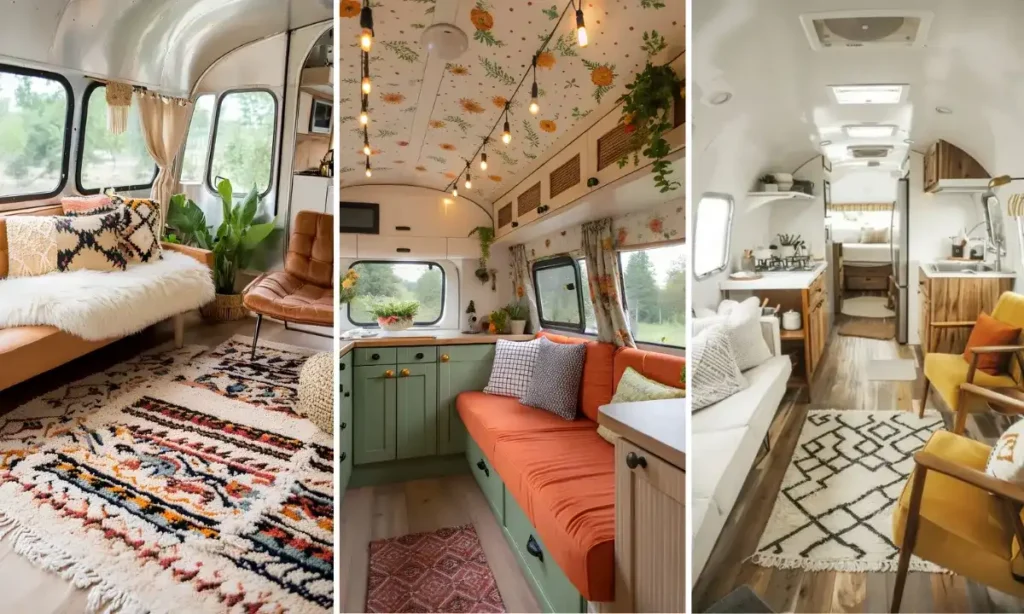
Most classic rigs get gutted before they get decorated.
That’s the wrong order.
The campers in this roundup skipped the blank slate. They kept the wood grain, the porthole windows, the boxy dinettes, and built vintage camper decor ideas right on top of what was already there.
Twenty of them, pulled from real builds.
Some lean mid-century, with mustard velvet and tapered wood legs. Others go full cottage floral, or land somewhere between Airstream chrome and campground kitsch. A few cost almost nothing. A few take a full weekend.
None of them require ripping out a single cabinet.
What ties them together is texture, not a single color rule. Reclaimed wood next to a crochet throw. Leather next to sheepskin. A loud wallpapered ceiling next to seating that stays completely quiet.
Pick the ones that match your rig, not the whole list at once.
1. Reclaimed Wood Dinette Booth
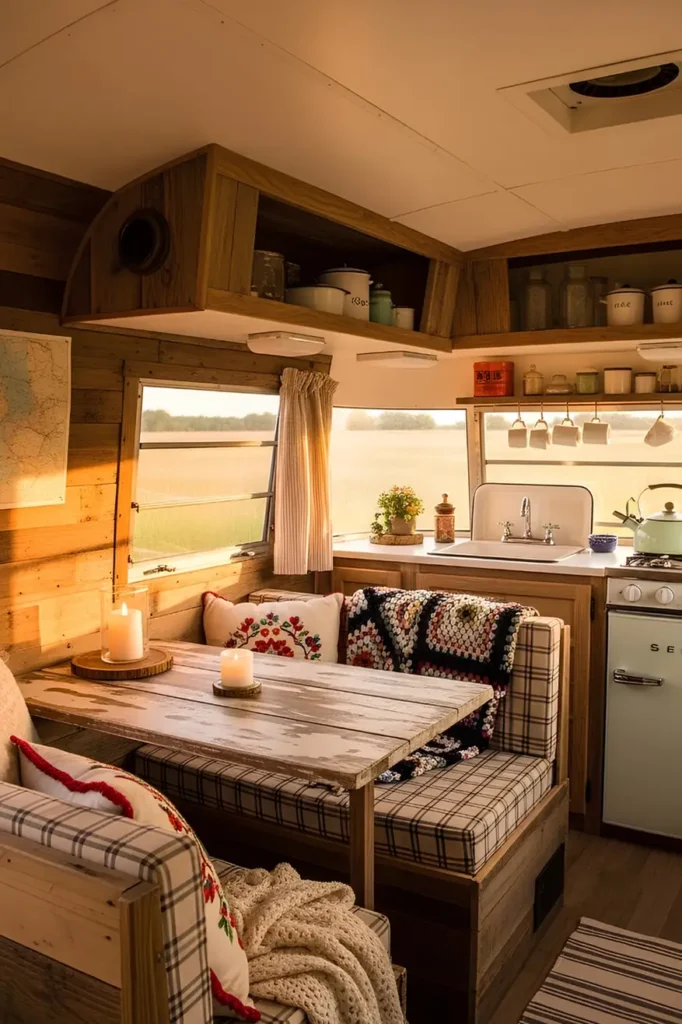
That silvery, worn wood tabletop isn’t new lumber dressed up to look old. It’s the real texture that makes a tiny dinette feel lived in, not staged.
A few things make rough reclaimed wood work instead of looking unfinished:
- Bare wood grain and visible nail holes read as authentic vintage faster than any paint color could
- Soft layers on top, like a crochet throw or an embroidered pillow, keep the wood from feeling cold
- Open shelving above the booth lets light bounce into a corner that would otherwise stay dim
Reclaimed wood does need the occasional reseal where elbows and hands rest most, since bare wood wears faster than a sealed finish. Keep up with that, and the corner turns into the spot people linger in, not just pass through on their way to the kitchen.
2. Mid-Century Mustard Accent Chairs
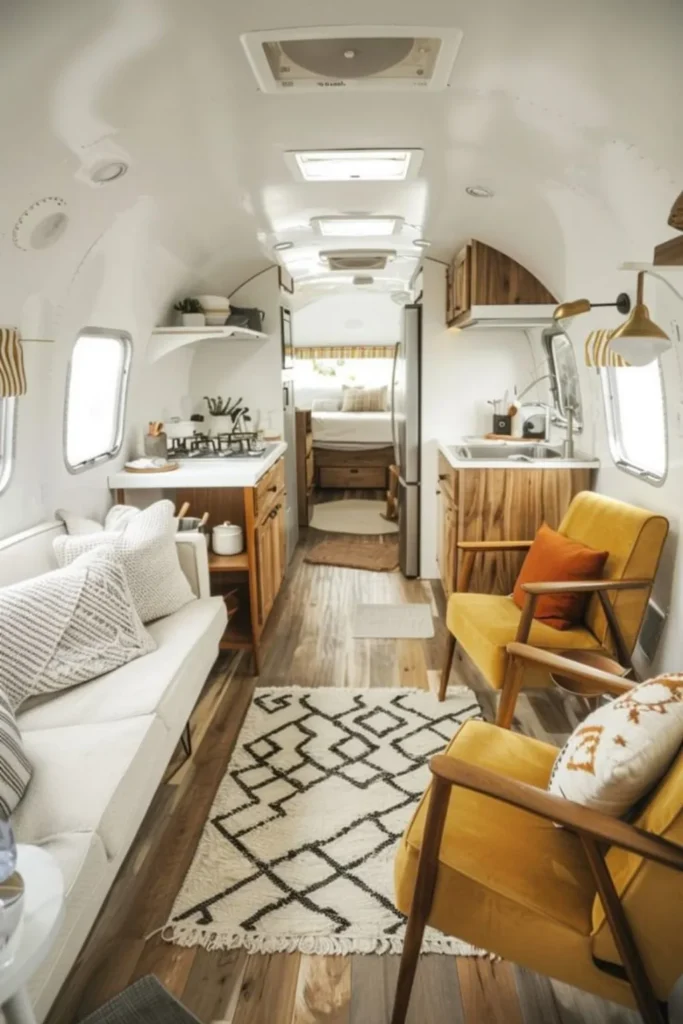
Most campers default to neutral seating because it feels safe. It also disappears into the walls after the first year.
What works better here is one confident color choice, repeated just twice. Two mustard velvet chairs, angled to face each other, do more for the room than a whole palette of muted tones.
A few reasons the combo holds up:
- Warm mustard against white walls and honey-toned wood keeps the space from feeling clinical
- Slim tapered legs and exposed wood arms nod to mid-century design without copying a specific era exactly
- A patterned wool rug underneath grounds the bright chairs so they don’t feel like the only decision made in the room
Velvet does show wear at the arms first, so plan on a fabric protector spray if the chairs sit near a door people brush past daily.
3. Botanical Nook With Layered Prints
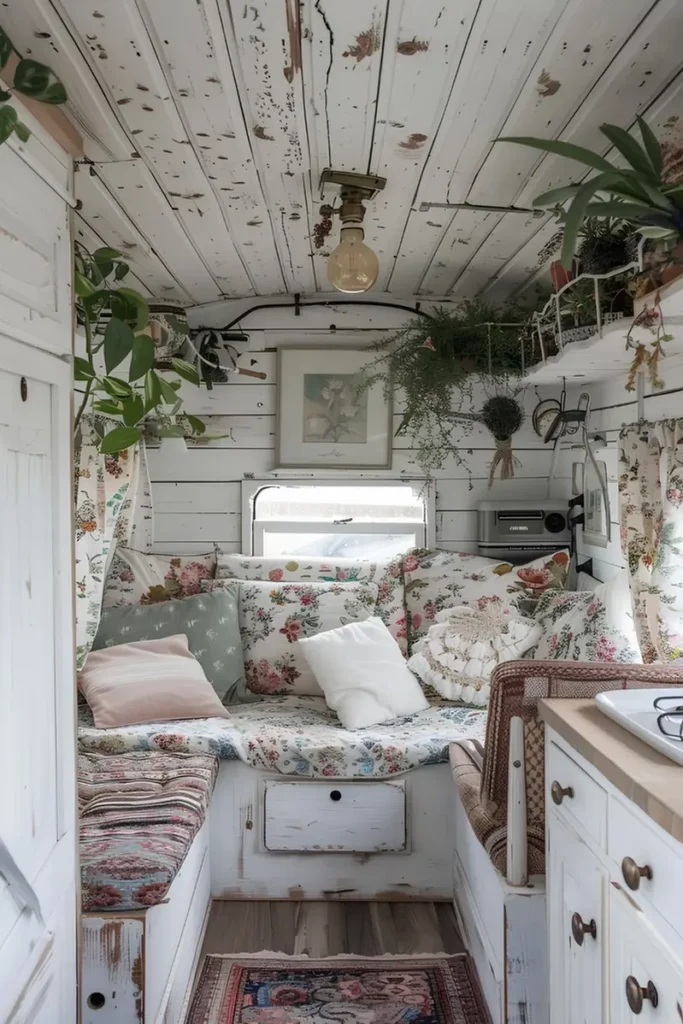
Chippy white paneling and a beat-up ceiling could easily read as neglected. Here it reads as intentional, mostly because of what gets stacked on top of it.
Layering does the heavy lifting in this corner:
- Hanging plants at three different heights fill the ceiling without blocking the window
- Floral cushions in overlapping patterns and sizes replace what would otherwise be a plain bench seat
- A single botanical print grounds the wall so the plants don’t compete with empty space
Real houseplants near a window that gets direct sun need a rotation schedule, or the leaves facing the glass scorch while the shaded side stays healthy. Turn the pots every week or two and the whole cluster keeps its fullness evenly.
💡 Quick Tip
Trailing pothos and ferns handle the low light of a camper interior far better than flowering plants, which fade fast without strong direct sun.
4. Green Cabinetry With Floral Ceiling
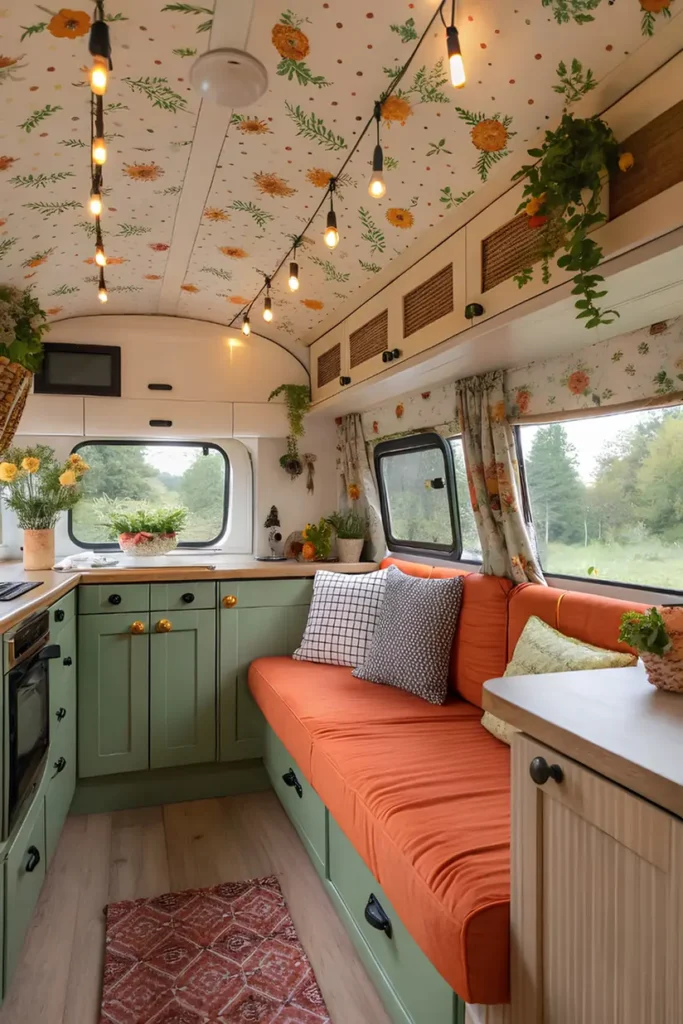
A wallpapered ceiling sounds risky in a moving vehicle. Done right, it becomes the first thing anyone photographs.
The trick is restraint everywhere else. Sage green cabinets stay solid and matte. The countertop is plain wood. That leaves the ceiling free to carry all the pattern, paired with a single bold cushion color instead of a second competing print.
String lights tucked along the ceiling seams do double duty, softening the transition between wallpaper and cabinetry while adding warm light after sunset.
Painted cabinet doors near a stove and sink take the most daily wear, so a durable enamel finish matters more here than the color choice itself.
5. Chrome Pendant Ceiling With Teal Cabinets
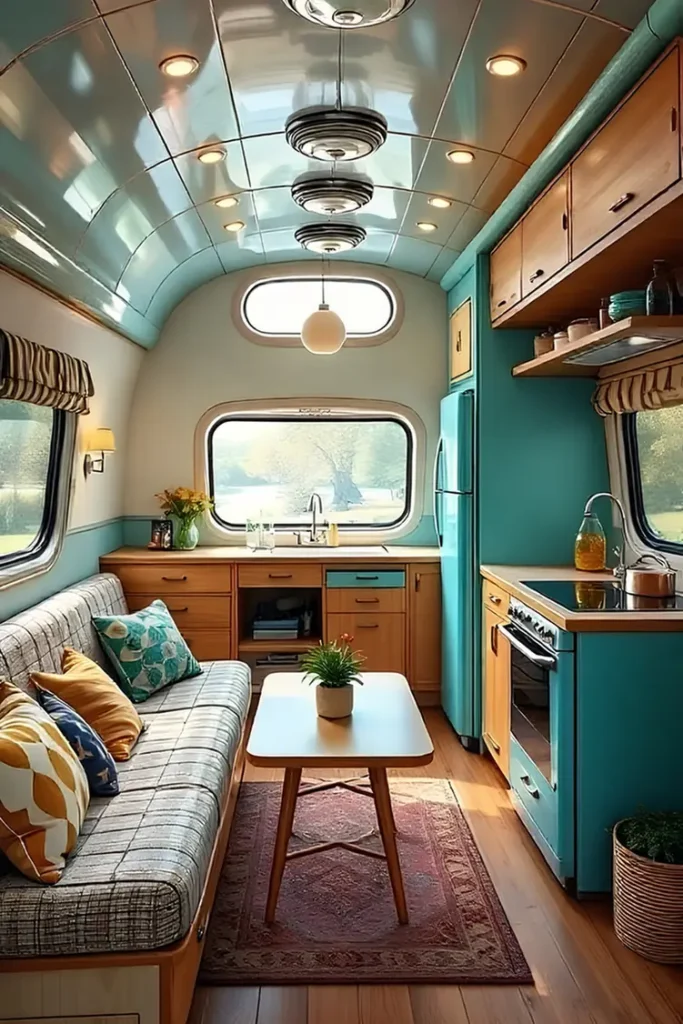
Glossy metallic paneling on a ceiling reflects every light source in the room, which turns three small pendant fixtures into what looks like a dozen.
That reflectivity only works because the rest of the palette stays disciplined. Teal cabinetry, honey-toned wood trim, and a single compact dinette table keep the color story to just two hues plus wood tone.
What makes the small table earn its keep:
- Round top with tapered legs takes up less visual weight than a rectangular one
- Sits centered under the main window, so daylight doubles as the dining light
- Folds or slides in some builds, which matters when the space converts to a sleeping area at night
Metallic ceiling panels show fingerprints and condensation spots fast, so a quick wipe down after cooking keeps the reflective effect from dulling.
warm honey wood tone
glossy teal cabinetry
chrome fixture accents
6. Leather Lounge With Global Rug Layers
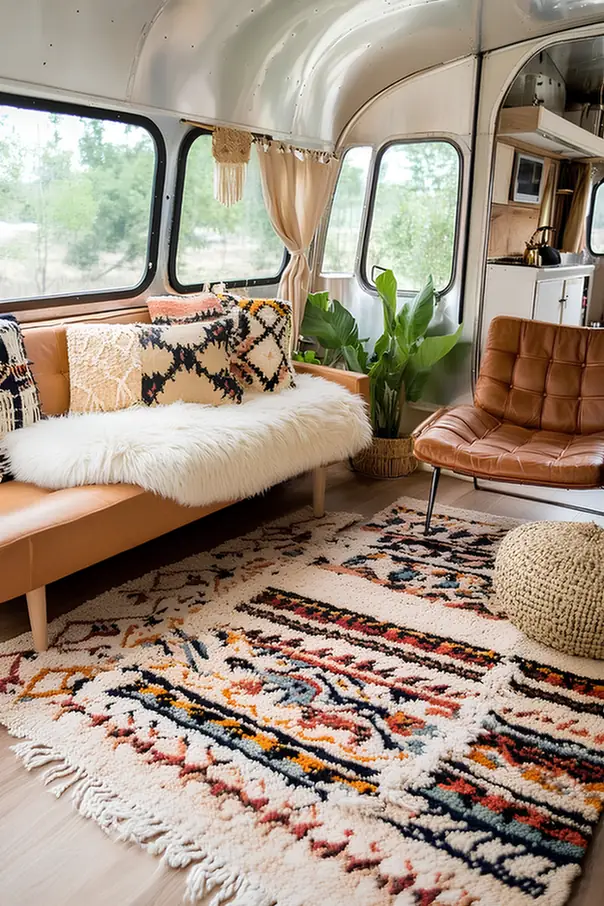
Two rugs stacked, three pillow patterns, a sheepskin throw. On paper it sounds like clutter. In this build it reads as collected over time rather than bought in one trip.
The reason it holds together is texture range, not color matching. Cognac leather brings shine and structure. Sheepskin brings softness on top of a firm bench. A patterned wool rug underneath adds the graphic weight that keeps everything from blending into beige.
A macrame curtain tie and a single tall plant finish the corner without adding a fourth pattern to track.
Leather seating in a vehicle that sits in direct sun through a window needs conditioning every few months, since heat dries it out faster than leather furniture at home.
7. Layered Vintage Rug Runners
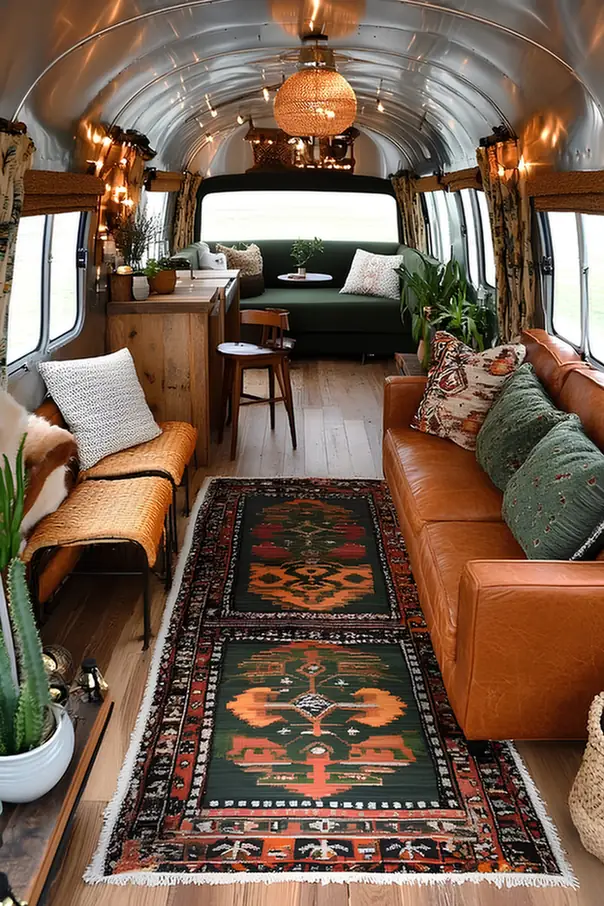
Two mismatched rugs stacked end to end usually look like a decorating accident. Turning them the same direction, in the same jewel tone family, fixes that instantly.
The payoff shows up the moment guests walk down the aisle: the eye reads one long, rich runner instead of two separate purchases, and the whole lounge feels older and more collected than it actually is.
Rattan and brass fixtures overhead pick up the same warm tones as the rug border, which is what keeps the space from splitting into competing zones between the kitchen and the seating.
Wool runners in a high-traffic aisle need a shake-out and rotation every few weeks, since foot traffic wears the center path faster than the edges.
Recreate this look
8. Skylit Corner Reading Nook
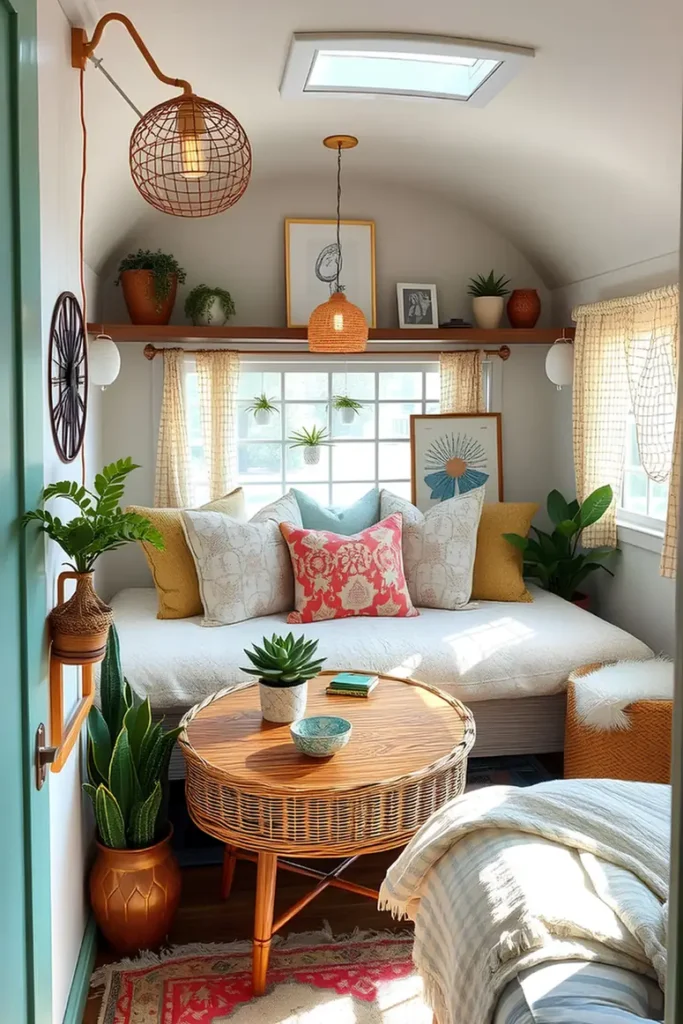
Most small campers push the sleeping bench flat against a bare wall and stop there. What works better is building a whole reading corner around it instead.
A shelf running above the daybed holds framed art and small potted plants at eye level, so the wall stops feeling like storage and starts feeling like a gallery. A round wicker table pulled close keeps everything within arm’s reach without eating floor space.
The skylight overhead does the real work, though. Natural light from above reads brighter than a side window in a room this narrow, and it makes the whole nook usable well past midday.
A skylight over a daybed does mean stronger UV exposure on any fabric directly underneath, so darker throws or slipcovers will fade faster than the surrounding curtains.
9. Fringed Plaid Tablecloth Layers
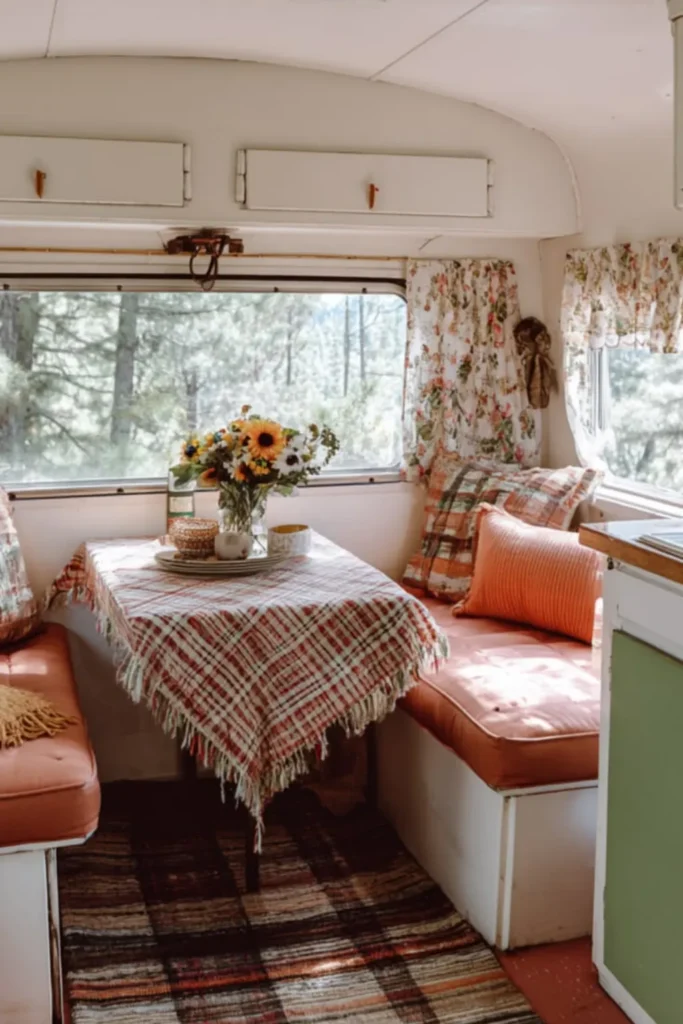
A dinette this small doesn’t need new furniture to feel finished. It needs fabric that doesn’t match anything else in the room, on purpose.
The fringed plaid tablecloth and the striped rug underneath share the same rust and cream tones but different scales of pattern, which keeps the eye moving instead of settling on one flat block of color. Fresh sunflowers on top do more work than a permanent centerpiece ever could, since real flowers force a small reset every week or two.
A couple of things worth noting if copying this:
- Vinyl bench cushions in coral or peach hold up to sun and spills far better than fabric would in this spot
- Sage green cabinet fronts nearby keep the warm plaid from tipping into overly matchy territory
Coral vinyl seating does fade unevenly if one side of the booth sits in direct afternoon sun more than the other, so flipping cushions occasionally keeps the color even.
A permanent runner or table topper for everyday use.
A fringed vintage tablecloth swapped seasonally.
Keep a plain base layer, then rotate a printed topper for the seasons.
10. Wood-Paneled Ceiling With String Lights
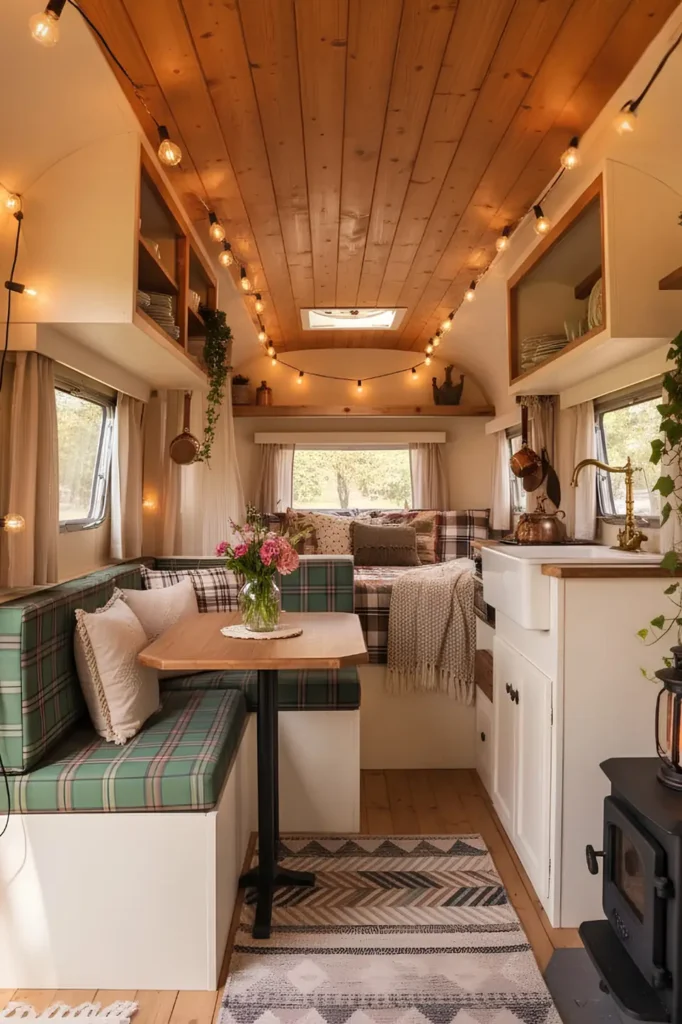
Vinyl and laminate ceilings are standard in most rigs. Swapping in real tongue and groove wood is one of the few upgrades that changes the entire feel of a camper the moment you step inside.
Warm honey wood overhead pulls the eye up and makes a narrow galley feel taller than it is. String lights run along the ceiling seams and add a soft glow at night without needing a single new fixture installed.
Plaid bench cushions in forest green pick up the same warmth as the wood, while a woodstove tucked at the far end signals this build is meant for cold weather trips, not just summer parking lots.
Solid wood paneling in a space with constant temperature swings needs a gap left at the seams for expansion, or the boards can buckle after a few seasons.
11. Retro Wave Print Ceiling and Walls
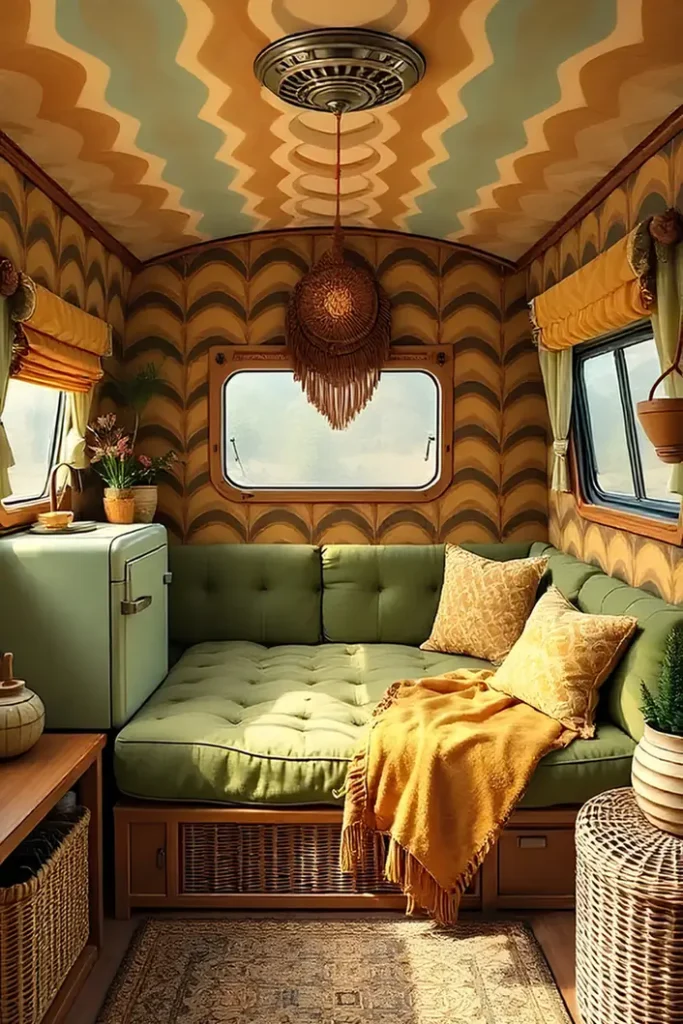
This is the boldest print in the whole roundup, and it earns that spot by covering nearly every surface. Wallpaper matched from ceiling to wall in a scalloped wave pattern turns a small lounge into something closer to a time capsule.
Olive tufted cushions keep the seating simple against all that pattern. A woven rattan pendant, wicker baskets under the bench, and a rattan side table repeat the same natural material three separate times, which ties the loud print back to something grounded.
A mustard throw blanket and matching curtains pull one color out of the wallpaper and repeat it just enough to feel deliberate rather than random.
Full wall and ceiling wallpaper in a moving vehicle needs edges resealed periodically, since vibration loosens seams faster than it would in a stationary room.
Full pattern coverage only works when the seating stays completely quiet.
12. Zoned Retro Kitchen and Lounge
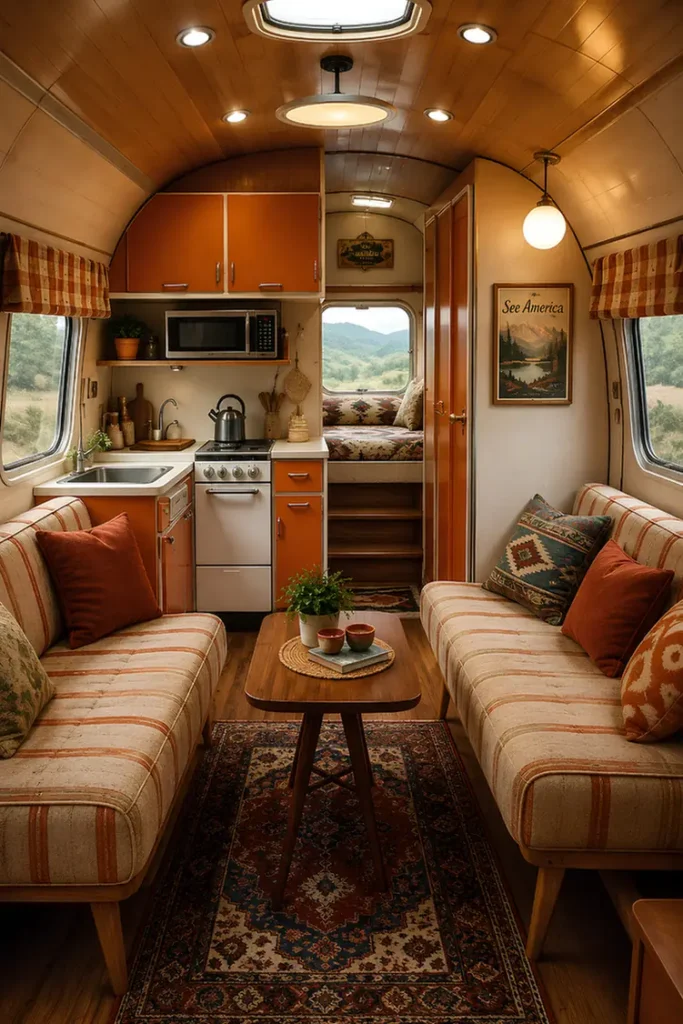
Long, narrow campers tend to blur into one continuous room if nothing marks where each activity happens. This layout solves that with color instead of walls.
Burnt orange cabinetry stops exactly where the galley ends, so the eye reads “kitchen” the second it hits that hue. Striped bench seating on both sides then takes over for the lounge zone, with a single oval coffee table anchoring the middle so neither couch has to do double duty as a dining spot.
Striped upholstery near a kitchen zone picks up cooking odors faster than solid fabric, so a washable slipcover option is worth planning for from the start.
| Zone | Job | Anchor piece |
|---|---|---|
| Galley | cooking and prep | burnt orange cabinet run |
| Lounge | sitting and gathering | striped bench seating |
| Hallway nook | transition to sleeping area | vintage travel print |
13. Brass Hardware on White Cabinetry
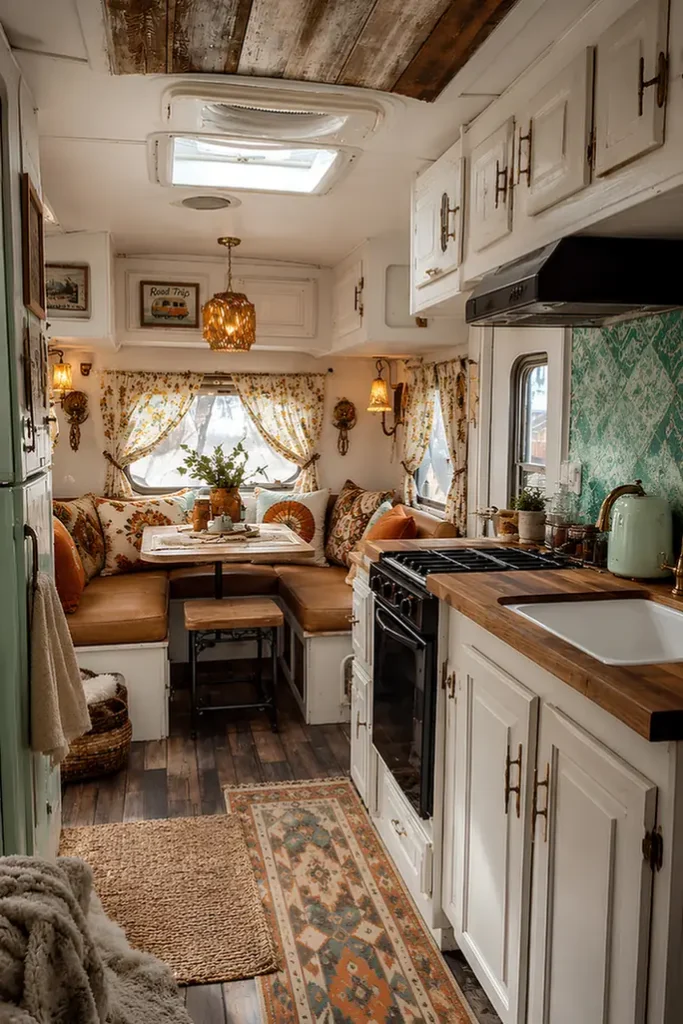
Most people repaint tired camper cabinets white and stop there, expecting the fresh coat to carry the whole kitchen on its own.
What actually finishes the look is swapping every knob and pull for aged brass. A dozen small brass touches do more visual work than one large statement piece, since they catch light across the entire wall instead of in just one spot.
Butcher block counters and a teal geometric backsplash add warmth so the white cabinets don’t drift toward sterile, while tan leather bench cushions bring in the last bit of color the space needs.
Unlacquered brass hardware will darken and spot with handling over time, which most people end up preferring since it reads as original vintage rather than freshly installed.
The same brass finish repeated on every pull ties the whole wall together.
Warm metal against crisp white keeps the kitchen from feeling flat.
14. Airstream Booth With Vintage Wall Art
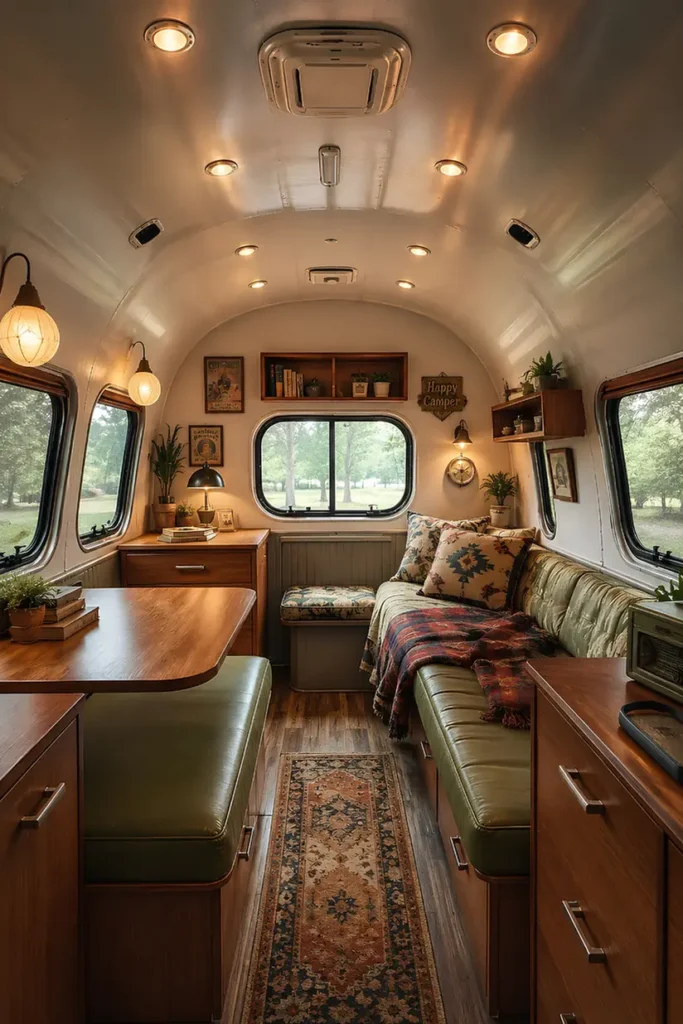
Bare aluminum walls in a classic Airstream can feel more like a workshop than a home if nothing softens them.
Framed travel posters and a small “Happy Camper” sign fix that fast, mounted at the same height so they read as a set instead of scattered afterthoughts. Wood tone cabinetry on both sides warms the metallic shell, and olive leather bench seats trade the shine of the walls for something matte and grounded.
A vintage runner rug underneath handles the narrow aisle, tying the seating to the cabinetry without adding a fourth color into the mix.
15. Book Nook Daybed With String Lights
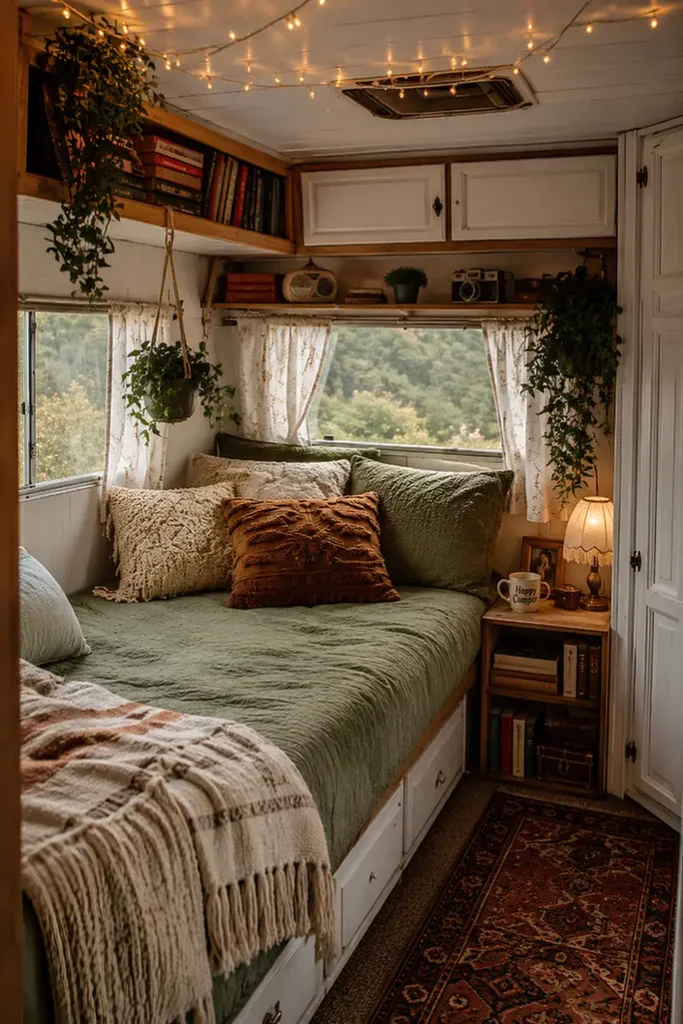
What makes a daybed feel like a real nook instead of a spare mattress shoved against a wall?
A small bookcase pushed right up against the mattress edge, stocked with worn paperbacks and a working radio, gives the corner a reason to linger beyond just sleeping. Hanging plants on either side of the window soften the transition from bed to wall, and a fringed throw at the foot adds the one texture layer the quilted bedspread doesn’t have on its own.
- String lights strung along the ceiling seam
- A small lamp on the nightstand for reading without overhead light
- A patterned runner rug that hides wear near the doorway
String lights left running overhead in a low-ceiling space need a timer or switch within reach, since a hardwired fixture isn’t always an option in a converted nook like this one.
16. Rustic Live Edge Coffee Table Styling
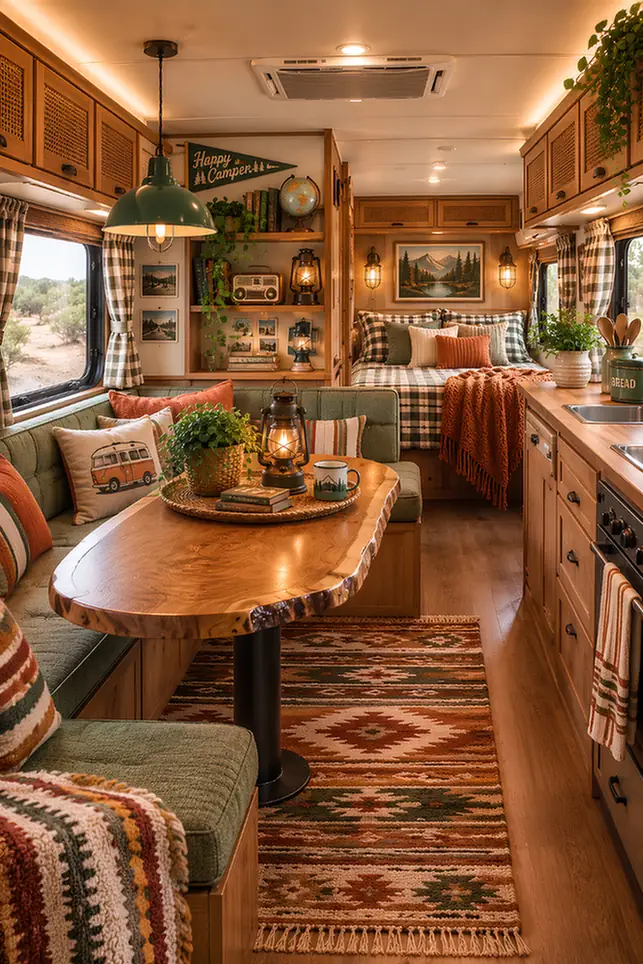
A plain rectangular table would get lost against this much pattern. A live edge slab with a visible bark line does the opposite. It becomes the one surface in the room that looks like it was found, not bought.
The centerpiece styling follows a simple height rule that makes the tabletop read as curated rather than cluttered.
- Tallest: an oil lantern for evening ambiance and vertical height
- Medium: a small stack of field guides and camp books
- Shortest: a potted plant tucked beside the lantern base
Southwest-patterned rugs underneath in the same rust and cream family tie the table back to the striped bench cushions without repeating the exact same pattern twice.
Live edge wood left unsealed will absorb spills at the bark edge first, so a beeswax finish reapplied twice a year keeps that natural edge from staining.
oil lantern
stacked field guides
a low potted plant
17. Vintage Campground Signage Kitchen
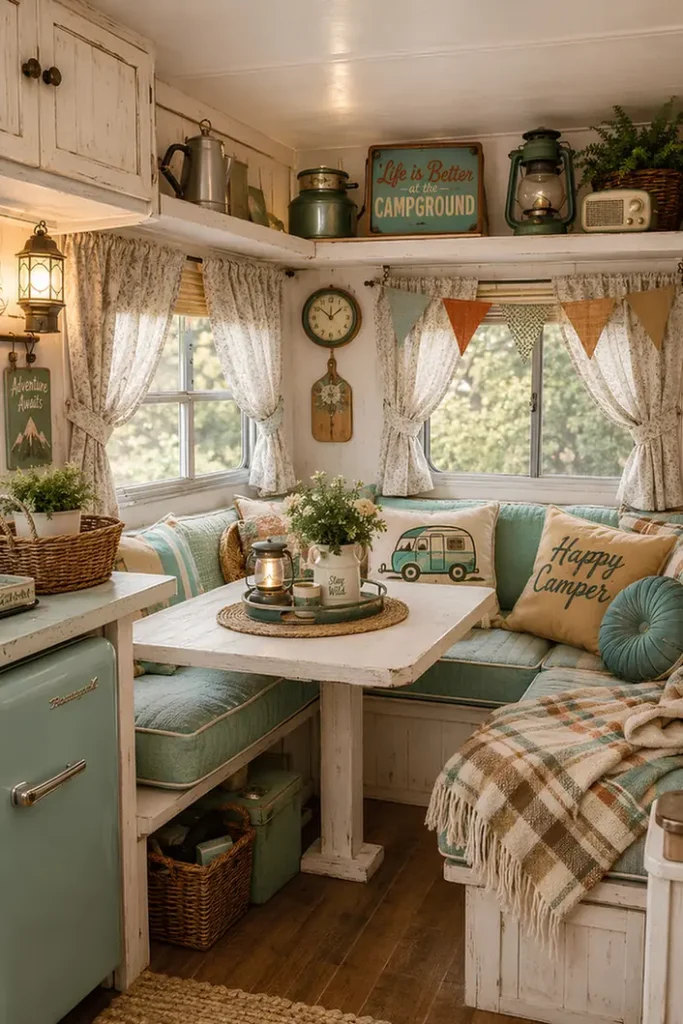
A retro mini fridge in seafoam already sets a nostalgic tone. Layering in actual vintage-style signage is what pushes this galley from “cute appliance” to a fully themed kitchen corner.
Pieces like enamel percolators, a faded campground marquee sign, and a lantern-shaped light fixture all sit on one open shelf, at slightly different heights so the eye travels instead of stopping flat.
A few places worth checking when hunting down pieces like these:
- Flea markets and estate sales for genuinely aged enamelware and tin signs
- Reproduction home decor shops for weatherproof campground-style signs
- Secondhand shops for mismatched vintage mugs and kettles
Vintage enamelware often has small chips that can expose bare metal, so anything meant for actual cooking use is worth inspecting closely before it goes back into rotation.
genuine aged enamelware and tin signs
weatherproof campground signage
mismatched mugs and kettles
18. Vintage Family Camper Corner
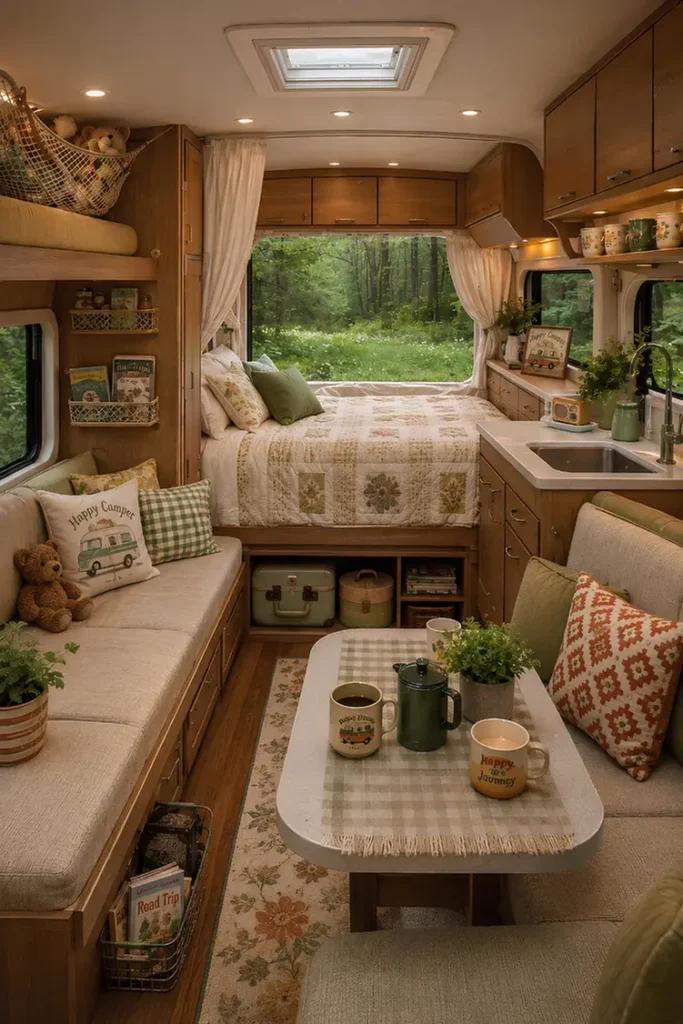
A camper meant for actual family trips needs more than good looks. It needs somewhere for the stuff kids bring along, and a place for that stuff to disappear when it’s not in use.
A mesh hammock net stretched across the ceiling handles stuffed animals and books without eating a single inch of counter or shelf space below it. Underneath, open wire baskets slide neatly beneath the bench seat, keeping road trip games within reach but out from underfoot.
Overhead netting near a skylight or vent needs periodic dusting, since loose fabric mesh traps more debris than a closed cabinet would.
Families with young kids on the road.
Trips longer than a weekend.
Minimalist, low-clutter builds.
Adults-only quiet retreats.
19. Sage Cabinets Vintage Tin Signs
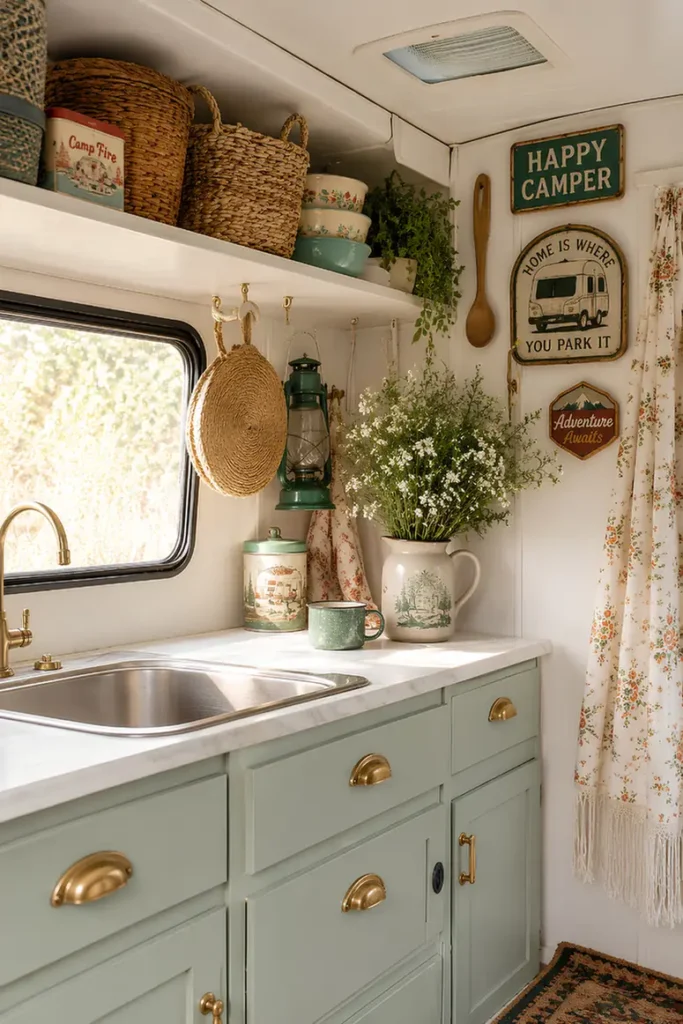
Painted cabinets alone tell you a camper has been updated. Vintage-style tin signage is what tells you the person doing the updating actually loves the theme, not just the aesthetic.
Stacked open shelving above the sink holds woven baskets and a small run of tin canisters, while three mismatched signs, reading like a running joke about camper life, get grouped tightly at eye level instead of scattered across the wall.
Where to actually find pieces like these:
- Roadside antique malls, for genuinely aged tin advertising signs
- Online vintage marketplaces, for reproduction campground-style signage at lower cost
- Estate sales, for the mismatched enamelware mugs and pitchers shown here
Tin signage hung near a window that gets direct sun will fade unevenly over a season or two, so rotating pieces or keeping them slightly back from the glass helps the colors hold.
aged tin advertising signs
reproduction campground signage
mismatched enamelware pitchers
20. Bunk Beds Meet Boho Lounge
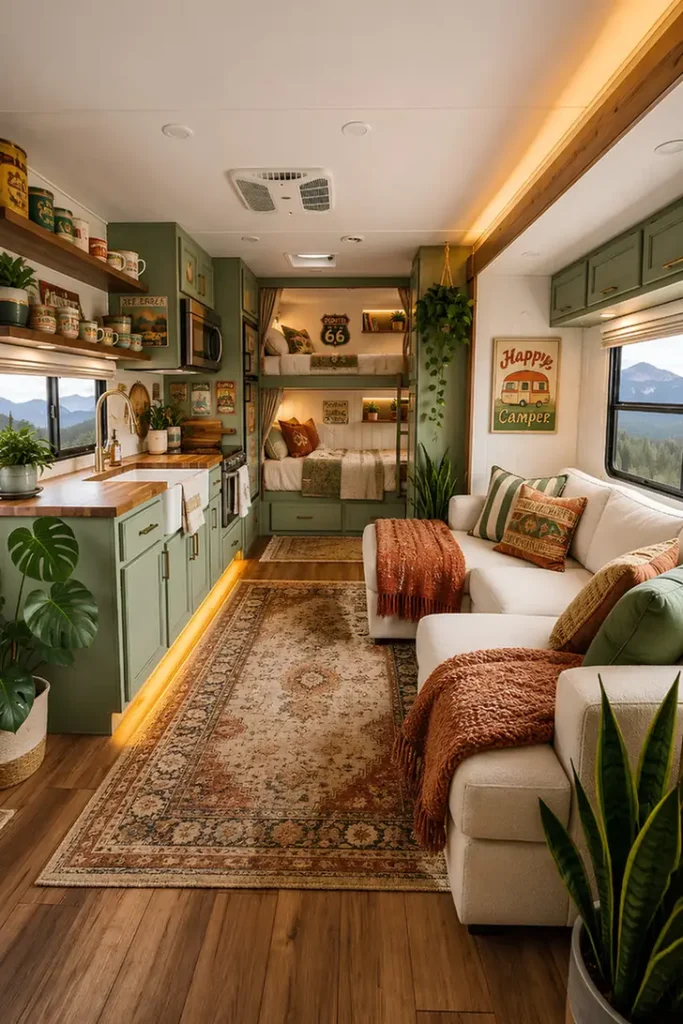
Route 66 signage over a bunk nook, sage green cabinetry through the galley, a cream sectional anchoring the lounge. Three different eras of style, one continuous rig, and none of it fights.
The connecting thread is warm wood flooring underfoot and a single oversized vintage-pattern rug that runs the length of the space, visually stitching the sleeping nook to the kitchen to the sofa without a single wall between them.
Under-bunk drawers keep bedding and extra linens contained, so the lounge stays a lounge instead of doubling as overflow storage. Backlit toe-kick lighting along the cabinets adds a soft glow at night that doesn’t require flipping on the overheads.
Bunk ladders and low ceiling clearance near the sleeping nook are worth checking against actual family heights before committing to this layout, since not every build accommodates taller guests comfortably.
Conclusion
A restored classic rig doesn’t need a full teardown to feel finished.
Half of what’s here is styling, not construction. A stacked rug. A brass pull swapped in. A shelf of enamelware picked up secondhand.
Start with whichever idea matches something you already own. That’s usually the fastest path from “still a work in progress” to a space that actually feels like yours.
Save this list before your next trip to the flea market. You’ll want it open when you’re standing in the aisle deciding what’s worth bringing home.