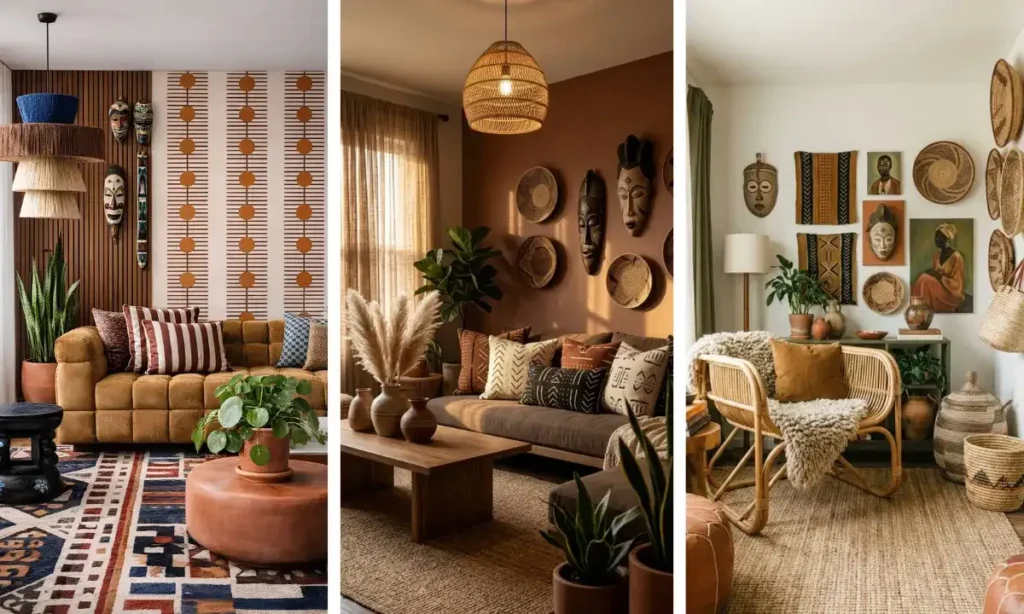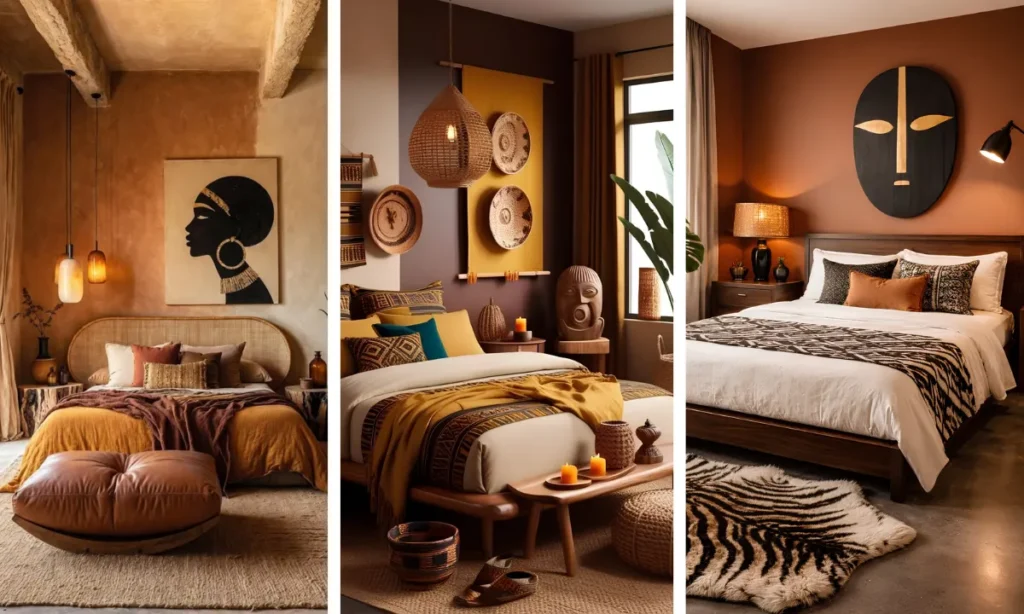
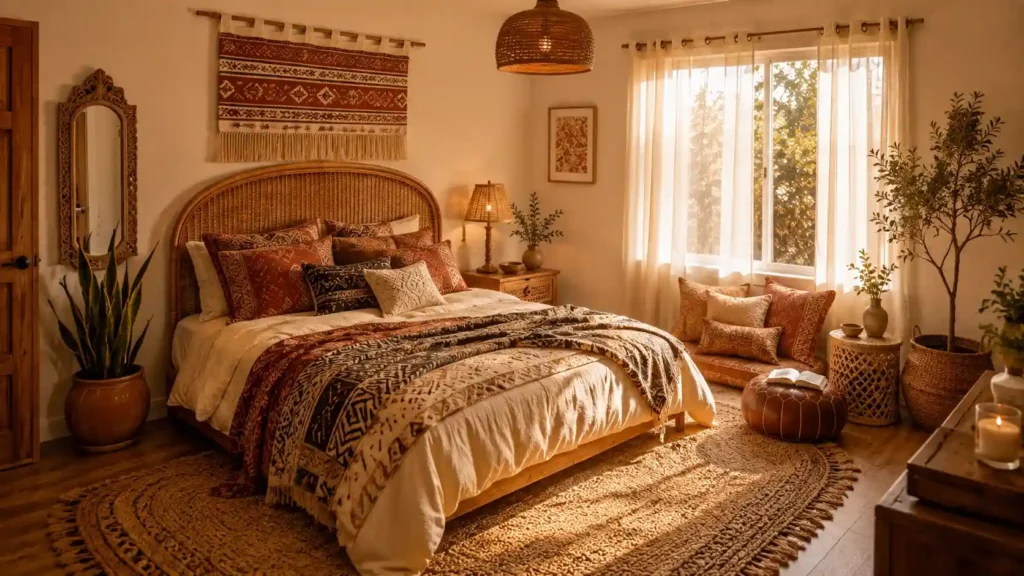
Picture an empty bedroom. White walls, a mattress on a frame, maybe a lamp from your old apartment. That blank slate is exactly where every afro boho bedroom starts, and it is more forgiving than it looks.
This guide walks you through turning that plain room into a warm, layered space built on rich color, natural texture, and handmade pattern.
You will choose a palette, anchor the room with the right bed, layer in textiles, and finish with lighting and personal touches that make the whole thing feel intentional.
How to style an afro boho bedroom comes down to layering, not shopping sprees. Most of what makes this style work is texture stacked on texture: a woven rug under a patterned throw, a carved stool beside a fringed pillow.
Nothing here requires a full furniture budget, and these budget-friendly Afrocentric decor ideas prove that the style works even when you’re sourcing piece by piece.
Expect to spend a full weekend on this if you are starting from zero, with most of the visual transformation happening in the last few hours once the layers start stacking. Some steps take minutes. Others need a little patience while glue dries or fabric gets a wash.
Clear some floor space, pull up your saved Pinterest boards for reference, and let’s build this room one layer at a time.
Set Your Color Palette Before You Buy Anything
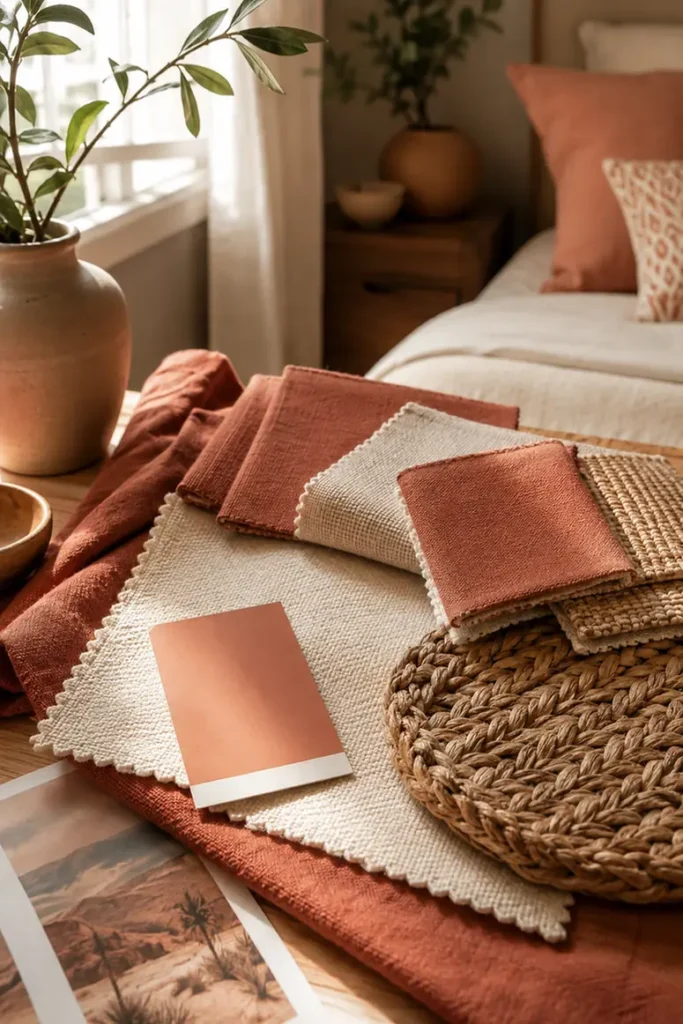
Every strong afro boho room shares one thing: a tight, repeated color story. Pick three to four colors total, no more, before you buy a single item.
Terracotta, rust, cream, and warm charcoal are a reliable starting combination. These tones show up naturally in mudcloth, Ankara prints, and woven baskets, so you are not fighting the fabric later.
Write your four colors on a sticky note and keep it on your phone. Every purchase gets checked against that note. If it doesn’t match, skip it, even if it’s beautiful on its own.
Choose a Statement Bed Frame as Your Anchor
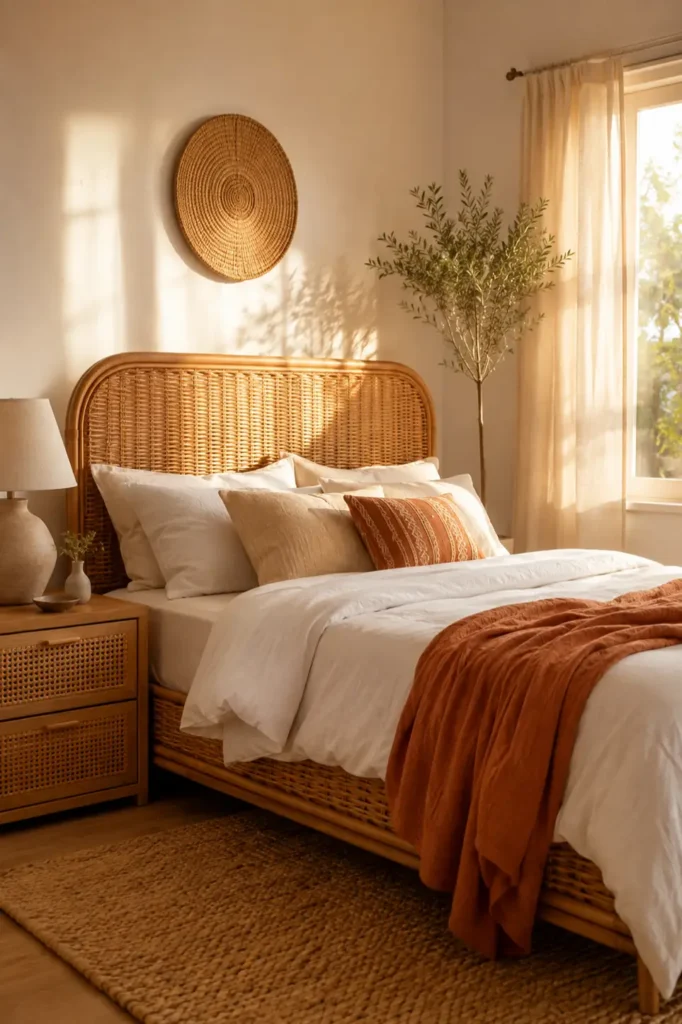
The bed is the largest object in the room, so it sets the tone for everything layered on top of it later.
Rattan, woven wood, and carved dark wood frames all read as afro boho instantly. If a full frame isn’t in budget, a plain wood frame with a carved headboard panel added on top gets you most of the look for less.
Measure your doorway and stairwell before ordering anything oversized. A frame that won’t fit through the door is the single most common return in this whole project.
Layer Your Bedding With Mixed Textures
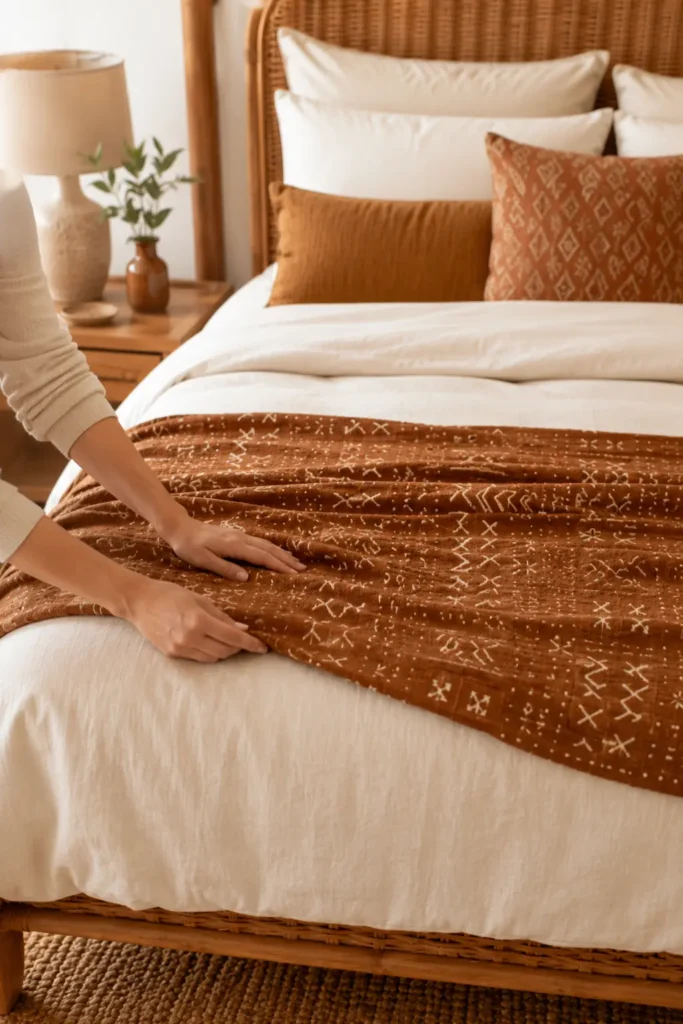
Bedding is where the room starts to feel finished, not furnished. The goal is texture contrast, not matching sets.
Start with a solid or subtly patterned duvet in your base color. Layer a bold mudcloth or Ankara throw folded across the bottom third of the bed, then add 2 to 3 patterned pillows in mixed sizes.
If you need help picking the right prints, these African print bedding ideas show real combinations that work.
Wash every new textile before it touches the bed. New fabric dye can transfer onto sheets, and a pre-wash also softens stiff woven throws so they drape instead of standing rigid.
Add a Handwoven Rug Beneath the Bed
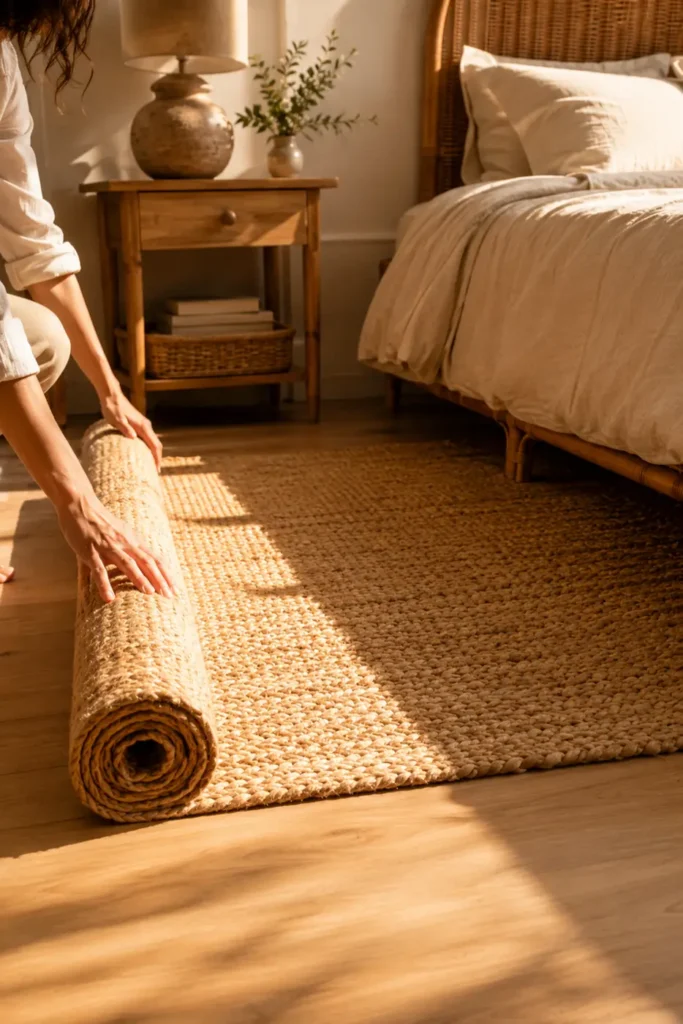
A rug pulls the whole floor plane together and stops the room from feeling like separate pieces of furniture scattered around.
Jute, sisal, and hand-loomed wool rugs all fit the style, and their slightly irregular weave is part of the appeal. These Afrocentric rug ideas show exactly how different weaves and patterns look under real beds. Perfectly uniform machine rugs tend to look out of place here.
Center the rug so at least two-thirds of it extends past the foot of the bed. A rug that only peeks out from under the mattress edge reads as too small, even if the size is technically fine.
Most people shift the rug two or three times before the placement feels right. That’s normal. Stand at the doorway each time and judge it from there, not from beside the bed.
Hang Textile Wall Art Above the Headboard
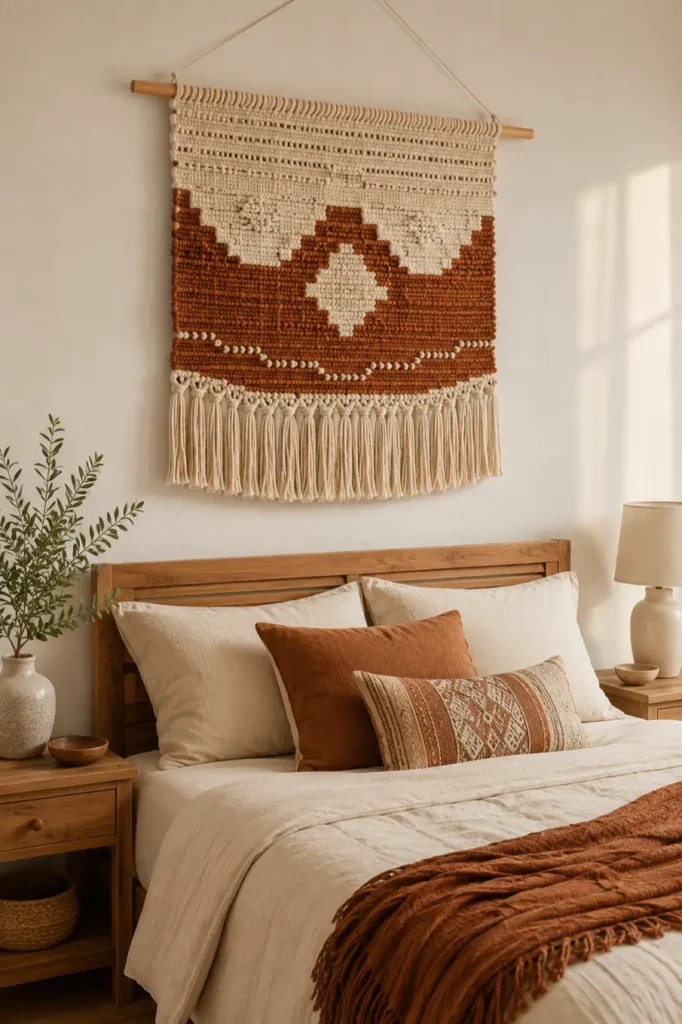
Wall art in this style should feel woven, not printed. A textile piece adds dimension a flat canvas can’t match, and it softens the hard edge where wall meets headboard.
Hang your tapestry or wall hanging 6 to 8 inches above the headboard, centered on the bed rather than the wall itself. Centering on the wall looks off if your bed isn’t dead-center in the room, which most beds aren’t.
If you’re using a rod-pocket hanging, thread a slim wooden dowel through the top and hang it from two small nails or a picture hook rated for the weight.
Skip a frame here. Part of the appeal of textile wall art is the raw, slightly imperfect edge. A frame boxes in exactly what makes it feel handmade.
If you want to expand beyond textiles later, these African wall art ideas include masks, woven plates, and carved pieces that layer well with the look you’ve already built
Build a Reading Nook With Floor Cushions
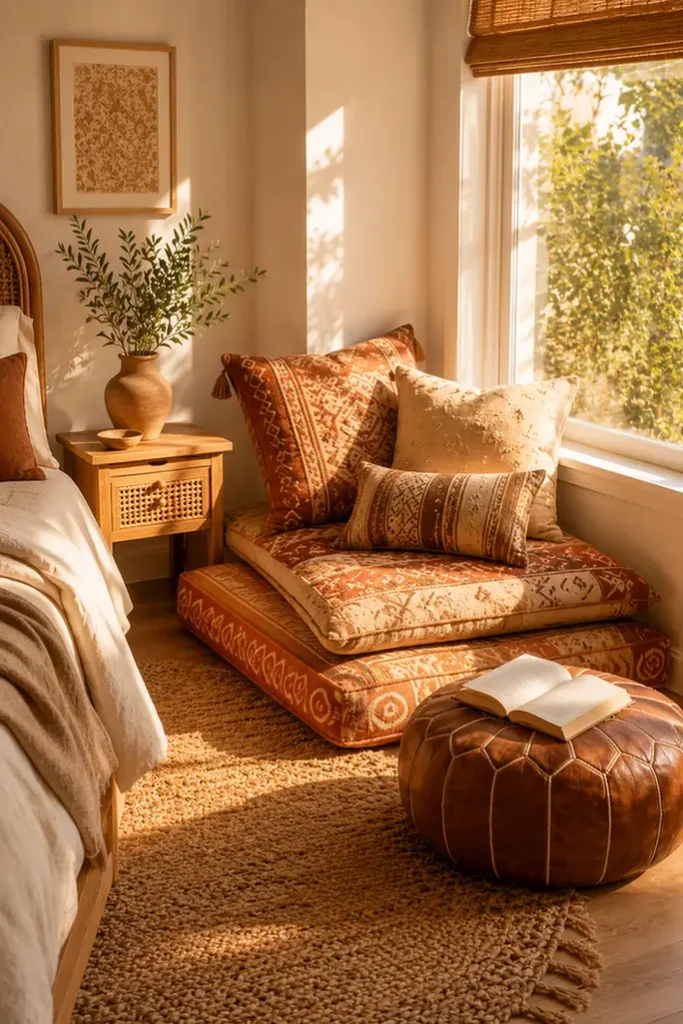
Not every corner needs a chair. A cluster of floor cushions creates a whole seating area in a fraction of the space, and it’s one of the fastest ways to make a bedroom feel lived-in.
Pick a corner near a window if you have one. Natural light makes this spot feel intentional instead of like leftover floor space.
Layer 2 to 3 cushions of different heights, plus one low pouf that can double as a side table. These Afrocentric floor cushion and pouf ideas show real combinations of mudcloth and woven styles that work well in bedroom corners. Mixing patterns here is encouraged. This is the one zone in the room where more clash is actually more charm.
A cushion cluster that looks too neat rarely gets used. Kick one cushion slightly out of line, lean another against the wall at an angle. Lived-in beats staged, every time.
If you want to take this corner further, a full cultural reading nook guide walks through lighting, shelving, and textile choices that turn a cushion pile into a real retreat.
Add Warm, Layered Lighting
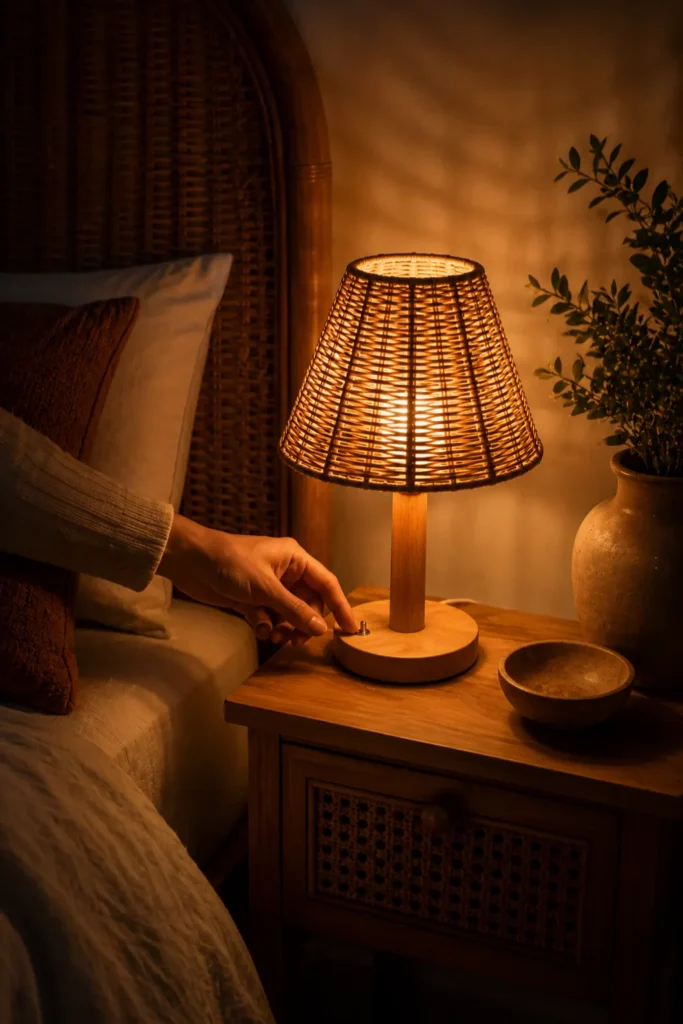
Overhead lighting alone will flatten every texture you just spent hours layering in. Afro boho rooms rely on multiple light sources at different heights, not one bright bulb overhead.
Start with a warm white (2700K) bulb in your main fixture, then add at least one secondary source: a small table lamp, a floor lamp beside the cushion nook, or warm string lights along a shelf.
Rattan or woven-shade pendants throw beautiful shadow patterns onto the wall at night. If a full pendant swap isn’t possible in a rental, a plug-in rattan pendant kit clips onto most existing fixtures without any wiring.
Turn off every light except your new lamp and look at the room after dark. This is where the space usually surprises people, in a good way.
Style Your Nightstands With Natural Materials
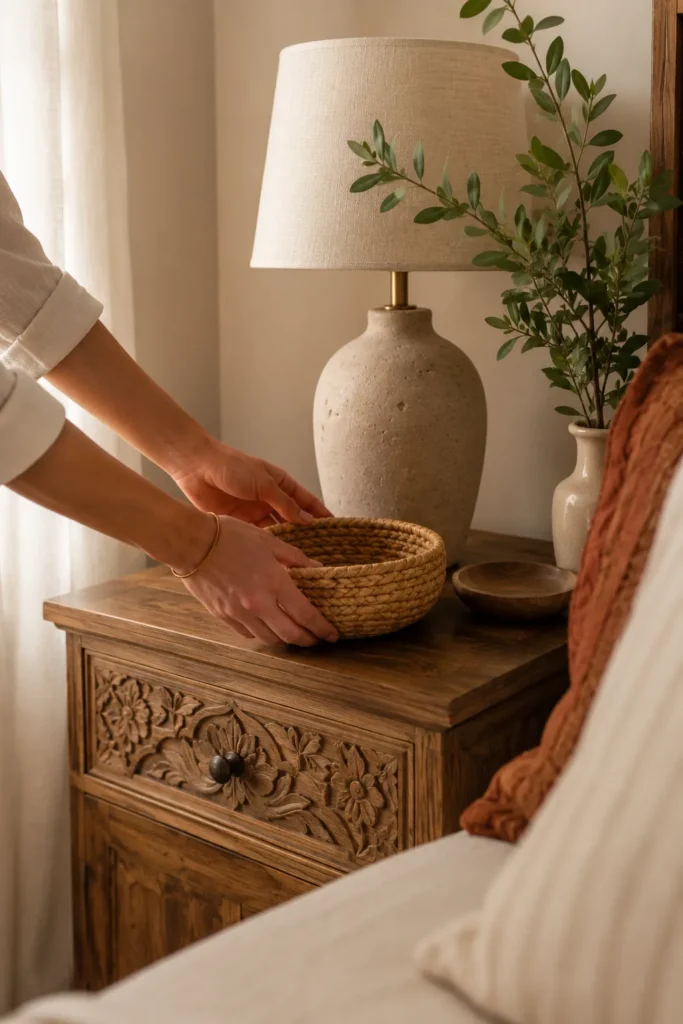
Does your nightstand still look like it came straight from the store? That’s the last piece keeping the room from feeling finished.
Choose a small carved stool, a rattan side table, or a wood crate turned on its side if you’re working with a tight budget. The material matters more than the size here.
Top it with three items maximum: a small lamp, a woven basket for odds and ends, and one personal object like a stack of books or a small plant. More than three starts to look cluttered instead of curated.
Keep the two nightstands slightly different from each other if you have a pair. Perfectly matched nightstands are common in hotel rooms, not in homes people actually decorated themselves.
Bring In Plants for Organic Texture
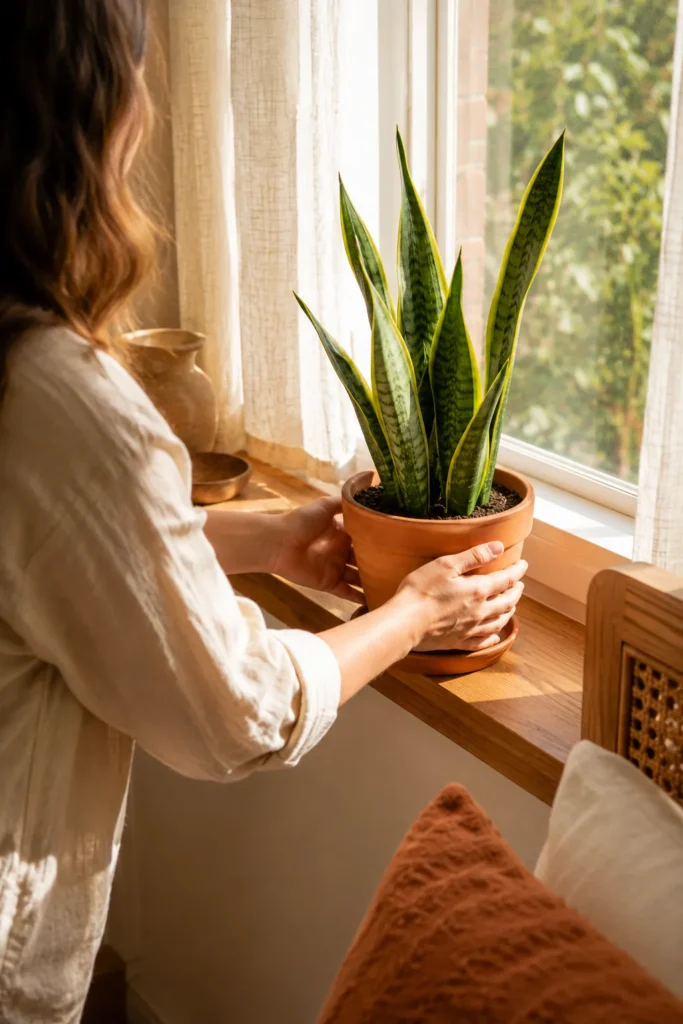
A room full of pattern and wood tone still needs something living in it. Plants are the fastest way to add that without adding more pattern to an already busy space.
A snake plant or ZZ plant works well in bedrooms with low light and survives beginner neglect better than most houseplants. Place one in a woven basket planter or a simple terracotta pot to match the palette.
Height variation matters more than plant variety. One taller floor plant in a corner, paired with a smaller one on the nightstand or windowsill, does more visual work than three plants of the same size scattered around.
Add Final Personal Touches and Accessories
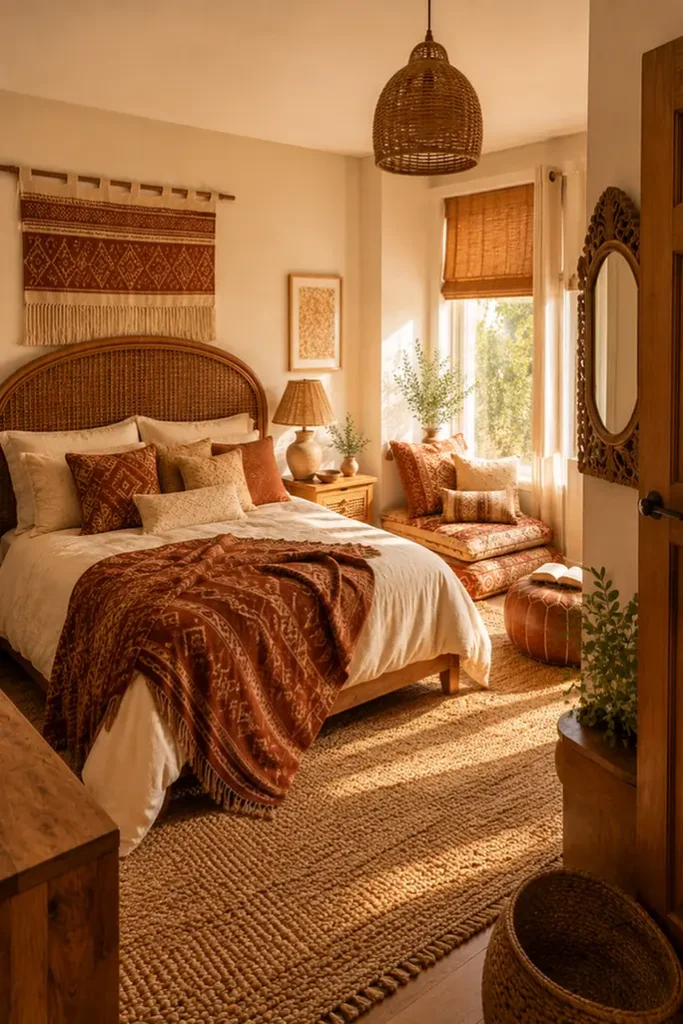
This is the step that makes the room yours instead of a showroom copy of a Pinterest board. Everything up to now was structure. This is personality.
Add one or two objects with real meaning: a piece from a family member, a small sculpture, a stack of records, anything that doesn’t come from a decor aisle. These are usually the first things a visitor comments on.
Hang a small mirror in a woven or carved frame near the door. It adds function and continues the natural-material thread running through the rest of the room.
Resist the urge to keep adding. A room this layered reaches a point where one more object tips it from rich into cluttered. If you’re unsure, leave the newest item out for a day and see if you miss it.
Most afro boho bedrooms go wrong in the same handful of ways. Knowing them ahead of time saves you a return trip to the store.
Do I need to buy everything at once?
No. Start with the palette and bed, then add textiles and lighting over a few weeks. The layered look actually benefits from being built gradually.
Can I do this style in a rental?
Yes. Almost everything here is freestanding or clip-on: rugs, throws, plug-in pendant kits, and cushions all work without any wall damage or permanent changes.
What if my patterns clash too much?
A little clash is the point. If it feels overwhelming, remove one item rather than adding a neutral to calm it down. Editing is usually the real fix.
How much does a full room typically cost?
Budgets vary widely, but a strong version of this look is achievable with a mid-range bed frame, one large textile piece, a rug, and secondhand or thrifted accessories.
Is this style pet-friendly?
Mostly yes. Choose a low-pile jute or wool rug over shag, and keep breakable decor off low surfaces a curious pet could reach.
Quick Reference Card
- Set your color palette
- Choose a statement bed frame
- Layer bedding with mixed textures
- Add a handwoven rug
- Hang textile wall art
- Build a floor cushion nook
- Add warm, layered lighting
- Style your nightstands
- Bring in plants
- Add personal final touches
Conclusion
Your bedroom now has a color story, real texture, and a corner you’ll actually want to sit in. That’s the whole goal of styling an afro boho bedroom, and you built it one layer at a time.
Give it a week before adding anything new. Rooms like this settle in slowly, and you’ll notice what’s missing once you’ve actually slept in the space a few nights.
When you’re ready for the next project, this same palette carries beautifully into a reading nook or gallery wall just outside the bedroom door, or into a full Afro boho living room.
Save this guide to your decor board so you can work through it step by step.