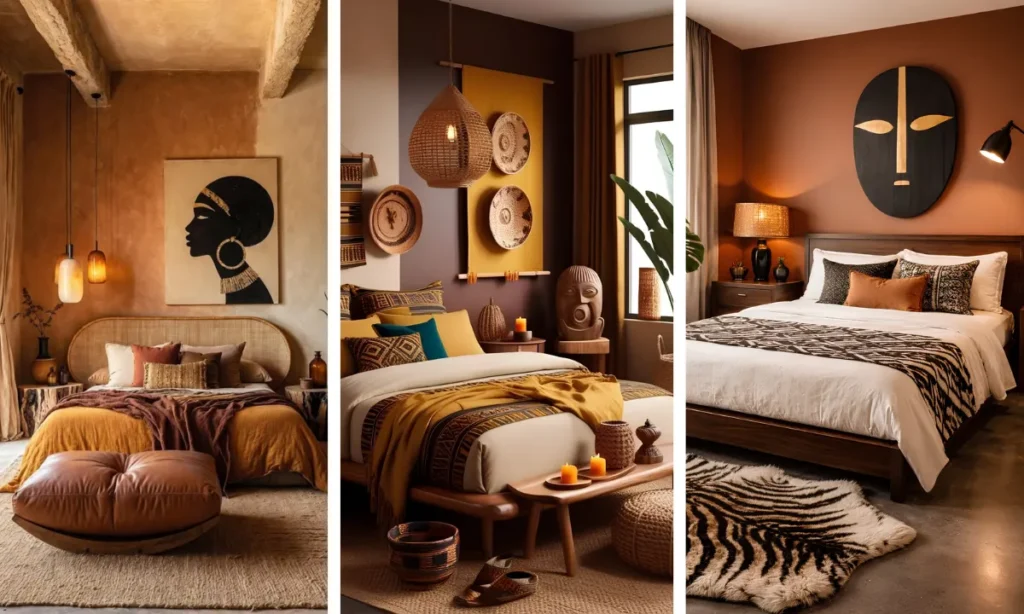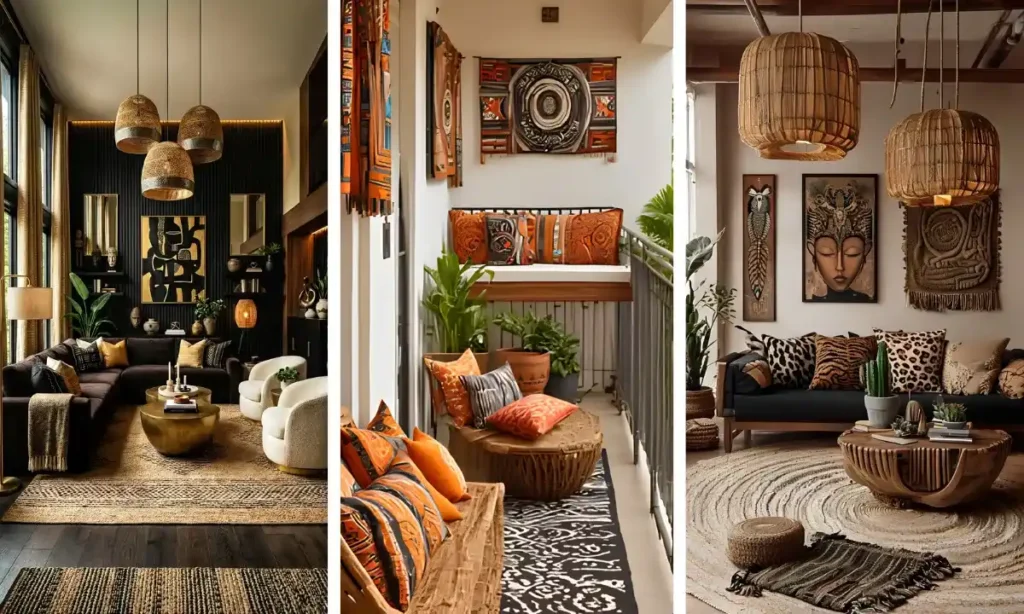
Most living rooms borrow furniture from a store catalog and call it done, leaving culture as an afterthought instead of the whole point.
These Afrocentric living room decor ideas flip that order, starting with carved masks, mudcloth pillows, and portrait art, then building the rest of the room around them.
Real spaces packed with woven baskets, rattan pendants, and rust-toned walls come first here, not imagined pins that fall apart once you try to shop for them.
Fresh ideas fill the gaps too, from Ankara print chairs to stacked carved stools, so there’s a plan whether you’re starting from an empty room or working around furniture you already own.
Each idea below stands on its own, with a real visual and enough detail to actually shop or DIY from. Some lean bold with animal print and jewel tones, others stay quiet with a single carved medallion on a plain wall.
Together they cover small apartments and full living rooms alike, dark, moody corners and bright, airy ones too. Whatever your starting point, there’s a version here that fits your actual space, not just an inspiration board.
1. Layered Rattan Pendant Lighting
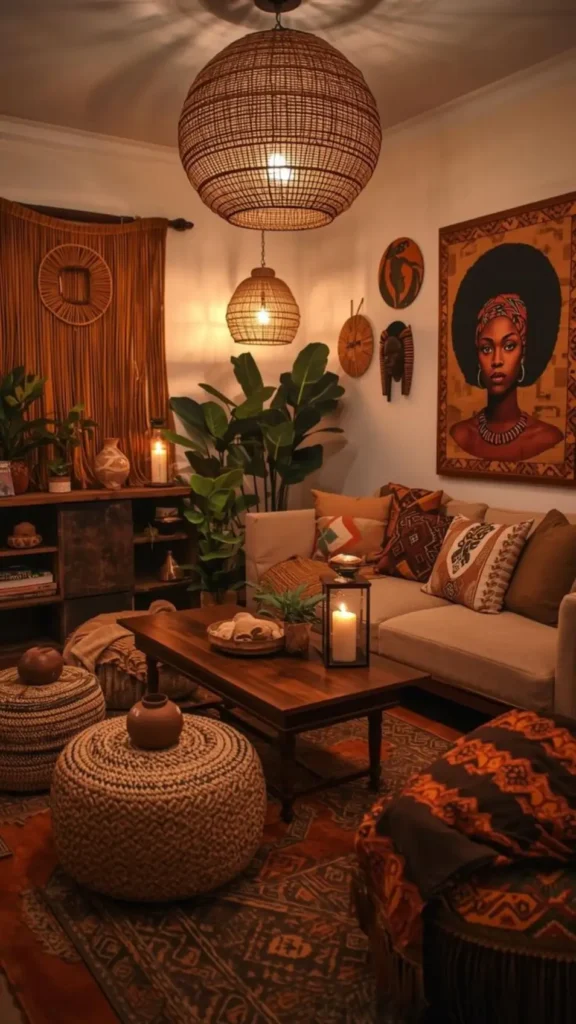
Two woven pendants hung at different heights turn a plain ceiling into the focal point of the room.
- Pair a large globe pendant with a smaller dome one and stagger the drop height.
- Pick warm amber bulbs so the rattan casts soft shadow patterns across the ceiling and walls.
- Keep both shades in natural fiber tones so they echo the wood furniture below.
- Let the lower pendant hang close to the coffee table for a cozy glow once the sun goes down.
Skip the single flush-mount fixture here. Two staggered pendants do more visual work for the same wall space.
2. Mix Mudcloth Prints With Solids
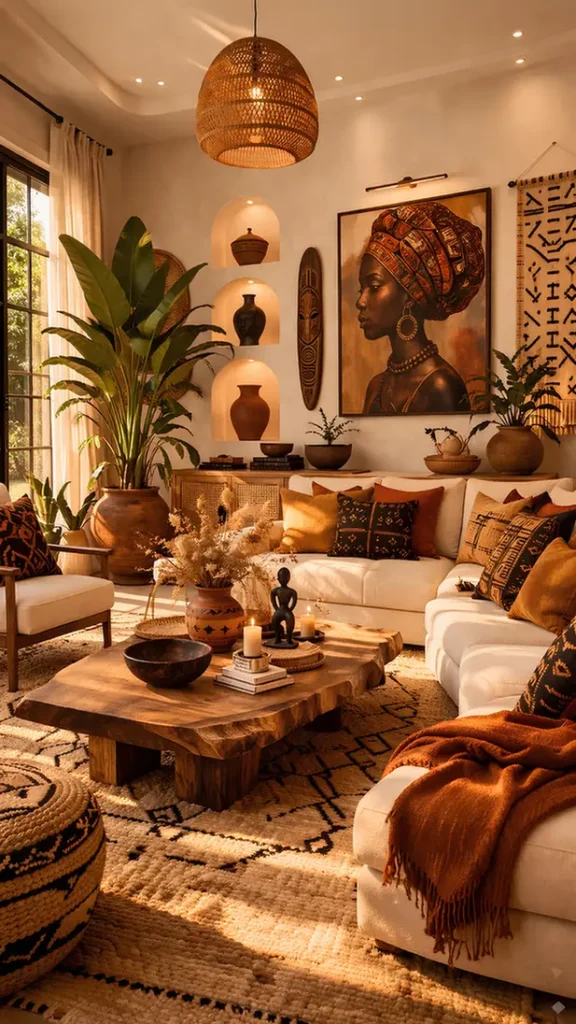
A cream sectional gives mudcloth print pillows room to breathe instead of competing with a busy sofa fabric.
This room stacks black and tan geometric mudcloth pillows next to solid gold, rust, and near-black ones, so the pattern reads as intentional rather than cluttered.
The live edge wood coffee table underneath keeps the palette grounded while the pillows do the color work.
Three mudcloth pillows are usually the sweet spot. Add a fourth, and the pattern starts to fight itself instead of standing out.
Pair 2 to 3 mudcloth pillows with solid gold or rust ones.
Keep the sofa itself in a plain neutral fabric.
Covering the whole sofa in only patterned pillows.
Mixing more than two bold prints at once.
3. Turn Textiles Into Wall Art
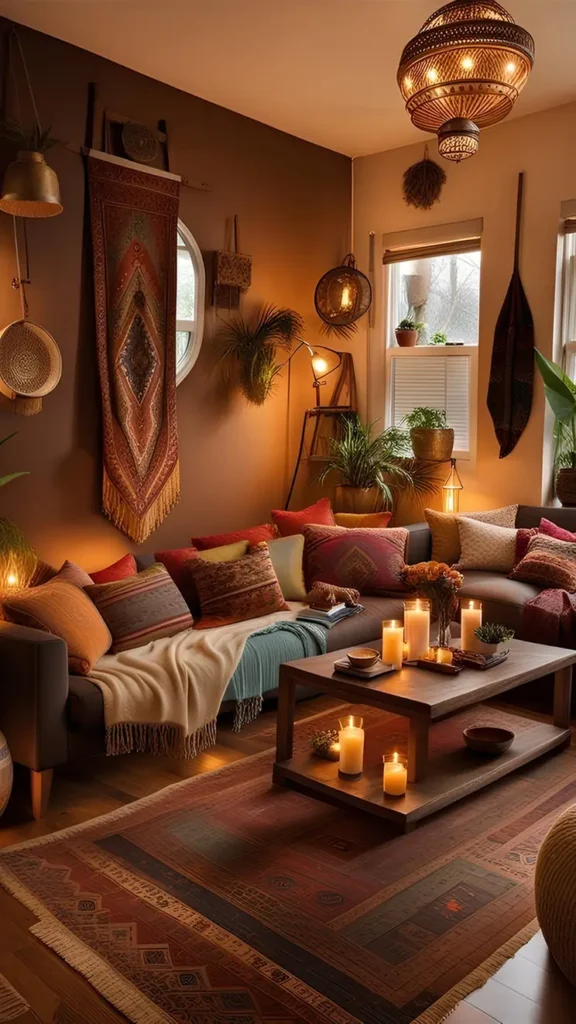
A brown accent wall can look flat fast, but a single woven textile hung vertically fixes that without adding a single frame vertically.
This one runs almost floor to ceiling, tassels and all, tucked between a round mirror and a small hanging basket so the wall reads as curated instead of empty.
Skip the frame entirely. A wooden dowel or curtain rod threaded through the top edge holds the shape and lets the fringe hang loose, which is half the appeal.
Slide a thin wooden dowel through the top pocket or fold of the textile.
Hang the dowel from two small hooks so the fabric stays flat against the wall.
Leave the bottom fringe loose so it moves slightly with the room’s airflow.
4. Cluster Masks On Tall Walls
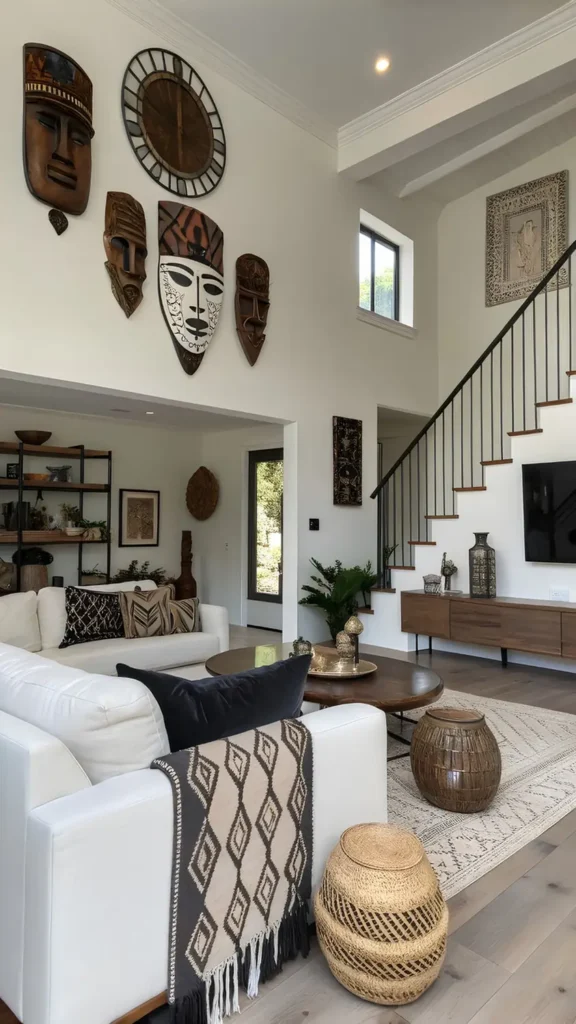
Bare white walls look especially empty once ceilings climb past ten feet, and one small frame gets lost up there.
This room solves it by grouping carved masks of different sizes into one loose cluster, anchored by a round wood clock so the whole arrangement reads as a single piece instead of scattered pieces.
- Start with the largest or most symmetrical piece as your anchor, like the clock here.
- Let mask sizes vary so the eye moves around the grouping instead of scanning in a straight line.
- Keep spacing tight, two to four inches apart, so it reads as one cluster and not a scattered gallery.
- Save this treatment for a wall with real height. It gets crowded on a standard eight-foot ceiling.
Grouping mismatched pieces tightly turns them into one bold statement instead of clutter.
5. Basket Wall As Gallery Art
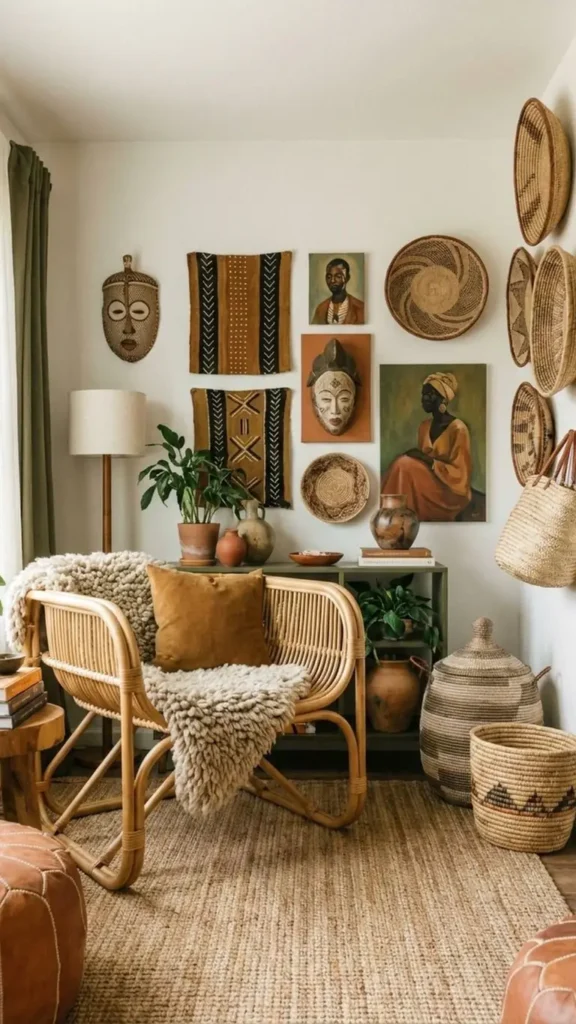
Not every gallery wall needs frames. This corner mixes woven baskets of different weaves and sizes with framed portraits, a carved mask, and mudcloth panels, all layered close together so the eye reads texture first and individual pieces second.
The baskets do double duty since a few of the larger ones could also hold blankets or plants if pulled down off the wall.
📌 Good To Know
Group baskets by shape first, then fill gaps with flat art and masks. Shape variety matters more than exact symmetry here.
6. Paint One Wall Terracotta
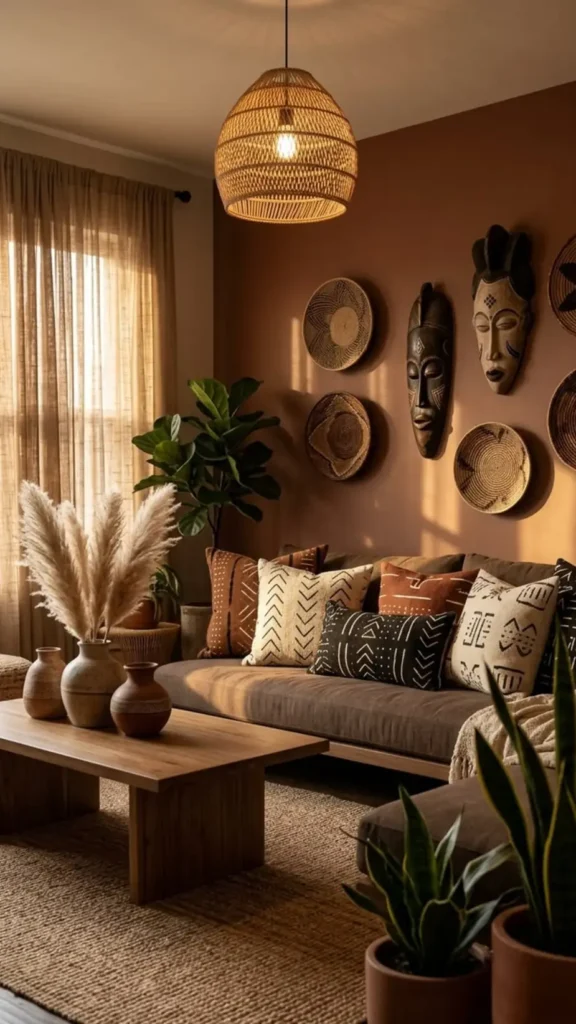
A deep terracotta wall does something a white wall can’t.
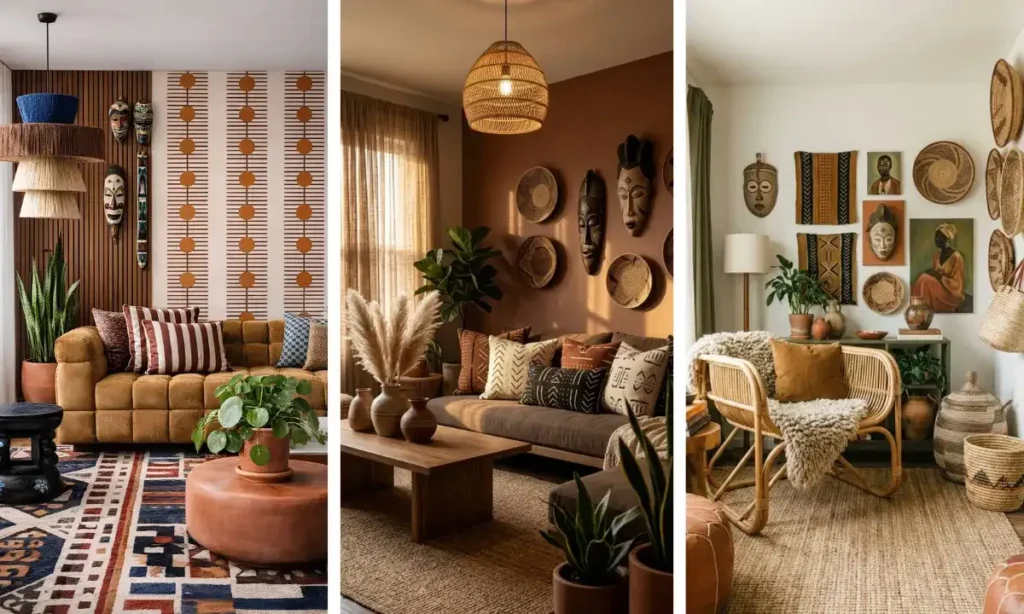
It lets carved masks, woven baskets, and pampas grass read as warm and cohesive instead of scattered, since the wall color itself becomes part of the palette rather than a blank backdrop.
Here, the same rust brown climbs from the wall into the mudcloth pillows below, so the whole corner feels planned even though it’s a mix of shapes and textures.
| White Wall | Terracotta Wall |
|---|---|
| Dark carved masks can look like scattered dots. | Masks blend into the warm tone as one grouping. |
| Woven baskets need more pieces to feel intentional. | A handful of baskets already looks curated. |
7. Two Rattan Tables Beat One
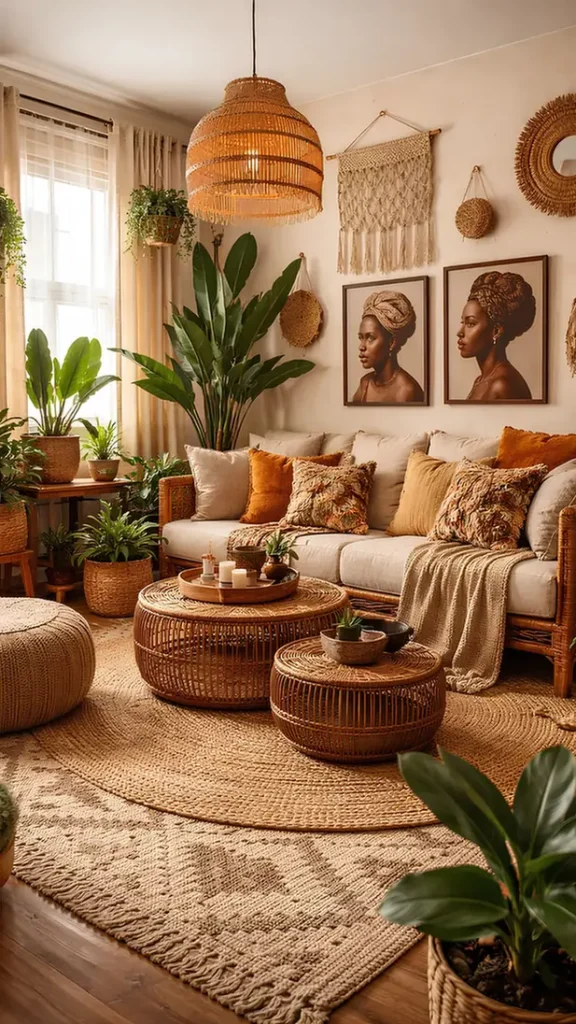
Swapping a single coffee table for two smaller round rattan ones opens up a tight seating area instead of cramming it.
One holds the candle tray, the other stays clear for drinks or a small plant, and both tuck under a jute rug pattern that keeps the floor from feeling busy. The matching portrait prints above the sofa echo the same warm wood tone, so the room ties together top to bottom.
8. Curved Sofa Meets Bold Art
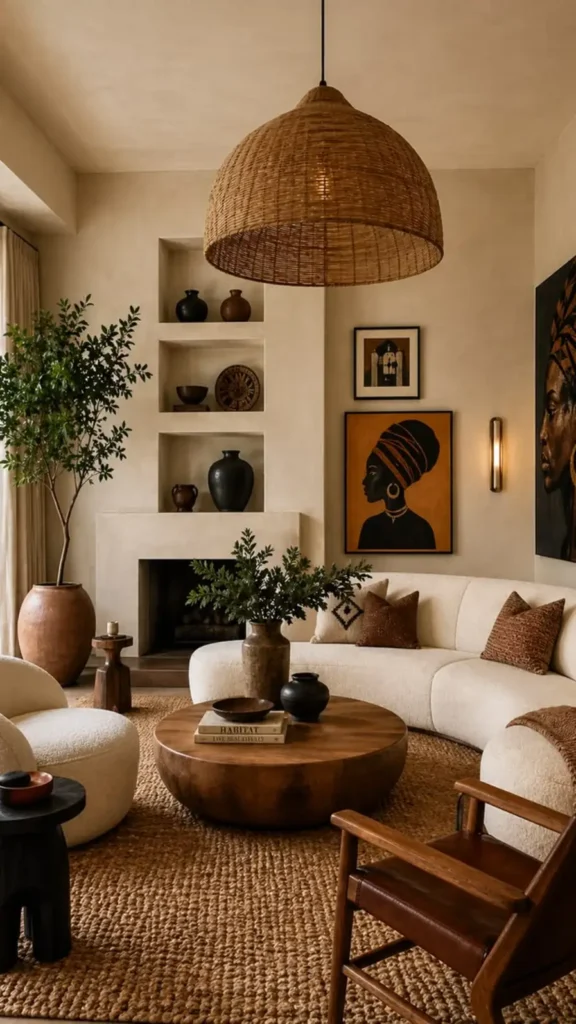
A rounded boucle sectional softens a room full of hard angles, from the built-in shelving niches to the black sculptural side tables and the leather sling chair in the corner.
The silhouette portrait in burnt orange and black becomes the loudest note in the room simply because everything else stays neutral and textural around it.
Even the pendant light overhead, a deep woven dome, keeps to the same earthy palette instead of adding a new color.
💡 Quick Tip
Let one bold portrait carry the color in a mostly neutral room. Everything else, from sofa to side tables, can stay quiet.
9. Graphic Print Wallpaper Backdrop
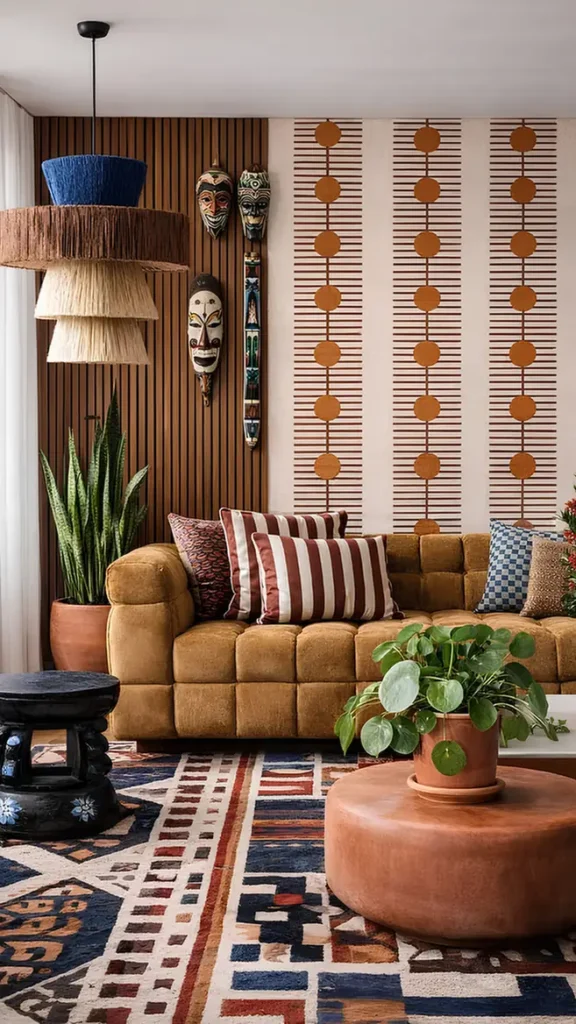
Wood slat paneling and a bold graphic wallpaper split this wall into two distinct zones instead of competing for attention.
The rust and cream dot-and-stripe print gives the room its energy, while the darker wood section stays quiet enough to hold a row of small carved masks without looking busy.
A layered fringe pendant with a navy top tier pulls one more color from the rug below, tying the whole space together.
Making bold wallpaper work
10. Mix Portraits With Textile Panels
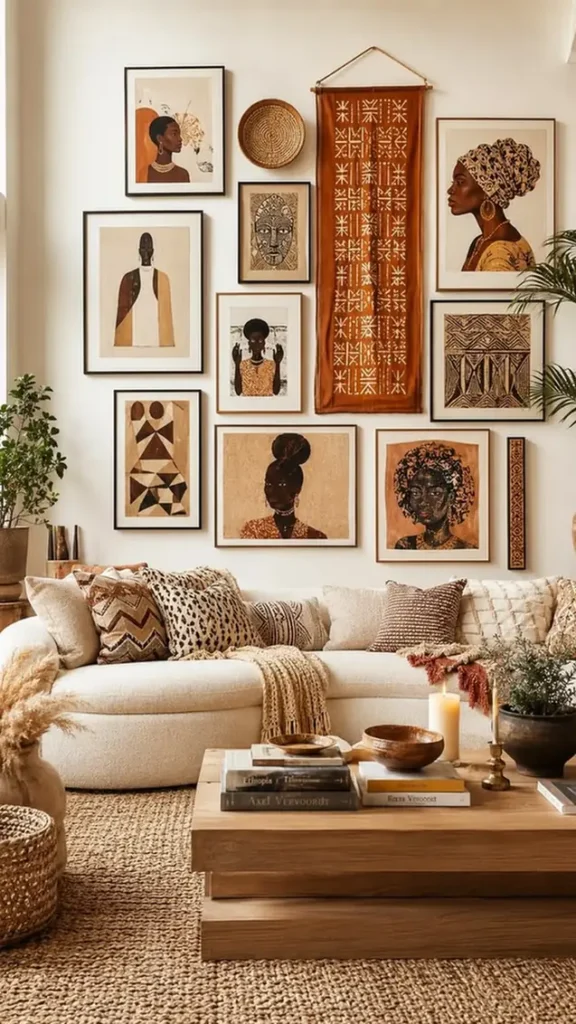
A dozen framed pieces could easily look chaotic, but this wall stays cohesive by sticking to black frames throughout and letting one mudcloth textile hang unframed right in the center, breaking up the grid without breaking the color story.
Portrait illustrations, a carved mask print, and one woven basket plate all share the same warm sepia and rust tones, so the mix reads as curated rather than random.
Pick one frame color, black works well, and stick to it across every piece.
Hang one unframed textile in the center as a break from all the straight edges.
Keep every piece within the same warm color family so the grid feels planned.
11. Black Walls, Striped Statement Chair
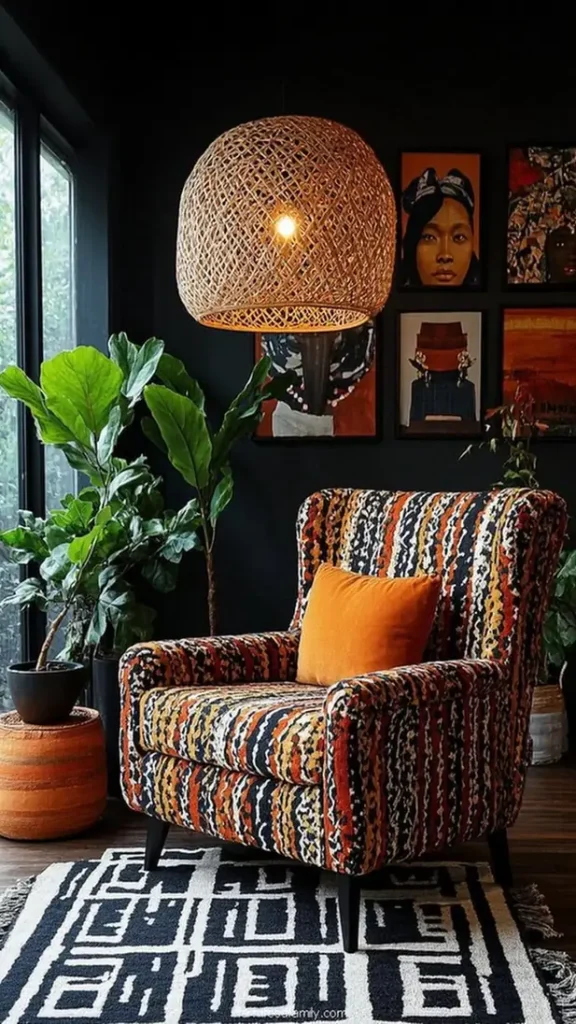
A near-black wall and matching dark rug turn a boldly striped accent chair into the entire focal point of the corner, no competing with anything else in the room.
The rust, mustard, and cream stripes echo the small gallery of portrait art hung above, so the chair feels chosen for the wall rather than dropped in later. One orange velvet pillow on the seat repeats the wall art’s warmest tone.
12. Rust Wall, Basket Cluster
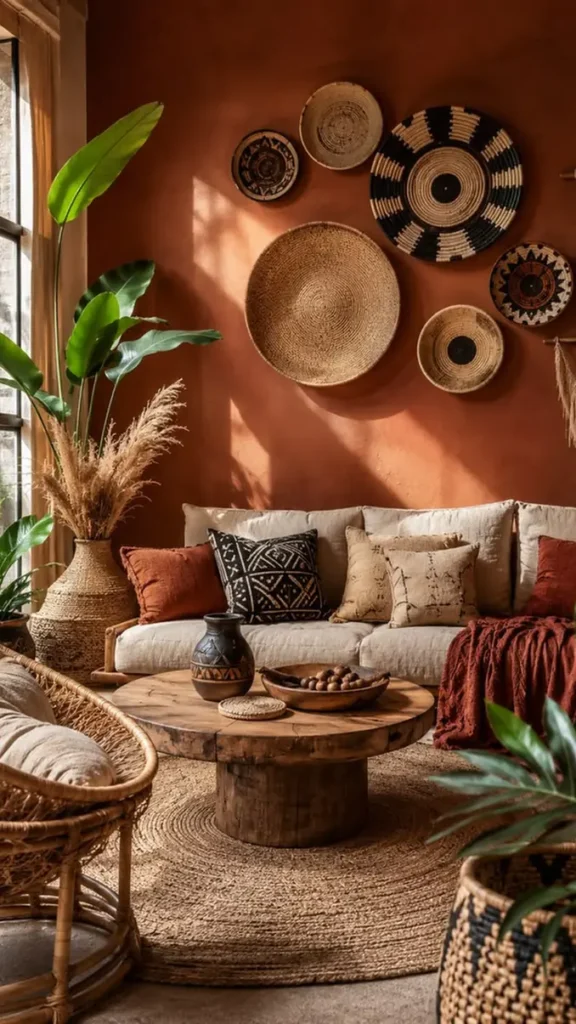
Burnt orange paint does more heavy lifting on this wall than any single object hung on it.
A cluster of woven plates in different weaves and sizes sits just off center, with one fringed macrame piece hanging quietly to the side instead of competing for attention.
Below, a round pedestal coffee table holds a wooden bowl and a small clay vase, keeping the seating area as textural as the wall above it.
A few baskets spaced evenly across a large wall can read as an afterthought.
Grouping them off center with one macrame accent turns the same pieces into a real focal point.
13. Jewel Tones Meet Animal Print
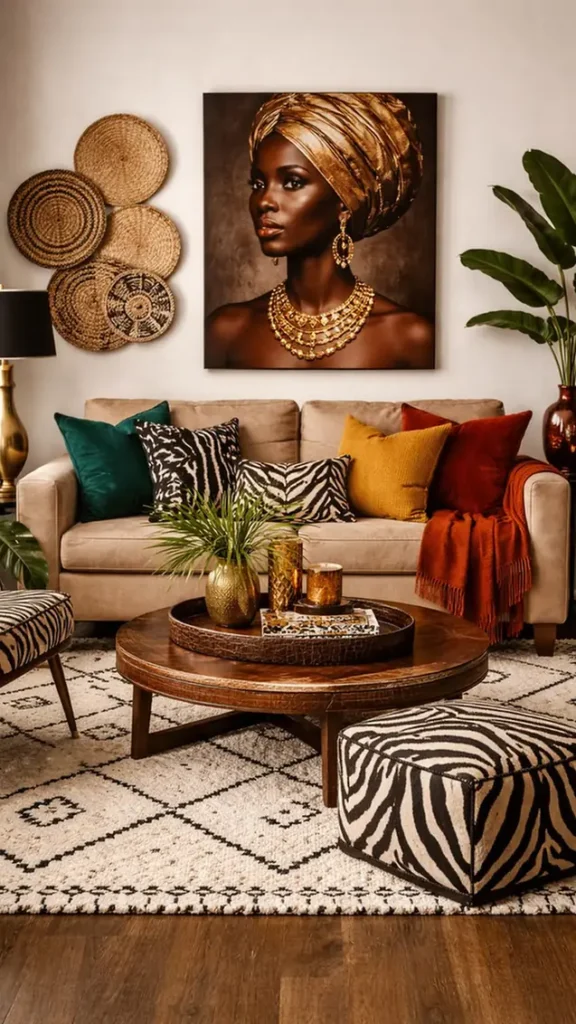
A large gold-toned portrait canvas sets the tone for the whole room, and the sofa pillows pick up on it with emerald, mustard, and rust velvet mixed right in with black and white zebra print.
That mix could clash on paper, but keeping every fabric in a rich, saturated shade instead of pastel keeps it feeling luxe rather than loud.
A copper tray table and brass candle holders add just enough shine to match the portrait’s gold headwrap.
💡 Quick Tip
Animal print reads as neutral when every jewel tone around it is equally saturated. Keep the palette rich, not muted, and the mix holds together.
14. Three Pendants, Three Canvases
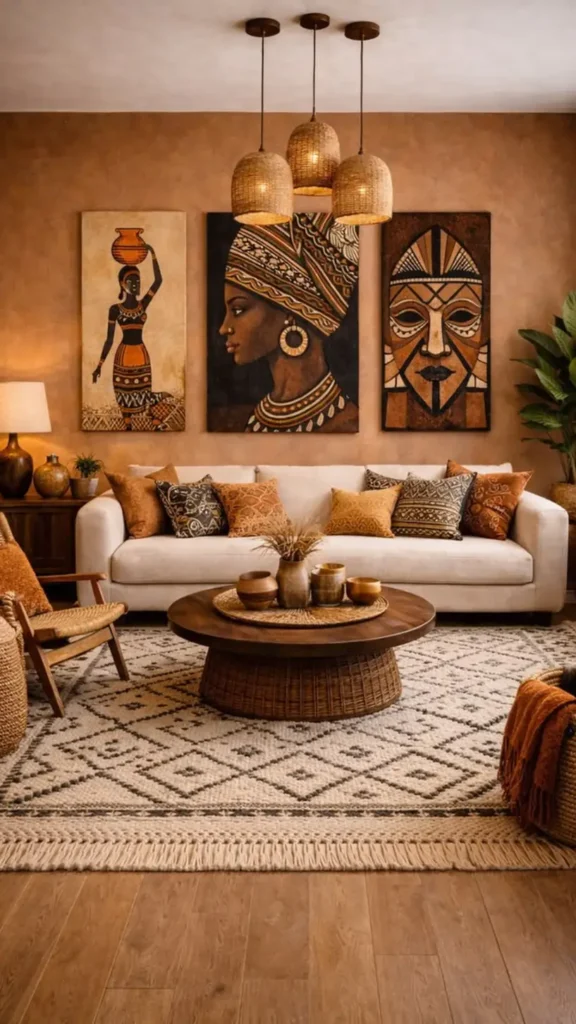
Lining up three tall canvas prints, a figure carrying a pot, a portrait, and a mask, above the sofa, gives this wall a storytelling quality that one large piece can’t match.
Hanging three matching pendant lights directly above them doubles down on the rhythm instead of centering a single fixture.
Everything sits in the same warm terracotta family, so even with three prints and three lights, the wall never feels crowded.
- Choose art with a shared subject or color story so the trio reads as one set.
- Repeat the pendant count to match the art count for a rhythm that feels planned.
- Rest the whole grouping on a low round table so the eye has somewhere to land at the bottom.
Matching the number of pendants to the number of art pieces turns a wall into a set instead of separate elements.
15. Oversized Carved Wall Medallion
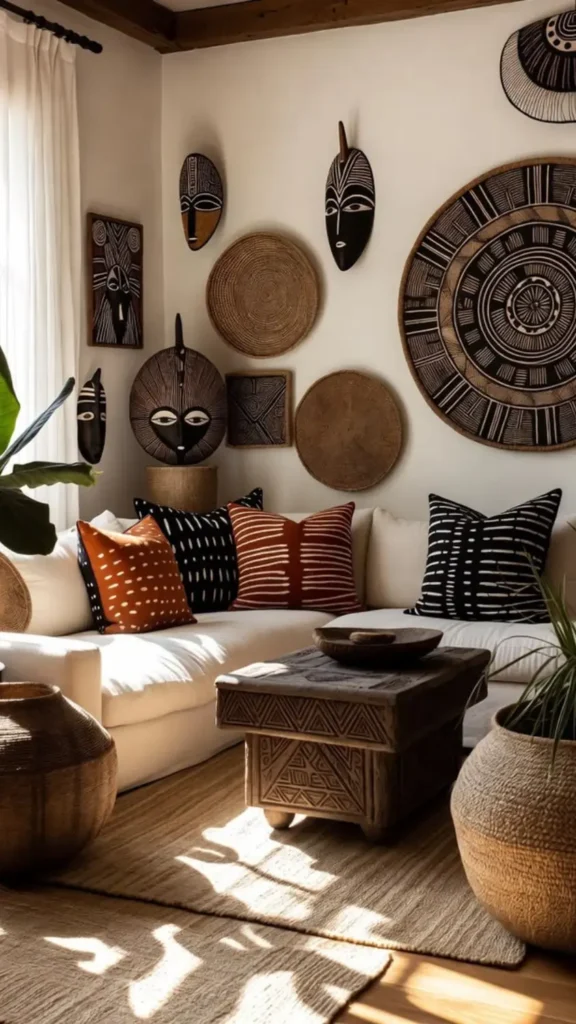
Scale does the heavy lifting on this wall. One large carved medallion anchors the whole arrangement, letting the smaller masks and woven plates around it feel like supporting details instead of a busy grid.
A chunky carved wood coffee table below echoes the same triangle motif carved into the medallion, so the pattern repeats from wall to floor without feeling matchy.
Scaling a busy wall
16. Frame Maps Alongside Portraits
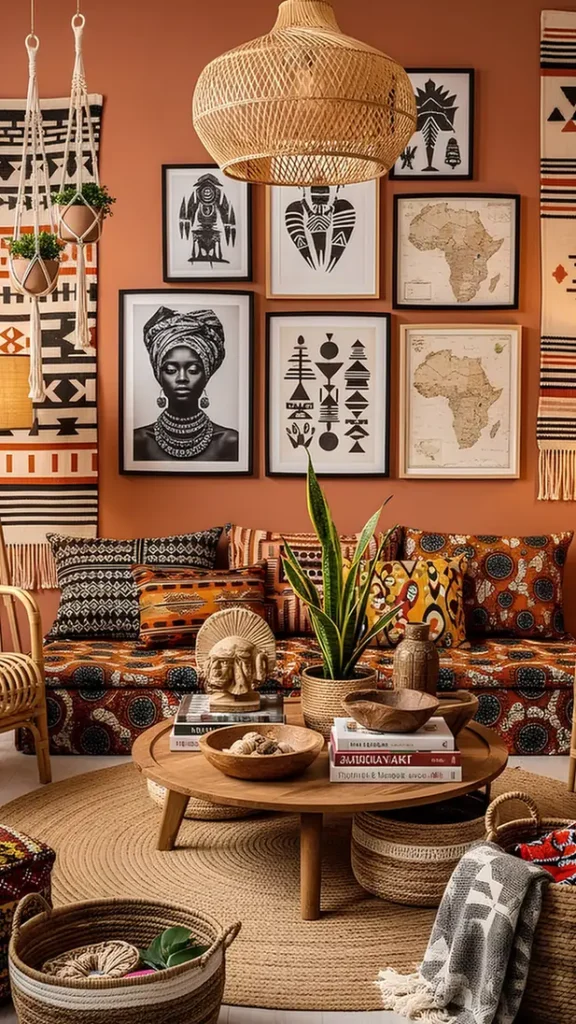
Vintage-style maps of Africa hang right next to a black and white portrait print and bold graphic symbol art, all in matching black frames against a burnt orange wall.
The map grounds the whole gallery with a sense of place, while the graphic prints add rhythm and the portrait adds warmth.
Two woven textile runners flank the grouping on either side, so the wall reads full from corner to corner without a single empty gap.
17. Ankara Print Accent Chair
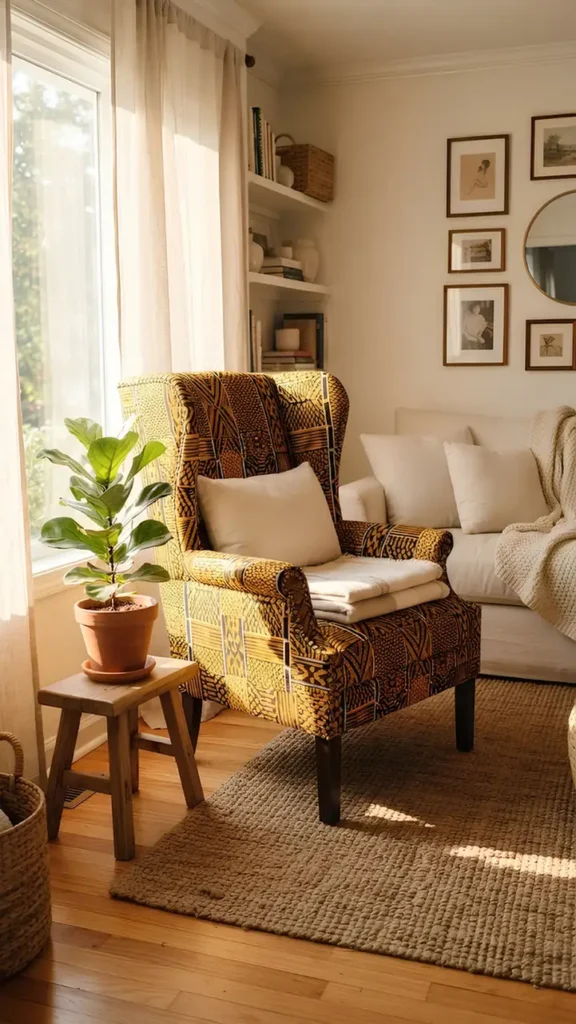
Reupholstering a single wingback or barrel chair in a bold wax print fabric gives a room one loud, colorful anchor without touching the walls at all.
Geometric diamonds, dots, or bursts in gold, rust, and black work best since they read as an intentional pattern rather than a random print.
Keep every other seat nearby in a plain neutral fabric so the chair stays the star instead of getting lost in more pattern.
Reupholster just one chair in a bold print.
Keep the surrounding seating plain and neutral.
Covering every seat in matching print fabric.
Mixing two large-scale prints in one seating area.
18. Stack Carved Stools As Tables
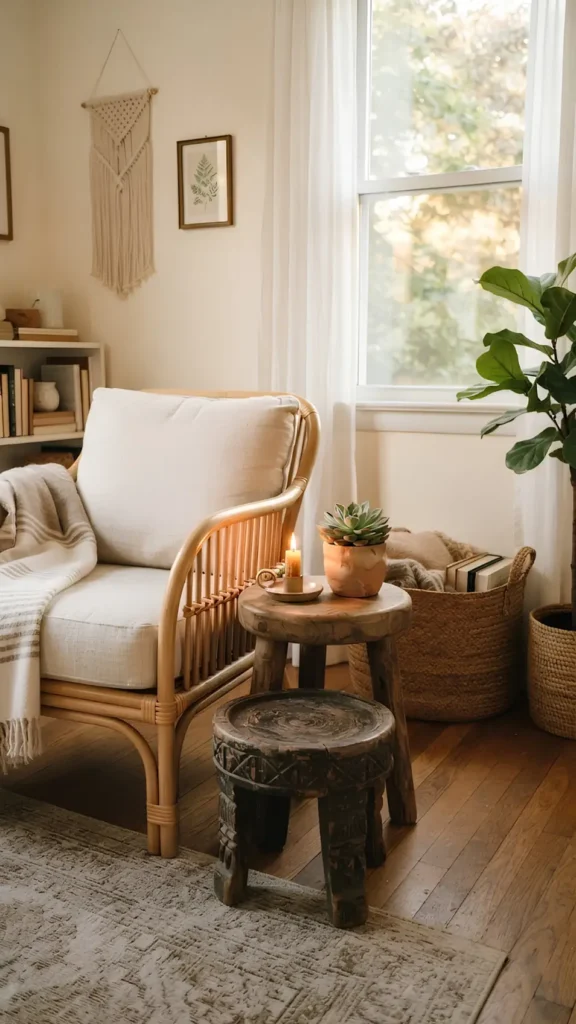
Two or three carved wooden stools of different heights can replace a traditional side table entirely, especially in a small living room where floor space is tight.
Stack them at slightly different levels next to an armchair to hold a drink, a candle, or a small plant. The carved patterns on the stool legs add detail a plain table never could.
💡 Quick Tip
Look for stools with hand-carved geometric legs at secondhand shops or import stores. Real ones develop a worn patina that machine-made copies can’t match.
19. Style Open Shelves With Pottery
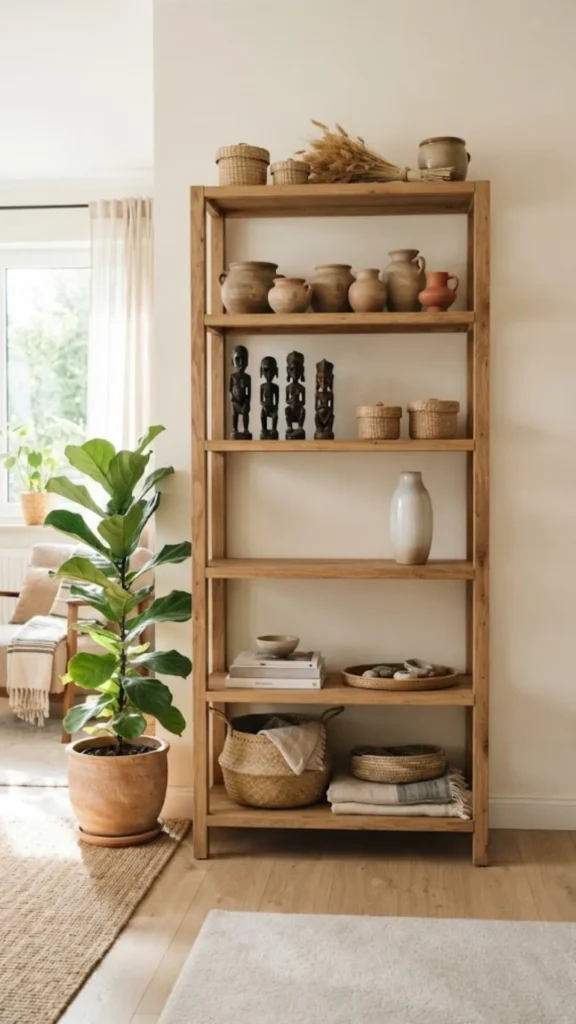
Open shelving disappears fast once it fills up with random books and knickknacks, but the same shelf becomes a display case once you group pieces by material instead of by size.
Clay pots, dark wood carvings, and woven baskets each get their own shelf or cluster, so the whole unit reads as intentional rather than crowded.
Sort your objects into three groups: clay, wood, and woven fiber before placing anything.
Give each material its own shelf or cluster so the eye can rest instead of jumping around.
Leave one shelf mostly empty, holding just one tall piece, so the unit doesn’t feel packed.
20. Floor Poufs As Extra Seating
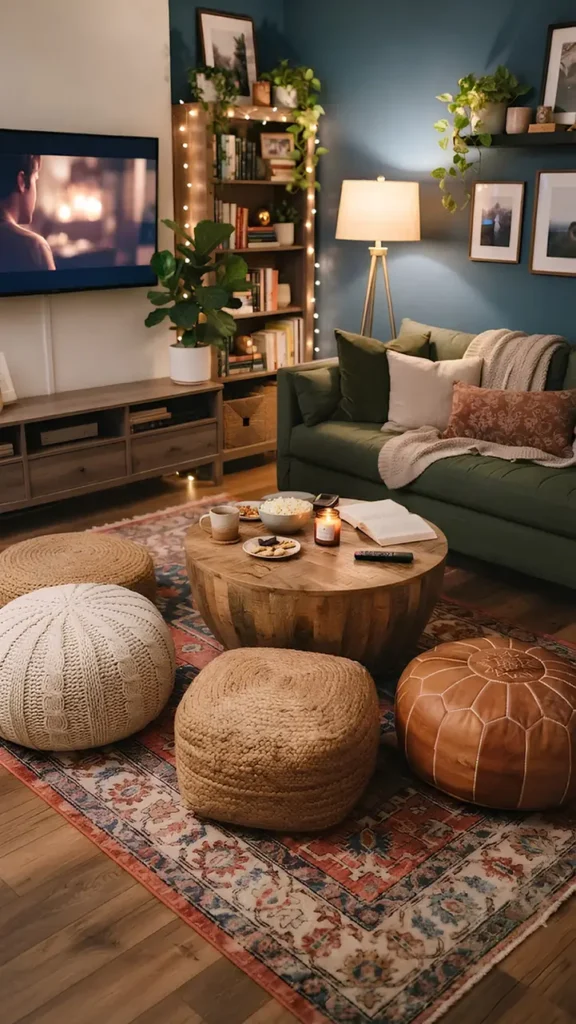
Running out of seats for movie night doesn’t have to mean dragging in a folding chair.
A cluster of three or four floor poufs in mixed woven textures, some knit, some jute, some leather, tucks under a coffee table when not in use and pulls out fast for extra guests.
Keep them low, at or below coffee table height, so they stay functional instead of becoming a tripping hazard.
Floor poufs solve the extra-seating problem without committing to a bulky piece that sits empty most of the year.
Conclusion
Twenty ideas, one clear thread: culture doesn’t sit on a shelf as a single object; it runs through the whole room, from the wall art down to the throw pillows.
Whichever ideas you pick, keep the earthy palette consistent so pieces from different photos still feel like they belong together.
Save the ones that fit your space, pin the rest for later, and build the room in layers instead of all at once. A living room like this rewards patience more than a big budget.