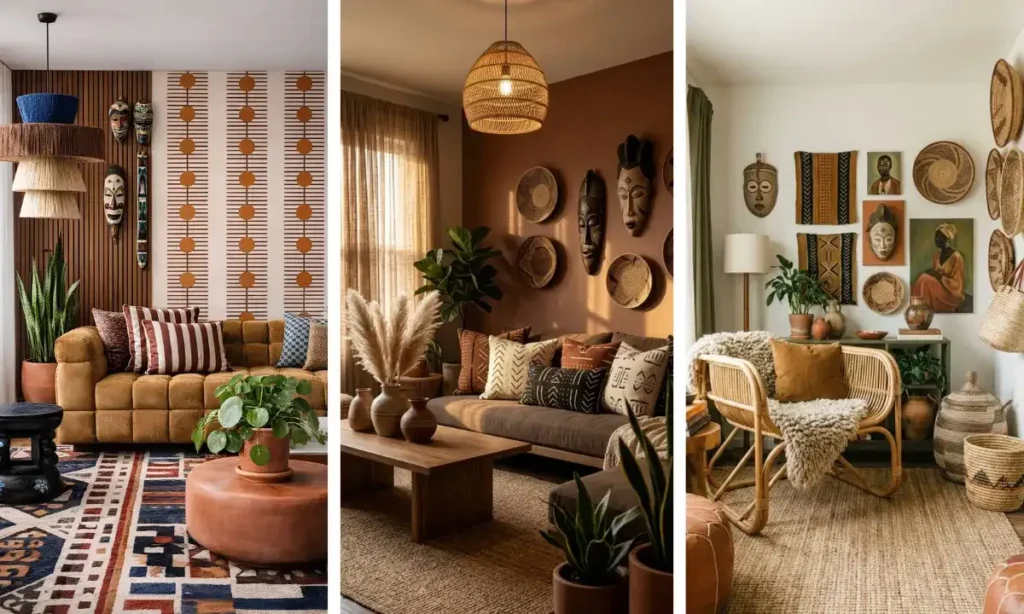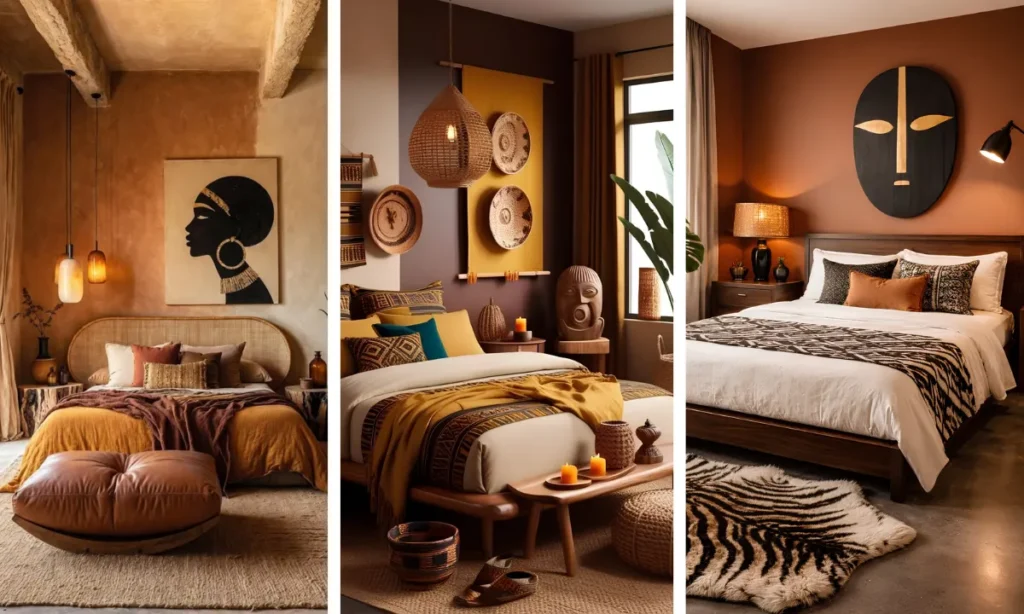
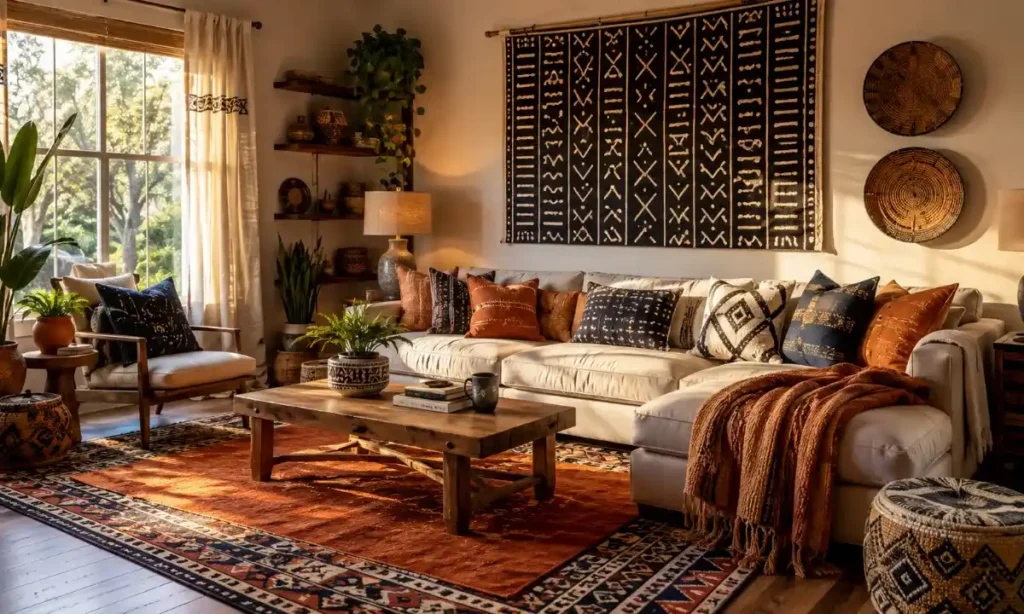
Your living room has the pieces. The rug you love, the pillows you picked up on a trip, the throw that’s been folded on the shelf for months. But when you put them all in the room together, it feels off. Not bad exactly, just scattered.
That’s the gap between owning African textiles and actually layering them.
Layering isn’t about adding more. It’s about giving each piece a job. One pattern leads. The rest support it. Color ties the whole room together instead of fighting for attention.
By the end of this guide, you’ll know exactly how to build that layered look step by step. Rug first, then pillows, then throws, then the wall. Each layer sits on the one before it, the same way a stylist builds an outfit piece by piece instead of throwing everything on at once.
This takes about 1 hour of active work once your pieces are gathered, and there’s nothing here that requires special skill. Just an eye for pattern, color, and a willingness to step back and look before you call it done.
Let’s start with the piece that sets the tone for everything else.
🧺 What You Need
📋 At a Glance
- Pick one dominant pattern to anchor the room
- Choose a color foundation from that pattern
- Layer a patterned rug as your base
- Add a solid throw rug on top for depth
- Mix in patterned throw pillows at different scales
- Drape a textured throw blanket over the seating
- Hang a woven textile or mudcloth panel on the wall
- Balance every pattern with a solid nearby
- Step back and adjust for visual weight
Pick one dominant pattern to anchor the room
Before you buy or pull out a single pillow, choose the pattern that will lead the room. This is the piece with the boldest print, the one your eye goes to first.
Every other textile in the room will echo this pattern back in smaller doses.
Kente-inspired stripes, mudcloth geometrics, and Ankara florals all work well as a lead. Pick one, not two, or the room will compete with itself before it even gets started.
Choose a color foundation from that pattern
Look at your lead pattern and pull out two to three colors from it. Nothing else.
Terracotta, deep indigo, and warm cream are a common combination that shows up across many African prints, so it reads as intentional rather than random.
Every other textile you add from here on should pull from this same small color set. That’s the trick that makes a room full of patterns look pulled together instead of thrown together.
Layer a patterned rug as your base
Your rug sets the floor for everything else, so it goes down first.
Center the rug under your main seating area, leaving 12 to 18 inches of bare floor visible around the edges. This border keeps the pattern from swallowing the whole room.
If your rug curls at the corners, a rug grip pad underneath solves that instantly, and it keeps the rug from sliding when someone walks across it.
Watch for one thing here. A rug that’s too small for the seating area makes the whole layered look feel disconnected, like the furniture is floating instead of anchored.
Add a solid throw rug on top for depth
Two rugs stacked sounds unusual, but it works. The solid rug goes on top of the patterned one, slightly offset so both edges show.
This layering trick is what stylists use to make a floor look intentional instead of accidental.
A jute or plain wool rug in one of your foundation colors works best here. Keep the top rug smaller than the base rug, usually by 6 to 10 inches on each side, so the pattern beneath still peeks through.
Mix in patterned throw pillows at different scales
Five pillows in the same size and pattern reads as a matching set, not a layered look. Vary the scale instead.
Try one 20-inch pillow, two 18-inch pillows, and one lumbar pillow in a smaller print. Group them so the largest sits in the back corner of the sofa and the smallest sits forward, closest to the armrest.
Drape a textured throw blanket over the seating
A throw doesn’t need a pattern of its own. In fact, a solid, heavily textured piece, like a chunky knit or a nubby weave, gives the eye a place to rest between all the prints.
Drape it over one arm of the sofa, letting it fall naturally rather than folding it into a perfect square.
A slight asymmetry here reads as lived-in rather than staged, which is exactly the feeling you want in a layered room.
Hang a woven textile or mudcloth panel on the wall
The wall is your last pattern opportunity, and it should feel like the boldest one in the room since nothing sits in front of it competing for attention.
Hang the panel at eye level when seated, usually 60 to 65 inches from the floor to the center of the piece.
A curtain rod, a dowel, or even a few well-placed nails work fine for mounting. You don’t need a frame. Letting the fabric hang loose actually adds to the textile feel of the whole layer.
Balance every pattern with a solid nearby
Step back and look at the room as a whole. Every patterned piece needs a solid neighbor sitting close to it, or the eye never gets a break.
A patterned pillow needs a solid one beside it. A patterned rug needs a solid throw on top of it. The wall panel needs a plain wall around it, not a gallery of other art competing for the same space.
If two bold patterns sit right next to each other anywhere in the room, move one of them.
Step back and adjust for visual weight
Walk to the doorway of the room and look at it from a distance, not up close.
From here, patterns should feel spread out, not clumped in one corner. If all your boldest pieces landed on one side of the sofa, shift one to the opposite side.
Give it a full day before you decide anything looks wrong. Textiles often need a settling-in period before they feel like they belong.
⚠️ Common Mistakes
Using too many lead patterns at once
When two or three bold prints all compete for the eye, the room loses its focal point. Pick one lead pattern and let everything else support it.
Skipping the color foundation step
Buying pieces just because they’re pretty, without pulling colors from your lead textile, is the fastest way to a room that feels scattered instead of intentional.
Matching pillow sizes exactly
A set of identical pillows reads as store-bought, not layered. Vary the scale so the eye has somewhere to travel.
Judging the room too soon
Textiles often look off on day one and settle in after a day or two. Give it time before rearranging everything.
💬 Frequently Asked Questions
Do all my textiles need to be African prints?
No. Solid pieces are just as important as patterned ones. They give the eye somewhere to rest between the bold prints.
Can I layer more than two rugs?
Two is usually the sweet spot for a living room. A third layer tends to make the floor feel busy rather than intentional.
What if I don’t have a wall panel yet?
Start with the rug and pillows first. The wall layer can wait until you find a piece that fits your color foundation.
How many patterns is too many?
A good rule of thumb is one lead pattern and two to three supporting ones. Beyond that, the room starts to feel cluttered instead of layered.
📌 Quick Reference Card
What You Need
Patterned rug · solid accent rug · 4-6 mixed pillows · textured throw · woven wall panel · rug grip pad · tape measure
Steps
- Pick one dominant pattern
- Choose a color foundation
- Layer a patterned rug as base
- Add a solid rug on top
- Mix pillow scales
- Drape a textured throw
- Hang a wall textile
- Balance patterns with solids
- Step back and adjust
Conclusion
Your living room now has real depth. Not just textiles scattered around, but a room built layer by layer, with one pattern leading and everything else supporting it.
Give it a day to settle before you judge the final look. A room this layered often needs a little time to feel like home.
The next natural step is bringing that same color foundation into your curtains or a piece of wall art nearby.
Save this guide to Pinterest so you can walk through it room by room whenever you’re ready to start layering.