Scrolling through Pinterest boards full of airy lofts will not prepare you for an awkward 600-square-foot rental covered in cheap beige carpets. The excitement of holding the keys to your very first place usually collides hard with the expensive reality of weird room layouts.
Reframing the ten most common first-apartment blunders with practical, budget-friendly fixes saves you serious time and money. Skipping the typical rookie errors means you avoid living with furniture you hate just because you lost the return shipping label.
Give yourself permission to pause before you buy.
The “Buy Everything at Once” Trap Leaves You With a Catalog, Not a Home
Imagine renting a U-Haul and hitting IKEA and Target on moving day with an empty credit card. You fill your cart with side tables, floor lamps, and dining chairs just to make the rooms feel completely finished by Sunday night. Buying an entire apartment of furniture in one weekend feels incredibly productive and satisfying.
However, that impulsive $400 faux-leather armchair often blocks the only natural walkway to your tiny kitchen. Buying everything on day one forces you to guess how you will actually move through the rooms. You might realize a week later that your new bulky sofa faces the wrong wall for comfortable TV viewing.
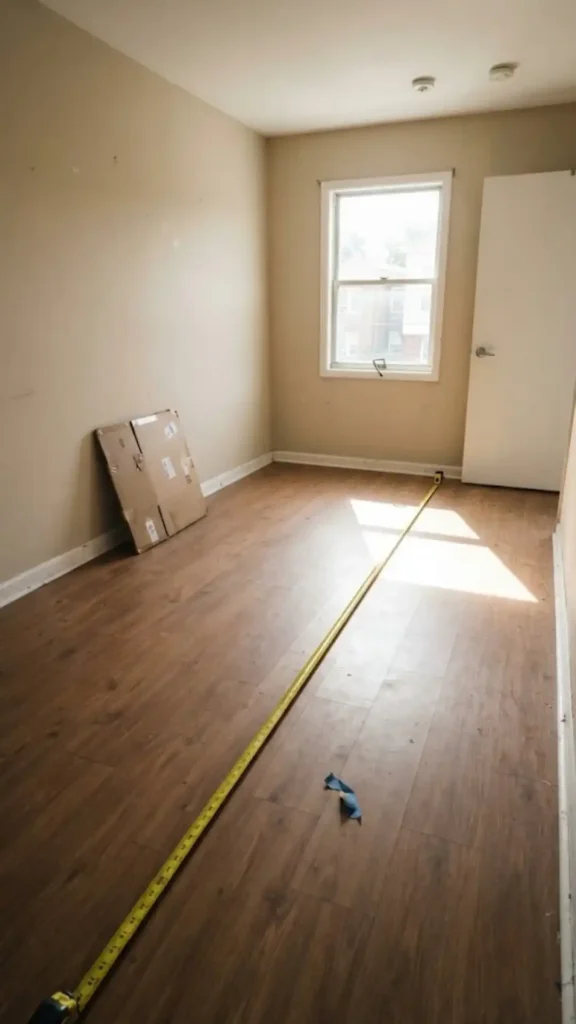
Taking four weeks to live in the layout tells you exactly what furniture you actually need. You can measure the empty spaces with a tape measure and buy pieces that fit perfectly.
Your Living Room Rug Needs to Be at Least an 8×10 (Seriously)
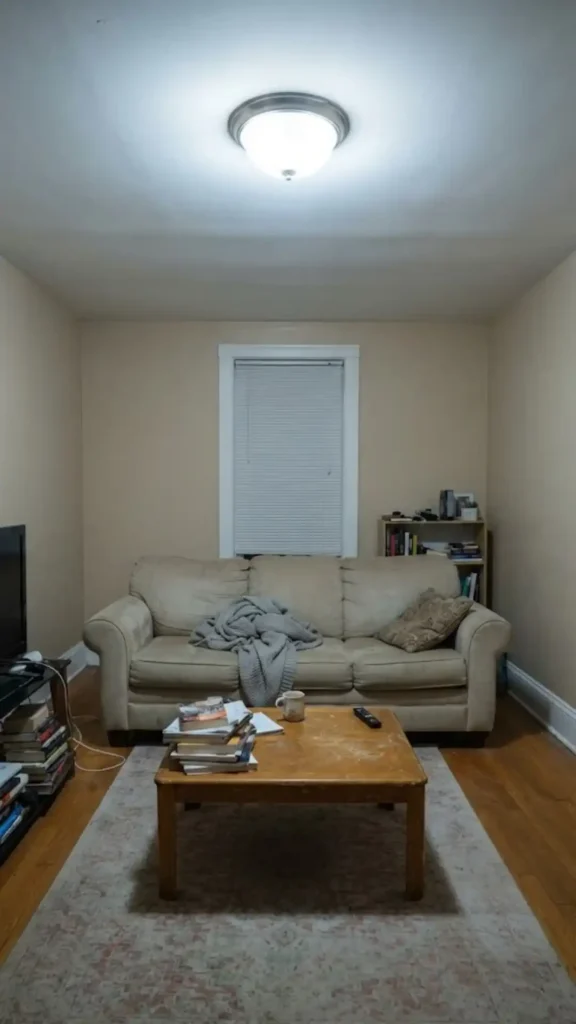
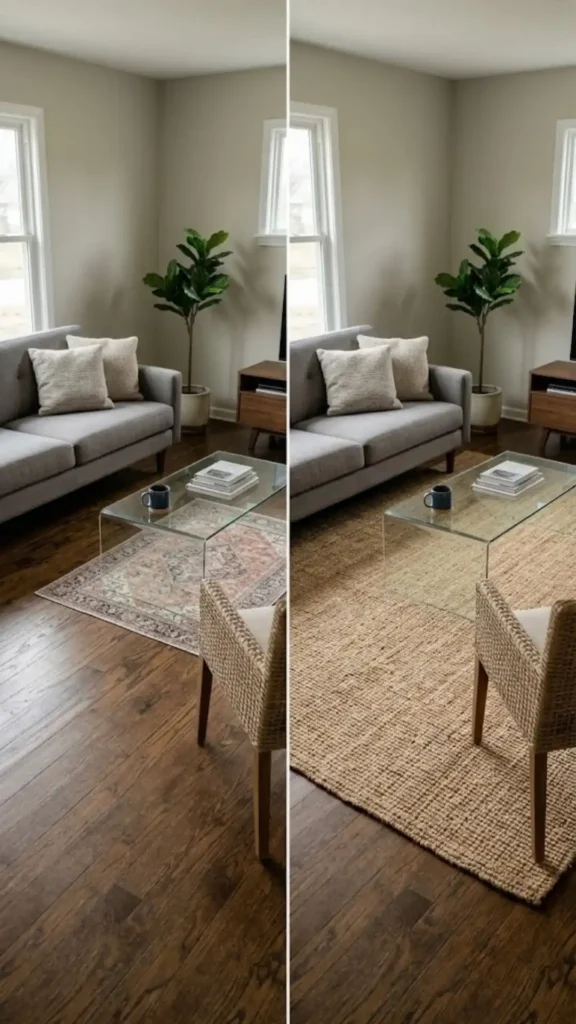
You unpack a standard 5×7 rug and place it right in the middle of your living room floor. That tiny square sits alone under your glass coffee table like a sad floating island. This common scale mistake visually shrinks the whole floor plan and makes your furniture look disconnected.
You need an 8×10 or 9×12 rug so the front legs of your sofa and side chairs actually rest securely on the fabric. This specific placement tricks the eye into seeing a much larger room.
But large rugs cost serious money when you shop at traditional brick-and-mortar furniture stores. Stretching your budget is easier if you search Rugs USA for oversized options during holiday sales. Heavily textured natural jute rugs also offer massive square footage for under $200.
A room always feels anchored when a thick rug physically connects the large furniture pieces together.
Overhead Rental Lighting is the Ultimate Enemy of Coziness
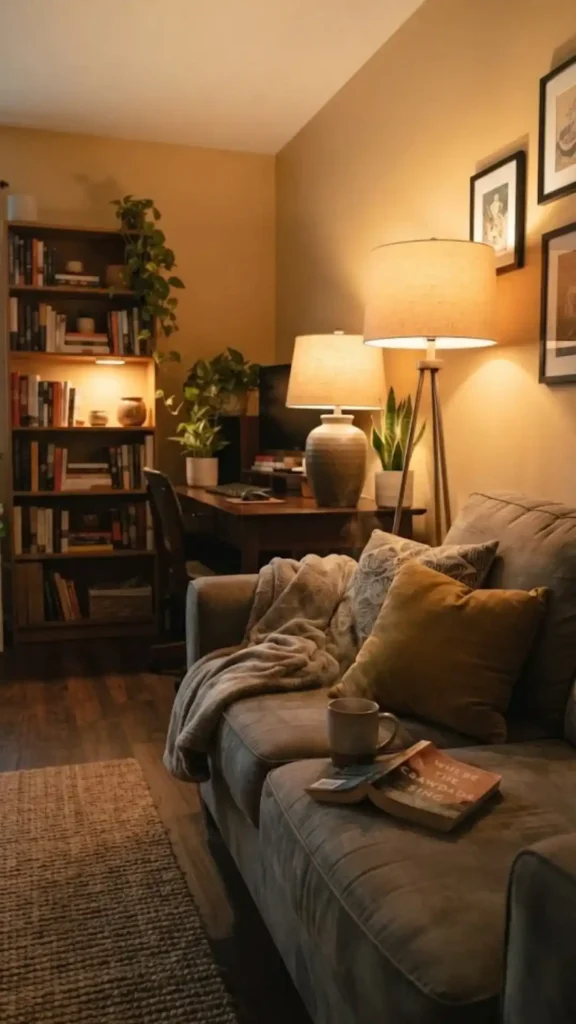
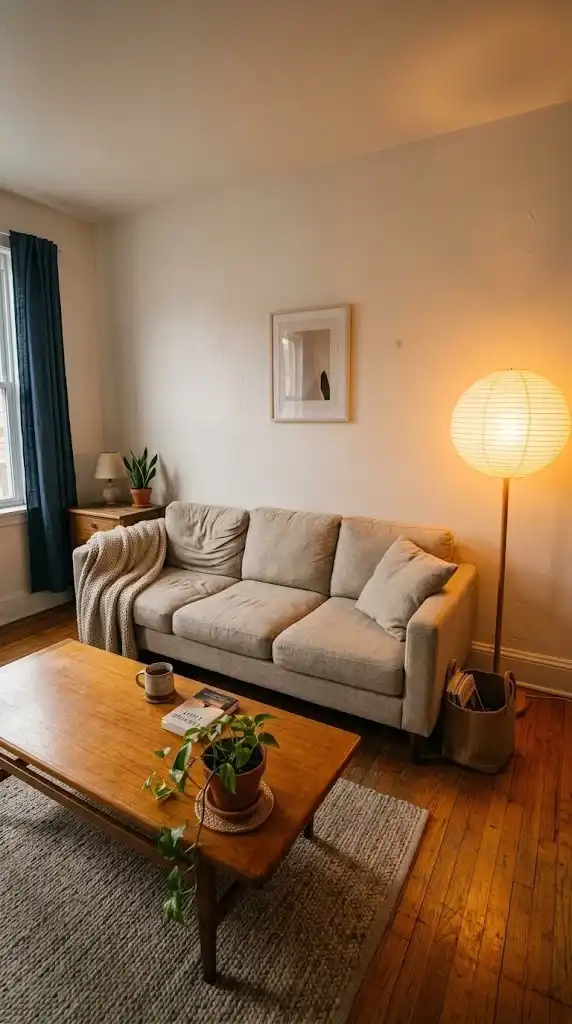
Most apartments feature a cheap glass dome fixture right in the center of the ceiling. Flipping that single switch casts a harsh glare across every corner of your living room. The dreaded apartment boob light destroys any chance of creating a relaxing mood after a long day at work.
You must layer three alternative light sources to fix this stark overhead glare.
- A tall metal floor lamp near the sofa provides general brightness for the whole room.
- A heavy ceramic table lamp on your desk adds focused task lighting for reading.
- A small battery-powered accent light tucked onto a wooden bookshelf creates warm depth.
However, all those expensive lamps fail if you buy stark daylight bulbs by mistake. You need to screw in 2700K warm-white LED bulbs.
Soft amber light instantly hides the fact that your walls are painted a sad shade of landlord beige.
You Do Not Have to Paint or Wallpaper to Hide Ugly Walls
Imagine spending a whole Saturday smoothing trendy peel-and-stick botanical wallpaper over your bedroom wall. It adds immediate bold personality to a boring beige box. You feel like an absolute design genius for hiding the scuffed drywall so easily.
But the strong adhesive on many popular brands actually rips off layers of cheap flat landlord paint when you move out. Losing your $500 security deposit over damaged drywall hurts your budget immensely. Patching and repainting an entire accent wall is a terrible way to spend your last weekend in an apartment.
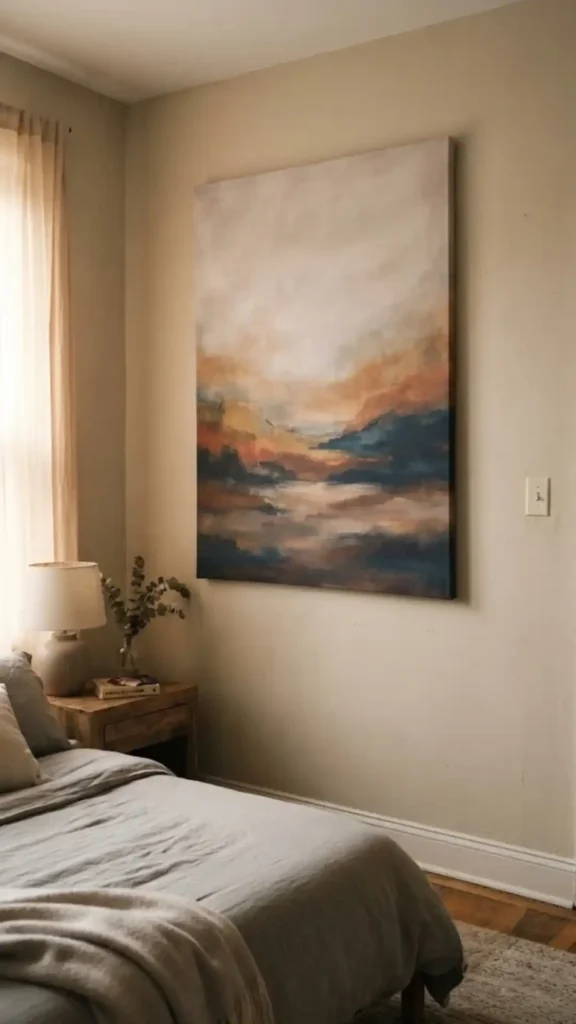
You can cover massive blank spaces without the financial risk. Hang a giant 40×60 canvas art print or a large vintage fabric tapestry instead.
Securing a large wooden frame with heavy-duty 16-pound Command Strips keeps your walls completely safe and your deposit intact.
Cheap Curtains Only Look Expensive if You Hang Them High and Wide
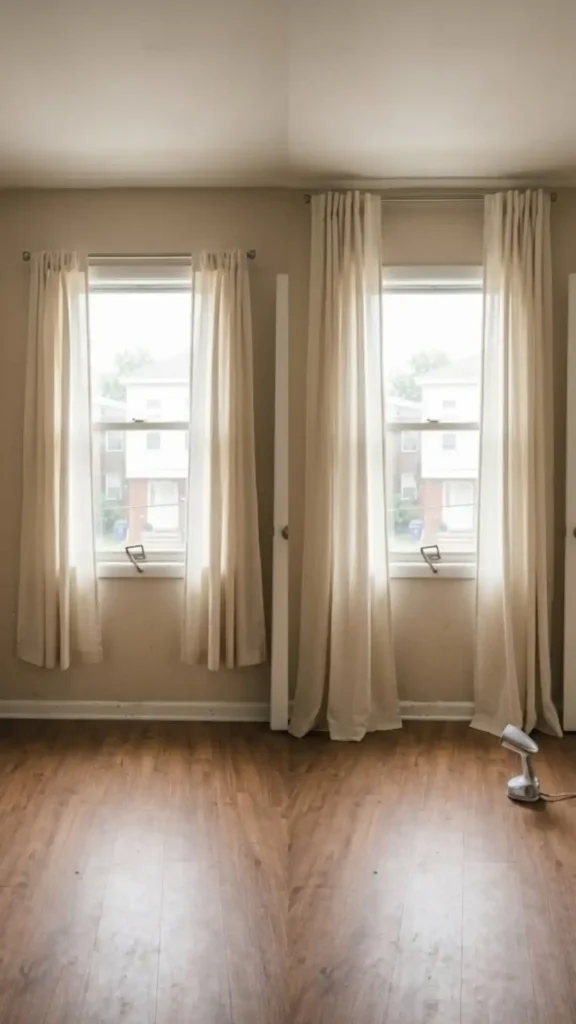
The fastest way to make a room feel cramped is mounting a metal curtain rod two inches above the window frame. This classic mistake chops the wall in half and makes your ceilings feel much lower than they actually are.
You need to mount the hardware four to six inches below the ceiling line. This simple visual trick draws the eye upward immediately.
However, standard 84-inch curtain panels will hover awkwardly above the baseboards if you raise the rod. High-water curtains ruin the elegant architectural illusion you just tried to create.
You must buy 96-inch panels so the fabric gently brushes the floor. The IKEA RITVA curtains offer great weight and extra length for less than $40 a pair. You can run a handheld steamer over them to remove the packaging wrinkles.
Why settle for squat windows when a simple hardware adjustment fakes grand architecture?
Scale Matters More Than Style on Facebook Marketplace
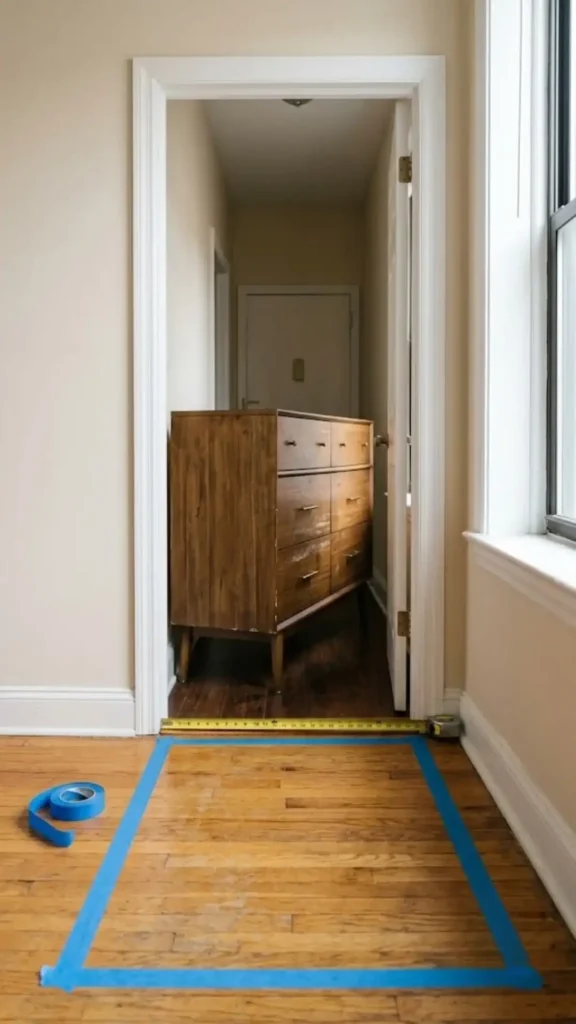
Imagine scoring a solid wood mid-century dresser for $75 after weeks of scrolling on your phone. You borrow a friend’s truck and lug the heavy wooden piece up three flights of concrete stairs. The pure excitement of a great bargain gives you serious energy.
But heartbreak hits when you realize that gorgeous 32-inch deep dresser will not fit through your standard 30-inch bedroom doorway. A piece that looks perfectly sized in an online photo can easily overwhelm a tiny apartment floor plan.
You have to know your exact spatial limits before you hand over cash. Map out the exact furniture footprint on your floor using blue painter tape. Measure every single door frame and tight hallway corner the piece must pass through.
Knowing your exact measurements guarantees your vintage bargain actually makes it inside your bedroom.
Open Shelving is a Trap Without Closed Storage Backup
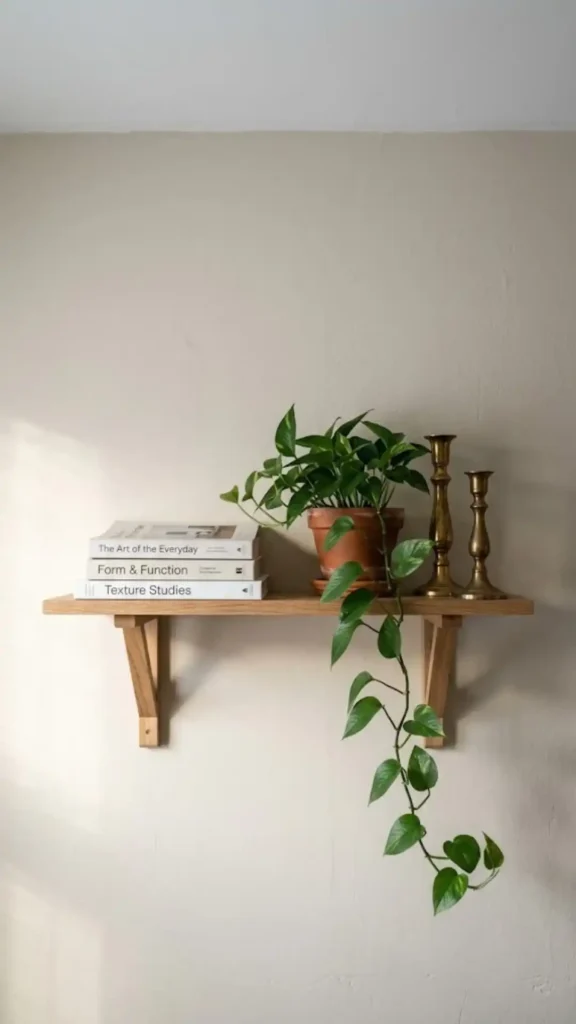
Wooden bracket shelves look incredible when they hold three curated art books and a trailing pothos plant. You install a set in your living room to display your favorite thrifted brass candlesticks. Open shelving feels light and airy in perfectly styled pictures.
However, small apartments force you to store ugly everyday items in plain sight. Stacking extra phone chargers, unread mail, and bulky dog treats on an open shelf creates massive visual noise. Your beautiful display turns into a messy catch-all by Tuesday afternoon.
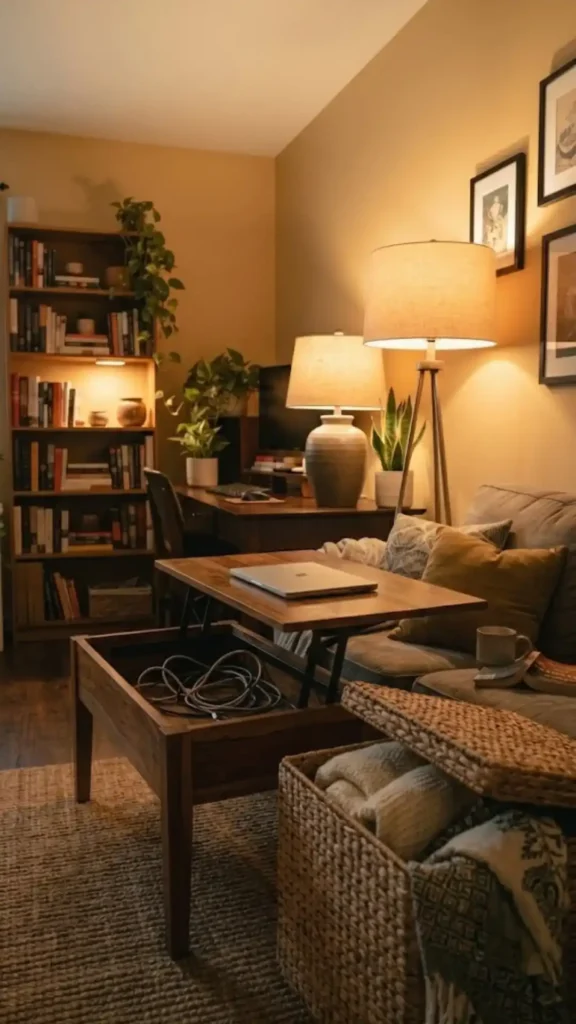
You need functional furniture to hide the daily mess. A solid wood lift-top coffee table conceals laptops and messy power cords perfectly. A woven Target Brightroom storage ottoman tucks away brightly colored throw blankets completely out of sight.
Giving your messy necessities a hiding spot allows your decorative shelves to actually breathe.
Matching Furniture Sets Instantly Age Your Apartment
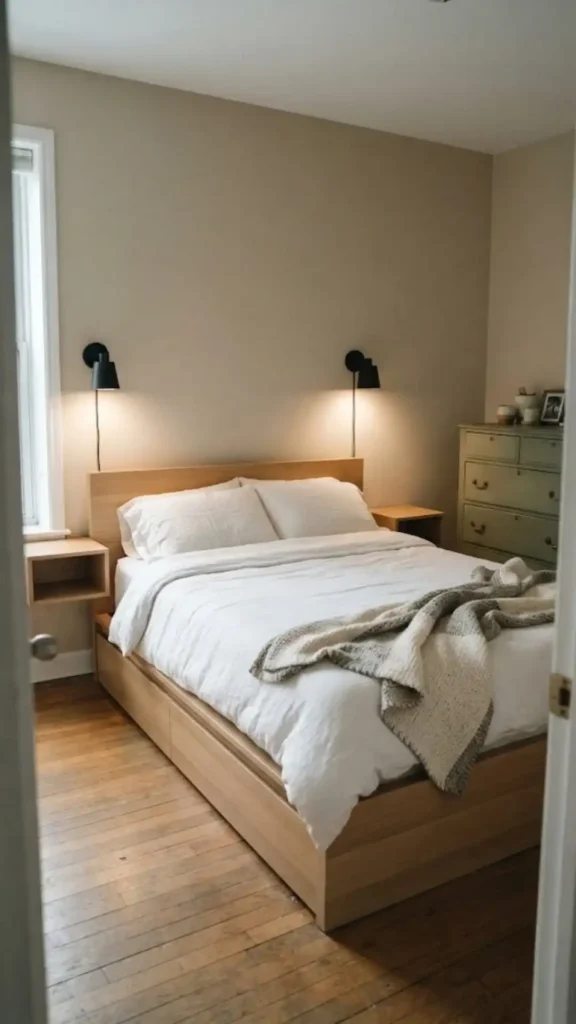
The local furniture showroom will gladly sell you a bed, two nightstands, and a dresser carved from the exact same dark cherry wood. This room-in-a-box approach saves you hours of tedious shopping time. It feels incredibly safe because you know the pieces match perfectly.
But matching every single piece makes your fresh new apartment feel like a tired roadside motel. A room needs contrast in textures and colors to feel layered and personal.
You can build a collected look easily by following a simple beginner formula.
- Start with one primary wood tone like a light oak platform bed frame.
- Add one metal element like matte black wall sconces installed above the nightstands.
- Finish with one painted or upholstered piece like a sage green vintage dresser.
Mixing materials proves that you collected your pieces over time rather than pointing at a catalog page.
Art Belongs at Eye Level, Not Hovering Near the Ceiling
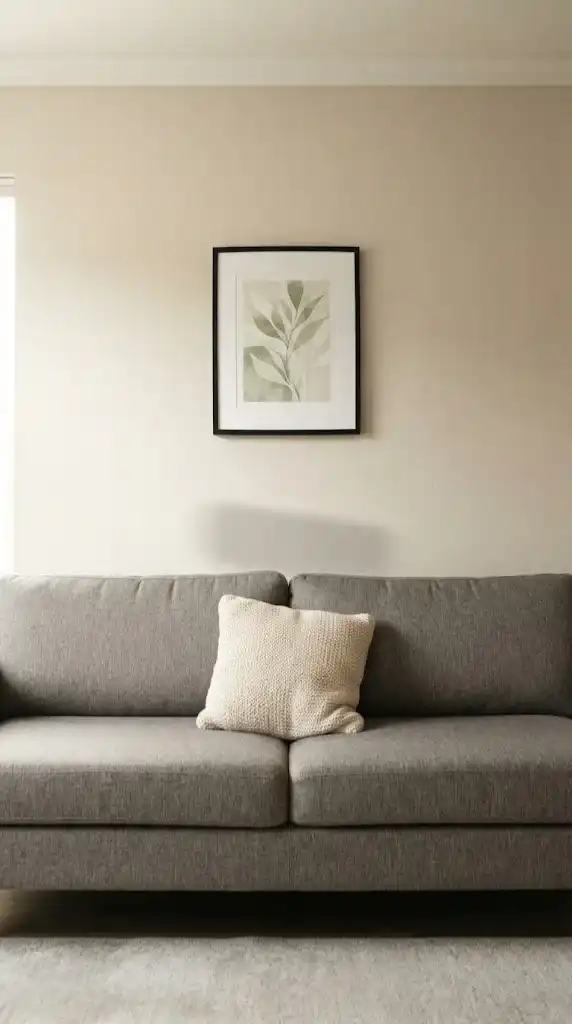
Imagine hammering a nail high up on an empty wall just to fill the massive blank space below the ceiling molding. People constantly hang frames based on how tall the ceiling is. This leaves a tiny family photo floating awkwardly in the air above the living room sofa.
However, art galleries and museums always hang pieces based on human height. You should follow the 57-inch rule for every single piece. The exact center of your framed print needs to sit exactly 57 inches from the hardwood floor.
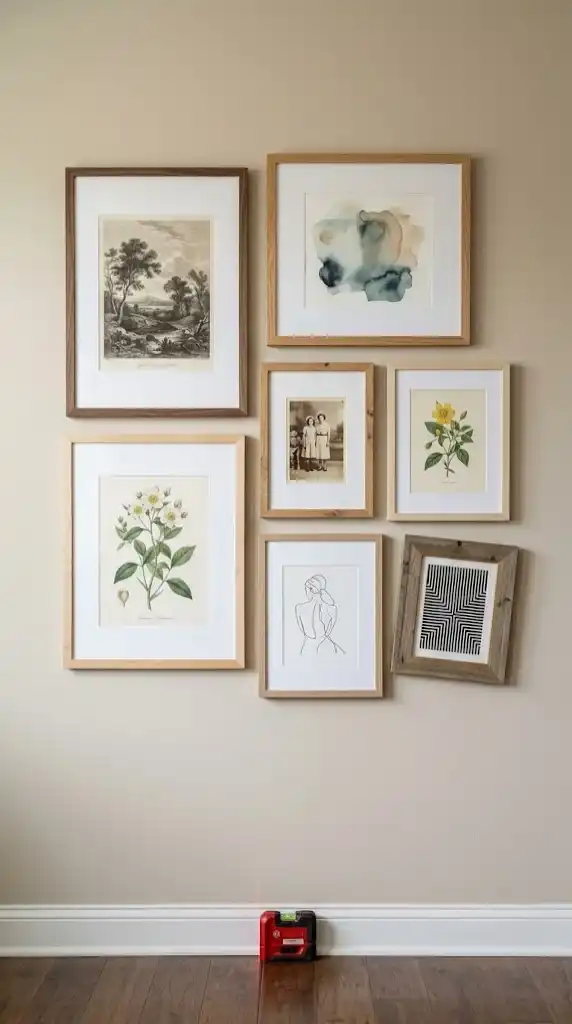
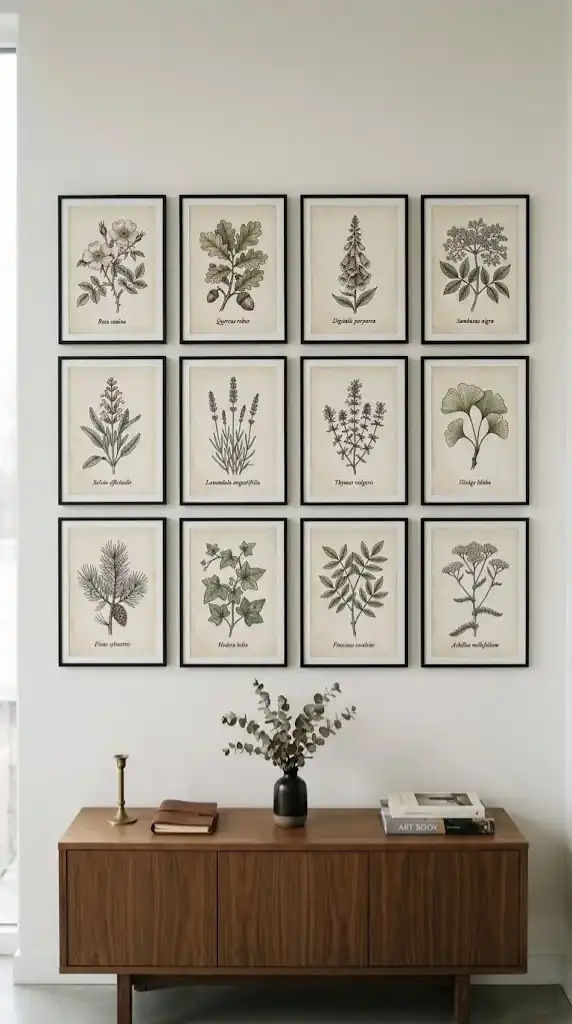
If you build a large gallery wall, treat the entire grouping as one single piece of art. Keep only two to three inches of empty space between each wooden frame to keep the collection tight. You can use a laser level to keep the rows perfectly straight.
Lowering your artwork anchors it directly to your furniture and makes the whole room feel connected.
Splurging on Throw Pillows While Skimping on the Sofa
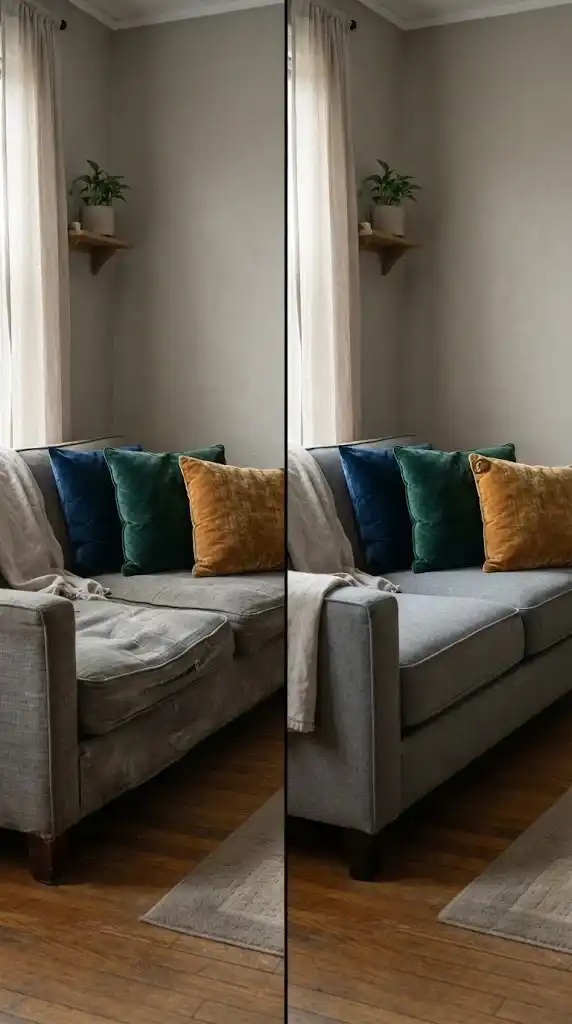
A tight budget often pushes you toward the cheapest seating options available online. You buy a $200 gray sofa from Amazon and spend your remaining cash on beautiful velvet cushions and expensive linen throw blankets. The living room looks fantastic on a tiny phone screen.
But no amount of expensive textiles will fix a rock-hard seat cushion. Bad back support becomes a daily physical misery that ruins your weekend movie nights. Cheap foam flattens out completely after just three months of regular daily use.
You should dedicate 60 percent of your initial decorating budget to your mattress and your primary living room seating. A sturdy frame and dense cushions matter far more than a stylish silhouette.
You can always collect pretty ceramic vases and woven baskets next year, but a supportive couch matters tonight.
A genuinely layered and personality-filled home takes actual time to build. Give yourself permission to live with empty corners while you save up for solid pieces you truly love.
If you need ideas for those tricky empty corners later, read our guide on styling awkward apartment nooks. For more budget-friendly advice, check out our favorite renter-friendly lighting swaps.