Living in a small apartment forces you to make careful choices about what comes through the front door. When square footage is tight, every single item must earn its keep. Buying cheap, oversized items that do not fit your layout will only make the room feel cramped and disorganized.
The right approach is investing in multifunctional furniture that is scaled to your space and serves more than one purpose. Choosing practical, well-designed pieces solves immediate layout problems while keeping the room visually calm.
You do not need a massive budget, but you do need a focused strategy. The twelve options below solve common layout challenges, provide hidden utility, and will easily move with you to your next home.
Rules for Picking Small Apartment Furniture
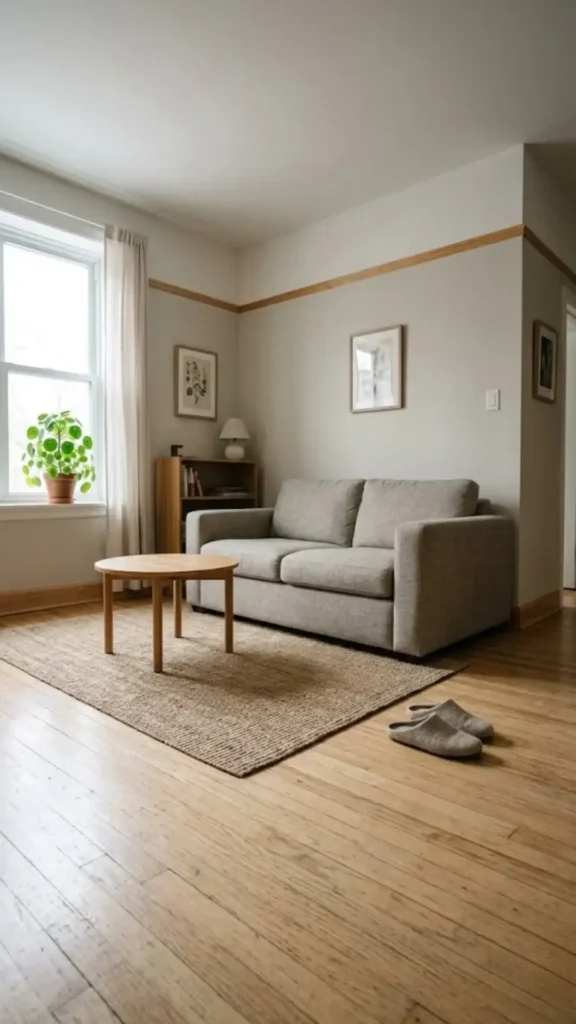
A successful small apartment relies on strict buying rules. The first rule is scale. You must measure your actual floor space before making a purchase. A massive couch will swallow a small living room, making the ceiling feel lower and the walkways too narrow.
Instead, look for apartment-size dimensions that leave at least two feet of walking space around the perimeter. Buying furniture that fits the room keeps the layout feeling intentional rather than crowded.
The second rule is demanding multiple uses from a single item. If a piece takes up valuable floor area, it should offer a secondary function. A bench should hold blankets. A desk should fold away. A stool should work as a side table. This approach reduces the total number of items you need to buy, which directly reduces clutter.
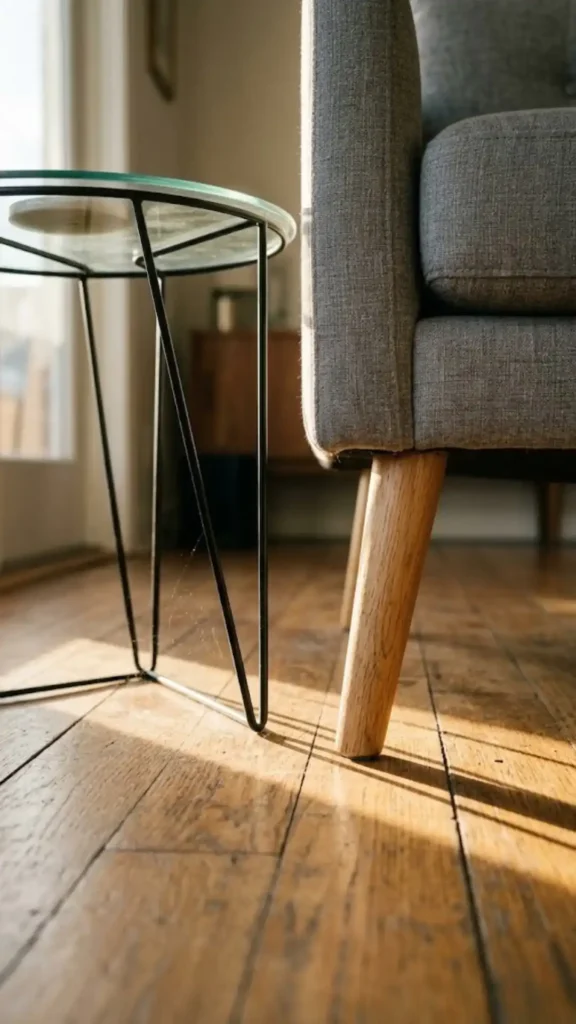
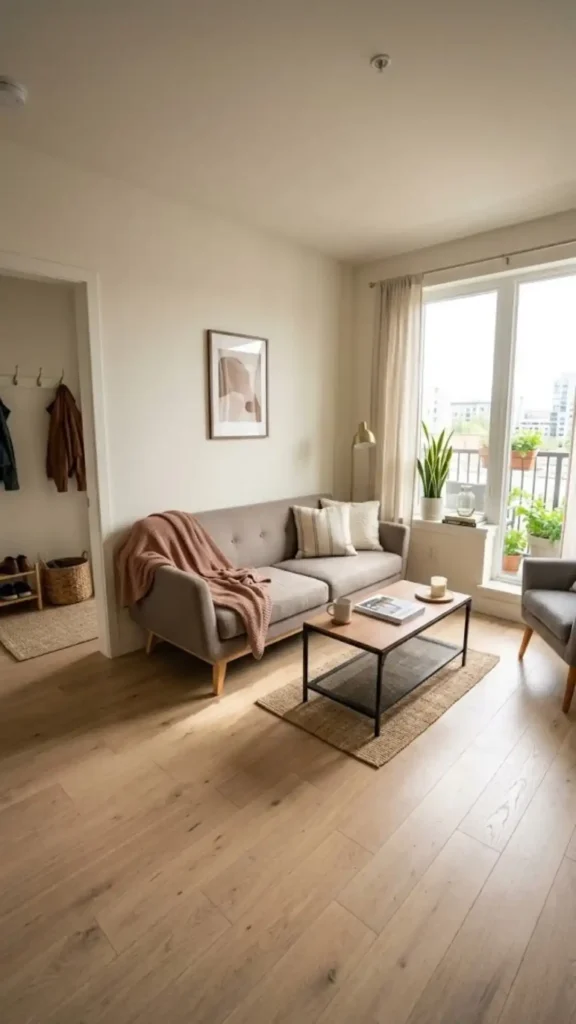
The third rule is managing visual weight. Solid, heavy blocks of wood or dark fabrics absorb light and make a room feel closed in. You can counter this by choosing furniture with exposed legs. When you can see the floor continuing underneath a sofa or a cabinet, your eye registers more space.
Glass, wire framing, and pale woods also carry less visual weight. I often suggest these lighter materials for rooms that lack natural sunlight. Following these three rules ensures you buy pieces that solve layout problems rather than creating new ones.
Seating Choices That Fit Tight Living Rooms
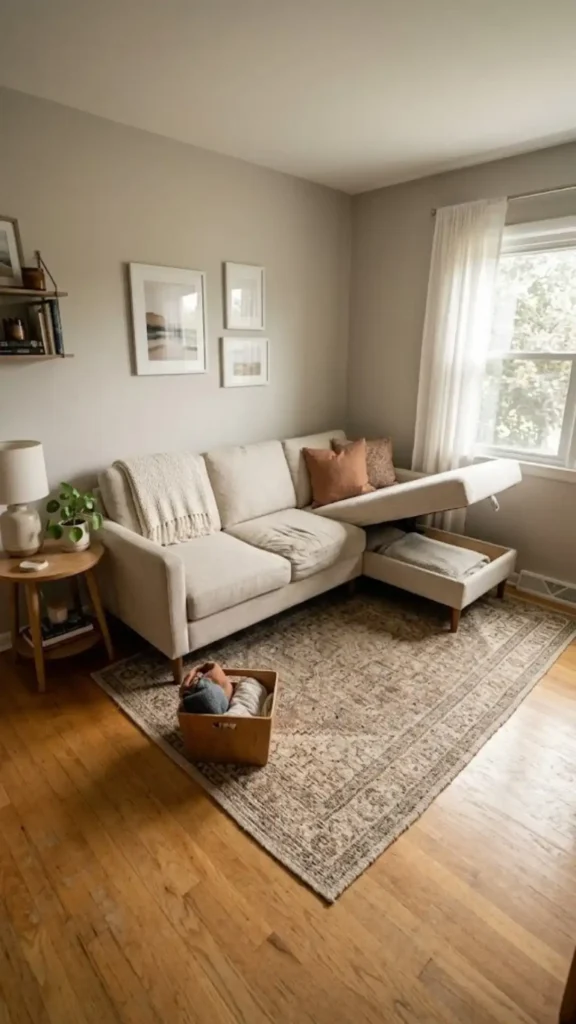
Finding seating for a compact living room requires a careful balance between comfort and footprint. Standard sofas often feature wide rolled arms and heavily stuffed back cushions that waste precious horizontal space.
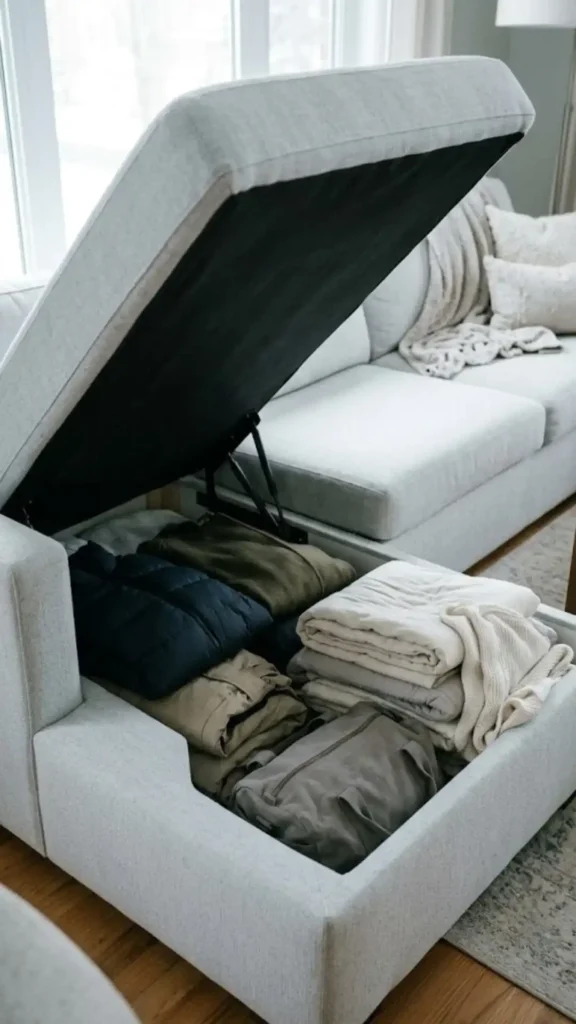
The most practical starting point is an apartment-size storage sectional. These sofas are built specifically shorter than standard models, usually measuring between seventy and eighty inches wide. The extended chaise section lifts on a hinge to reveal a deep cavity.
This hidden area is perfect for holding off-season coats, bulky extra bedding, or even travel bags. The clean, straight arms give you maximum seating area without adding unnecessary bulk to the sides.
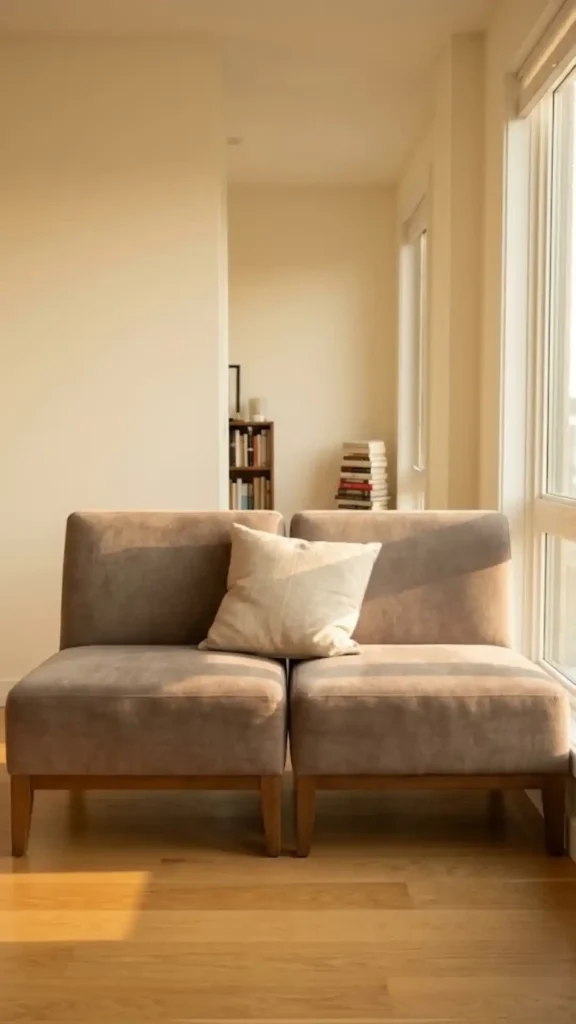
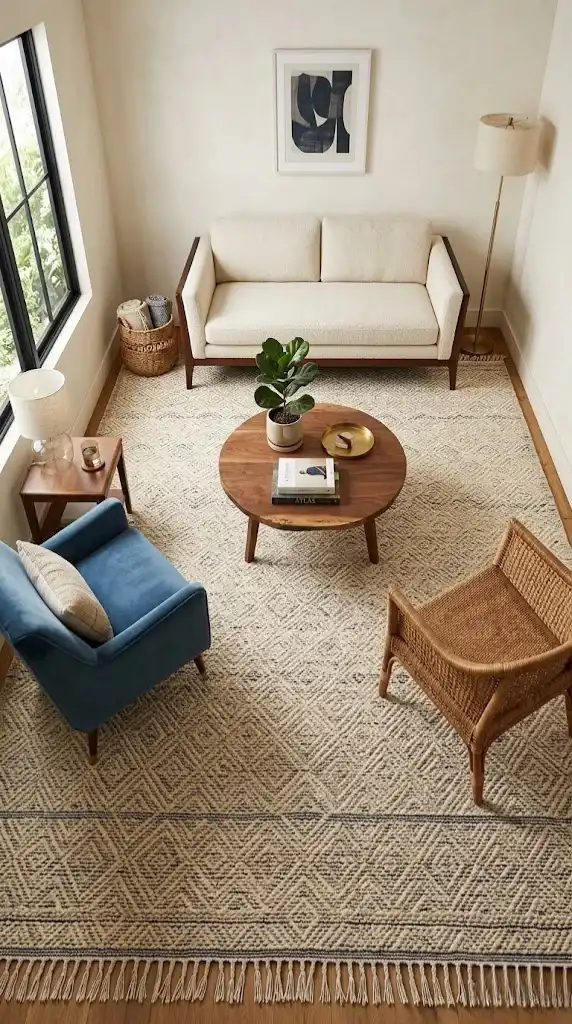
Next, consider adding armless slipper chairs instead of traditional bulky recliners or wide club chairs. An armless chair provides a comfortable, low-profile seat that takes up a fraction of the floor space.
Because they lack arms, they do not block sightlines across the room. You can place two of them side by side to create a temporary loveseat, or angle a single chair in an empty corner to build a quiet reading spot.
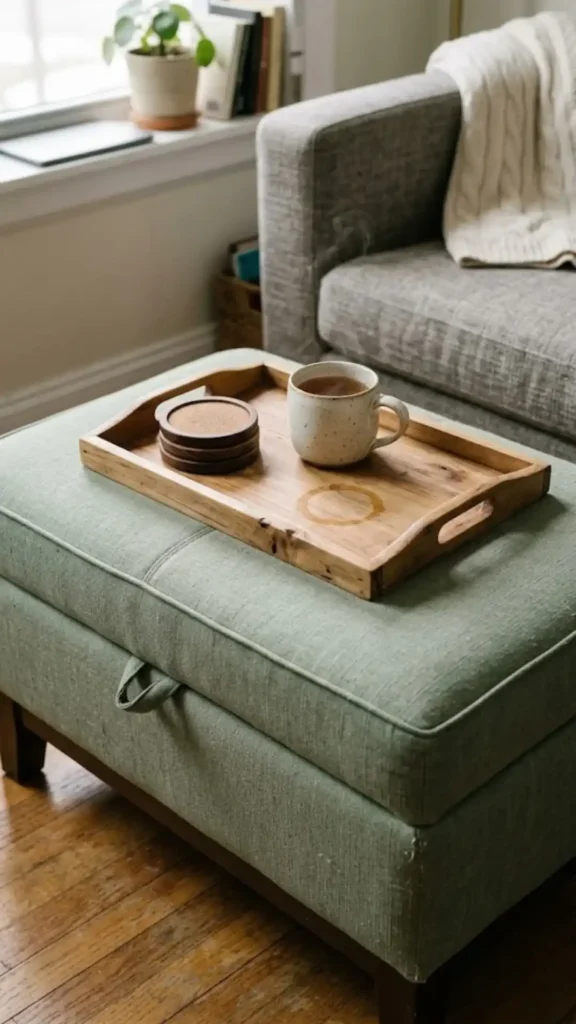
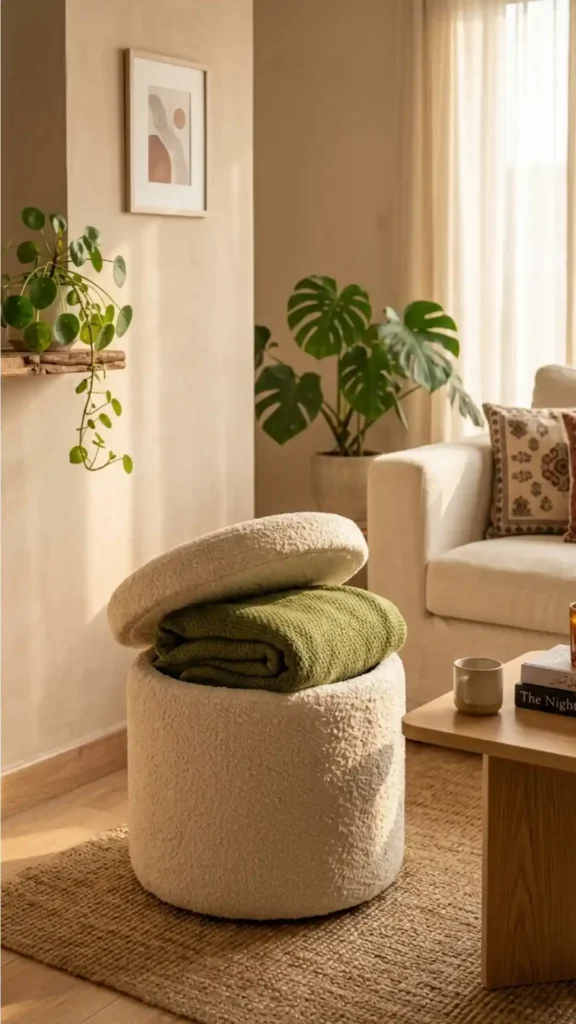
Finally, a large storage ottoman serves as the most flexible seating option you can buy. Instead of choosing a traditional wooden coffee table, a sturdy upholstered ottoman gives you a soft place to rest a serving tray. It hides daily living room clutter inside, and it offers a comfortable extra seat when guests arrive.
You can easily slide it out of the way to open up the room. These three seating choices provide ample room for relaxing without overwhelming a restricted living room layout.
Tables That Adapt to Daily Needs and Guests
Flat surfaces quickly become a scarce resource in a tiny apartment. You need tables for eating, working, and resting, but keeping large tables out all the time ruins the flow of the room. The solution is buying tables that shrink or expand based on what you are doing in that exact moment.
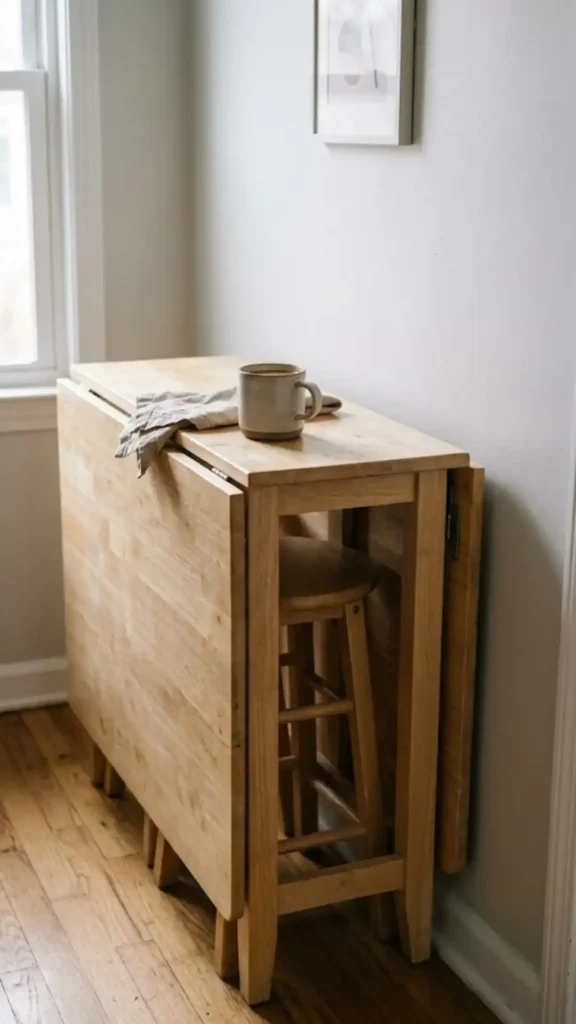
A drop-leaf dining table solves the problem of hosting in a tiny kitchen. During a normal weekday, you can keep both leaves folded down and push the slim center table flat against a wall.
This setup works perfectly as a narrow console table or a small breakfast bar for one person. When you invite people over for dinner, you simply pull the table into the center of the room and lift the sides to comfortably seat four to six people.
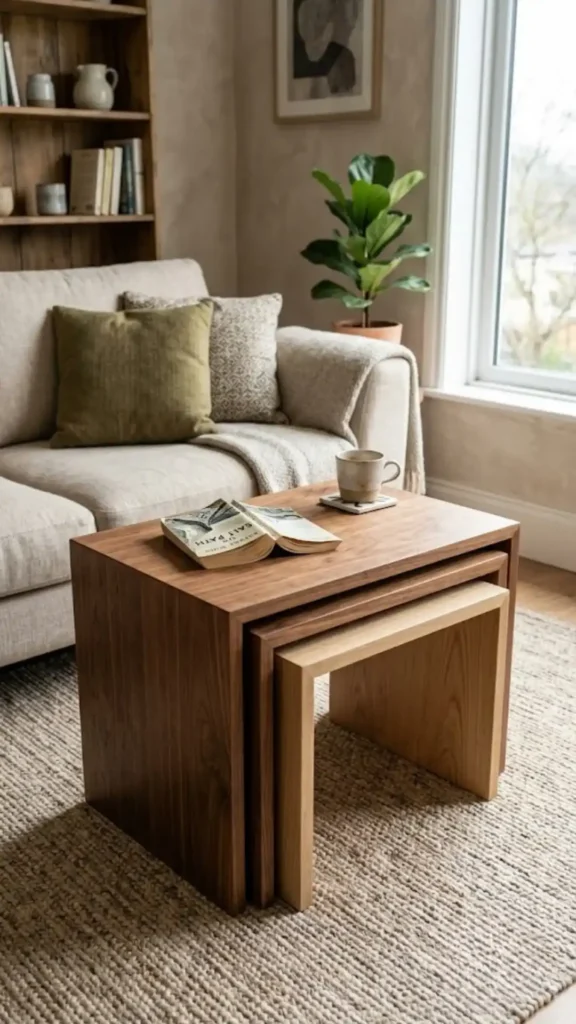
For the living room, nesting coffee tables offer a similar level of control. This set features two or three matching tables of staggered heights. The smaller tables slide completely underneath the largest one. On a daily basis, you maintain a very small footprint. When you have guests and need more spots for drinks and plates, you can pull the smaller tables out and scatter them around the room.
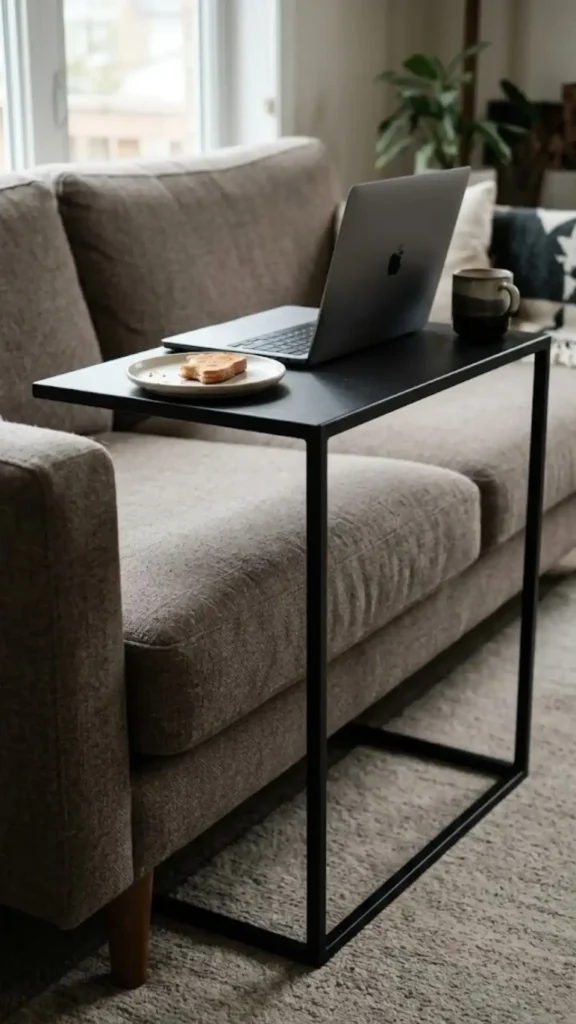
A C-shaped side table is the third essential piece. The base of a C-table slides directly under your sofa, hovering the flat top right over your lap. It takes up nearly zero floor space while giving you a sturdy spot for a laptop or a dinner plate. These adaptable pieces give you surface area exactly when you need it and disappear when you do not.
Bedroom Storage Items That Solve Closet Problems
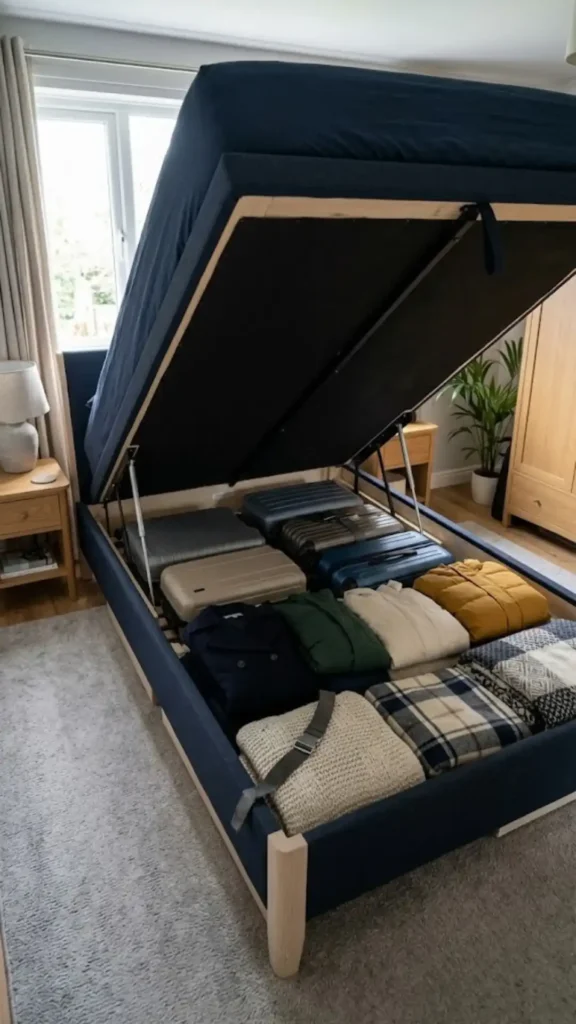
Apartment bedrooms often lack adequate closet space. Trying to fit an entire wardrobe into a single narrow closet is a frequent struggle. You have to rely on your bedroom furniture to handle the clothing overflow without making the sleeping area look disorganized.
The most impactful piece you can buy is a hydraulic lift bed. Unlike standard frames that leave a dusty, hard-to-reach gap near the floor, a lift bed utilizes the entire footprint of your mattress. The mattress lifts up smoothly on gas struts, revealing a massive, continuous storage compartment underneath.
This provides enough room to store large hard-shell suitcases, bulky winter coats, extra blankets, and out-of-season shoes. It acts as a horizontal closet completely hidden in plain sight.
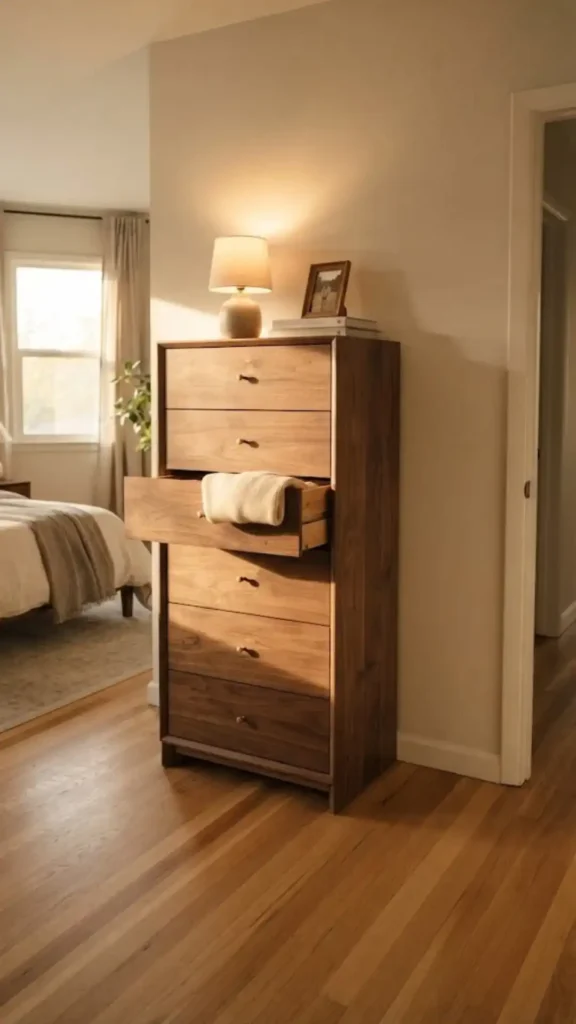
When you need dedicated drawer space, skip the traditional wide double dresser. Instead, choose a tall, narrow vertical dresser or a tallboy chest. By building up toward the ceiling rather than stretching across the wall, you gain five or six deep drawers while only sacrificing a small square of floor space. This vertical approach leaves more room for a functional bedside table or a clear walking path to the door.
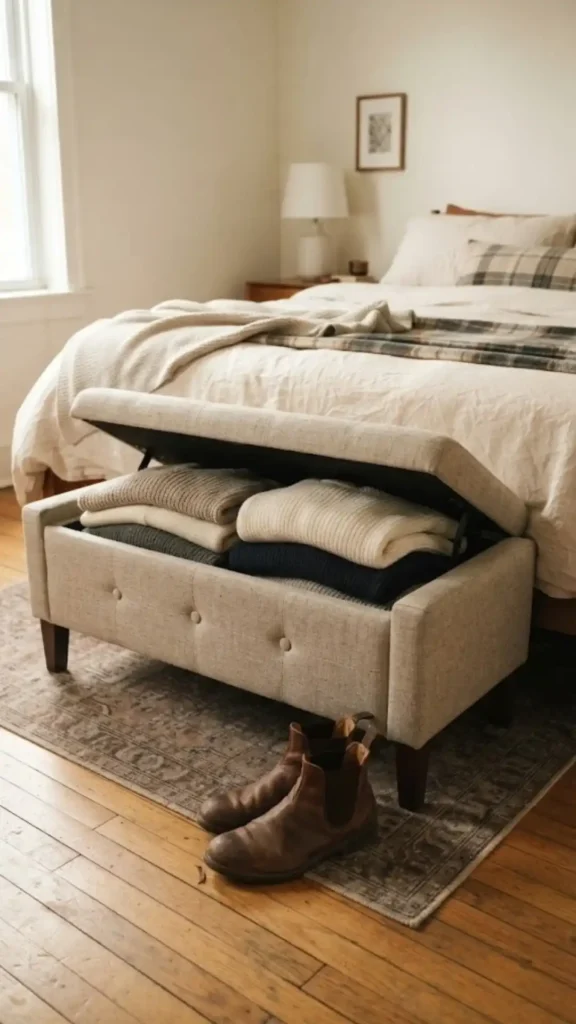
To handle everyday items, add a storage bench right at the foot of your bed. A slim, upholstered bench offers a convenient place to sit while putting on shoes, but the hidden interior easily holds folded sweaters or spare bed sheets. This prevents clothing from piling up on a chair or the floor. Bringing in these hardworking storage items keeps your bedroom feeling restful and strictly organized.
Accent Pieces That Keep Floor Space Clear
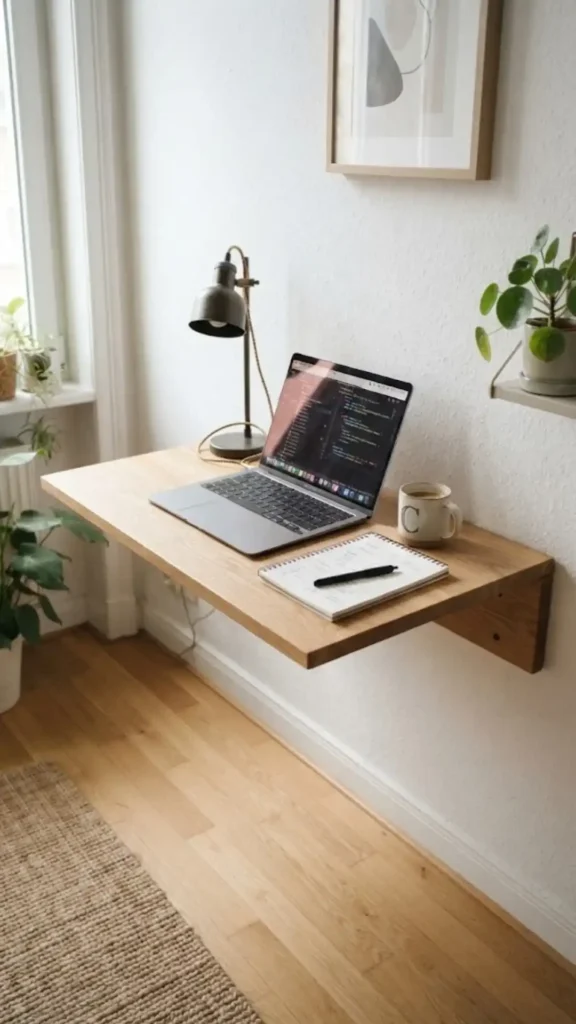
Small apartments still need accent furniture to feel complete and fully functional. The trick is choosing supporting items that provide utility without adding visual clutter to the floor plan. Keeping the floor surface visible makes the entire room feel wider and less restricted.
A wall-mounted floating desk is the best way to add a dedicated workspace to a tight layout. Traditional heavy desks have four solid legs and thick drawers that demand a large footprint.
A floating desk attaches straight to the wall and simply folds flat when you finish working. It gives you a highly stable surface for a laptop during the day and completely disappears from your walking path at night.
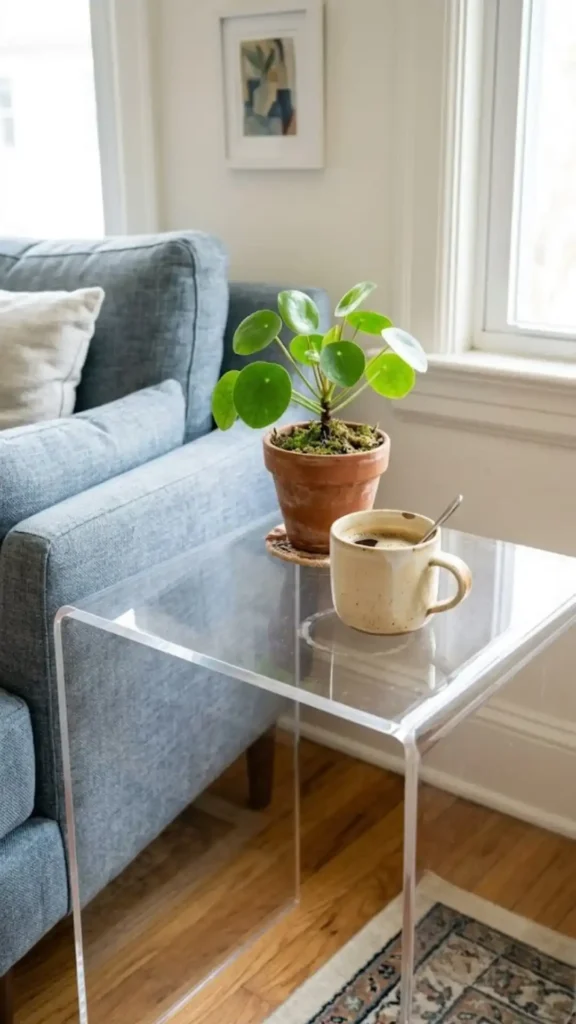
For holding coffee cups or displaying small plants, clear acrylic side tables are incredibly useful. Acrylic functions almost like invisible furniture in a tight room. Because natural light passes right through the material, these tables serve a highly practical purpose without interrupting your line of sight. They keep the room feeling open, light, and airy.
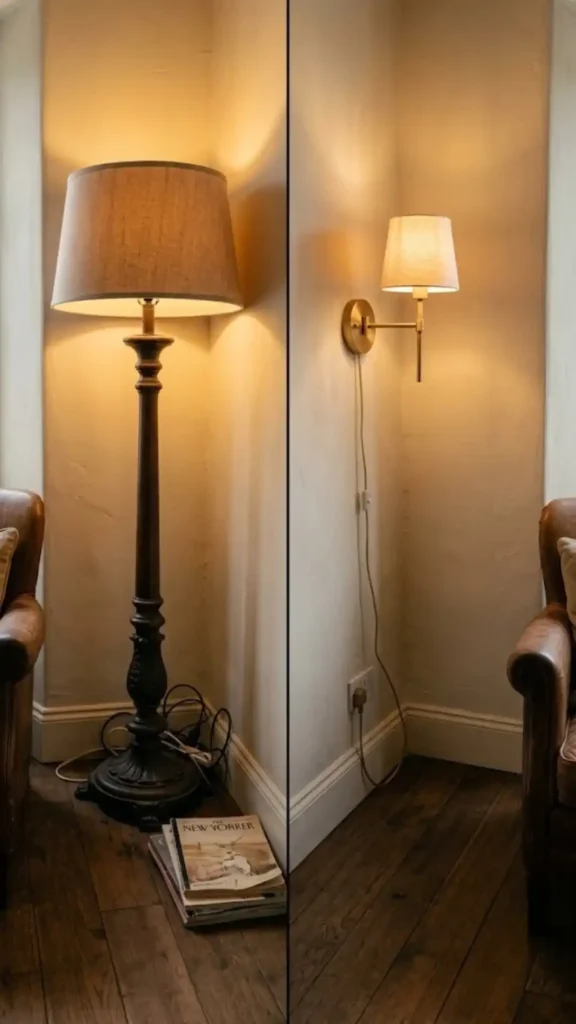
Finally, consider using wall-mounted plug-in sconces instead of standard floor lamps. A tall floor lamp takes up a corner of the room and requires a bulky, heavy base to stay upright.
A plug-in wall sconce provides the exact same amount of warm reading light but uses absolutely zero floor space. These clear and floating accent pieces add necessary function to your daily routine while preserving your layout.
Conclusion
Furnishing a small apartment is never about settling for less. It is about demanding more from the pieces you choose to bring inside. When you select furniture that adapts to your needs, maximizes hidden storage, and respects your floor plan, your home will feel tailored and calm.
The best part is that these smart, hard-working items will easily transition into a larger space when you eventually move. Now that you know what to buy, your next step is figuring out where to put it. I recommend reading our complete guide on small apartment layouts to arrange your new pieces perfectly.